Who really resisted Nazism and fascism during the WWII(2)
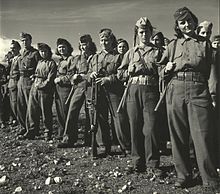
The resistance movement in Europe during WWII played an important part in defeating Nazi Germany’s military might. The resistance movements – Europe’s secret armies or partisans . were found in all Nazi-occupied countries, also occurred in Poland, Yugoslavia, Greece and Rumania. Within Western Europe, many would-be resistance fighters joined the communist resistance simply because it was seen as being the most successful. According to Jean-Louis Charles, Right from the start, communist resistance achieved a remarkable cohesion and efficiency because they had long been used to working underground.” It is ridiculous and non sense to say, contrary to false insinuation uttered by the dominant anti-communist historiography, that the Communist resistance began only in June 1941 with the starting of Operation Barbarossa and by order of Stalin. What it would be fair to say that at the beginning, for fear of communism and in order to thwart the communist influence and to prevent any potential communist leading role in social unrest and social revolution, the ruling class in Britain, in the United States did its best by setting up rival anti-communist groups whose aim was less to combat Nazi occupation than to resist the communist resistance itself. The French and British Munichards and the ruling class in the United States had done their best before the war, by allowing Nazi Germany’s rearmaments, by financial relief for War settlement obtained thanks to the two American Plans Dawes and Young, with the sole objective, helping Hitler to smash Bolshevism and to conquer the Soviet Union. the great landowners, aristocrats industrialists, bankers, high churchmen army leaders magnates of very kind in western Europe and the United States had never lost their fear of their own workers and peasants who might be the fuel for social revolution, perhaps one spearheaded and organized by communists. Paris and London sought to speed Hitler’s march and helped place within his grasp the necessary power for an attack upon the Soviet Union by opening the Balkans required to feed the Nazi war machine. Western elite’s support of Nazism and fascism was conceived as a force which would defeat communism and this support could explain the lack of fighting in the West during the winter but also the rise of communist resistance as natural and logical response to Nazism and fascism. Annie Lacroix-Riz’s new book, « les élites françaises de 1940 à 1944, de la collaboration avec l’Allemagne à l’alliance américaine », available since April 26 and of which I’m preparing a review, explains and exposes, thanks to its abundant archives research, how the French elites had actively collaborated not only after the 1940’s Blitzkrieg but since Hitler’s accession to the power in Germany in January 1933.
The history of the Second World War give us many examples showing that the hidden objective of the ruling class in the United states and Britain was not at all the defeat of Nazism and fascism in Europe but only to prevent the spread of communism on the continent and the conquest of power by the communist movements of resistance. First example is Italy. After Mussolini’s fall on July 25, 1943, American and British ruling class intervened in Italy in order to prevent the taking of power by communist resistance and the return of the Italina Communist leader Palmiro Togliattiwho had been in exile in Moscow during the Fascist era, . After rebuffing the strong popular demand for the king’s abdication, they set up a government led by Marshal Bodoglio and Churchill in an address on February 22, 1944, gave the King support. In order to keep safe from communism in Italy, the Anglo-American ruling class deferred social and economic reform and instead of welcoming the Italian resistance fighters in the North as brothers, the first thing that they did was they disarmed them wherever as republicans and reds who migyhr cause trouble.
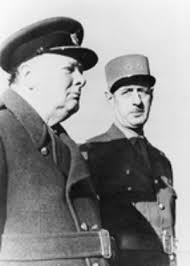
In Greece, on December 3, 1944, after sixty-three days of fighting, Churchill crushed the communist resistance of EAM, a political movement of resistance against the German invaders and paved the way to civil war in Athens. Churchill, took personal charge of its suppression by supporting general Vendiras who was bitterly anti-communist and organized a new third brigade often called the Mountain brigade with British backing on a purely royalist basis . In Greece, EAM had swept nearly the whole country but in order to thwart this popular and strong communist movement of resistance, Churchill helped the formation of a rival movement grouping Conservatives and Rightists who created with the of British General Scobie, after the British troops landed in Greece at the of September 1944, the Royalists Greek Brigade, the New National Guard. On December 4, 1944, Churchill decided in lieu of King George, the setting up of new Cabinet led by Themostocles Sofoulis.