Catégories
Archives

American totalitarianism (1)

American totalitarianism (1)

Making a pretext of sinking of eight American vessels and of revealing of a « plot » to involve the United States in a war with Mexico and Japan, President Wilson appeared on April 2 1917 before the Congress and asked for a declaration of a state of war and on friday April 6, 1917, the United States went to war. Wilson’s slogan « force, force to the uttermost, force without stint or limit » was a declaration for a « total war and marked the passage from American dictatorship to American totalitarianism. At this juncture, the austere and stern scholar turned, under the circumstances of the war, into one of the greatest of war Presidents controlling every aspect of the war effort maintaining morale at home and abroad, mobilizing the nation for war and fight. The government became dictator over industry labor and agriculture ; it took over the railroads and the telegraph lines, farm production was increased  by one fourth and fuel and coal production was raised by two fifths, a colossal shipbuilding program, with more than three million tons in a single year was launched  Conscription had been voted putting Under arms some twenty-five million men; Wilson made use of propaganda at home and abroad. From the beginning of the war Wilson waged a wide and aggressive psychological warfare against Germany; He tried to sow dissension in Germany by insisting that the United States was not fighting against the German people but against his tyrannous and autocratic government. The hunt against dissent and “disloyalty” had been implemented and the First World revealed a constant continuity and a logical development between Alien and Sedition Acts of the 1790s and the Sedition and espionage Acts of Wilson’s presidency during the first World War or lately the Smith Act of 1940.
Catégories
Archives

Rise of American dictatorship (2)

Rise of American dictatorship (2)

American dictatorship entred a new phase at the beginning of the ninettenth century with the netry to the White House of Andrew Lackson in 1828 jackson’s inauguarated a new eraa in American dictatorship . Jackson had been described according to Justice Story as the « king of Mob » because of his populism and his appeal to the people as he had always  one of them. Once in popwer, Jackson vigorously carrieed his main ideas into practice ; Under his presidency he strenthened the power of the executive by opposing his « Maysville veto » disapproving voting money by Congress for olocal roads an d canals from Maysville to Lexington into  Kentucky. He opposed South carolina when it attempted to nullify the protective tariff of 1828; in 1832, Jackson strenly vetooed a bill for recharter of the second bank of the United States

Catégories
Archives

Rise of American dictotatorship (1)

Rise of American dictatorship (1)

The genesis of American dictatorship began with Sahys’s Rebellion (1786-1787) in massachusetts. A series of popular uprisings  at Northampton and Worcester. At Springfield, the leader of popualr uprising was daniel Shays an former captain in  the Continental army. To end the rebellion an army of four thousand four hundred men was raised and put Under the command of general Lincoln supported by troops funded by voluntary loans from wealthy citizens iof Boston and othe towns. thanks to the governor james Bowdoin the insurrection was at lenght suppressed but Shays’s Rebellion had a far-reaching political conséquences. the rebellion by disclosing the danger strengthen the hands of the conservatives who were seeking for a strong power able to prevent further popualr uprisings. the ultimate  and the most ultimate conséquences of Shays’s rebellion was the laying down the foundations of American dictatorship with the establsihment of political institutions and the creation of a strong governemetn and a striong executive capable of insuring domestic tranquility » and the proetction of the property. shays’s rebellion was the pretext for Wahington for underlying the inadequacy of the Articles of Confederation  and for  claiming  a corecive power and a new political reorganization.. Experience of Shays’s rebellion taught the necessity of bestowing on some central authority the power to prevent more disorders and social and popualr uprisnings.  A partir fo these cosndierations emegede the necessity of building an imperial organization  Virginia Plan recommended that a national executive was to be estabslished consisting of a supreme legisaltive, Executive and judiciary. the establishment of the United States was the making and the outcome of a coup d’étata fomented by the federalists as the supporters of the Cosntitution called themselves. in pennsylvania state convention whicj met Novemver 21, 1787. On September 17, 1787, The new constitution of the United states had been definitely ratiifed

The firts chapter of American dictatorship has been inaugurated by the repression of the « Whiskey rebellion. On the 6th of April 1789, the first Congress elected george Washingtion as President and Adams as Vice-President. five years after Washington took office, broke out the whiskey rebellion, an insurrection of inhabitants of western Pennsylavania  and Virginia agaiants Hamilton’s excise tax of march 3, 1791.  On Hamilton’s recomemndation, washington orderd out the militia in order to suppress the rebellion . Wasghington in his address to Congress justified the repression of the rebellion by the « subversive » proceedings and the « spriti of opposition » to the « just authority of governement and the rights of individuals » Washington qualified acts committed by the insurgents as acts of treason « being overt acts of levying was against the United States »

the second chapter of American dictatorship was the two infamous Alien and SEDITION ACTS of 1798 aseries of four Laws directed against foreigners suspexcted for dissent and disloyalty.


Catégories
Archives

Ideological roots of western totalitarianism

Ideological roots of western totalitarianism

 The natural law is a guide-post and lumber-room which points in different directions and permits a convenient diversity of arguments.  The theory of eighteenth-century jurists of the natural law Scholl justified conquest as a right incident to war. The failure of the natural philosophy in general and the natural right philosophy in particular to provide definite and restrictive answers makes the right of security preeminently serviceable in the justification of both imperialism outside and totalitarianism inside. Though the natural right to liberty did not lend itself to territorial expansion and to enslavement of their peoples, it could be used in the same time as ideological weapon for expansionism and imperialism through a corollary natural right to « safety » or security. The concept of security is logically flexible yo a degree permitting much more sweeping political implications.  in virtue of the natural doctrine and the natural right to security and self preservation, the law of nations has been deduced from natural law and this apparent assumptions was the ideological fundament allowing both the infant United States to annex adjacent territories and the European powers to colonize and to enslave other people Inside and outside continent. The natural right of security and self preservation lead to override the right of self-determination and here for the first time the idea that « our rights » must not be destroyed leads to the destruction of that cornerstone of the natural right philosophy the universal right to political liberty. This imperialistic idea had become synonymous of another idea that of subordination of the political liberty of citizens to the general welfare of the larger geographical unity. Imperialism imperatives were the impetus for domestic totalitarian system under the pretext that the governed, for their internal and external security must to consent to government whether for better or for worse.

Catégories
Archives

Political roots of western totalitarianism

Political roots of western totalitarianism

The struggle against the democracy and popular aspirations for democracy began before the American revolution through pamphlets and writings of its major leaders.  Among those who very early opposed democracy and popular aspirations for democracy ther was John Adams who “wanted to make sure that American revolution didn’t goo too far in the direction of democracy “ opposing Paine’s plan for single-chamber reprehensive bodies elected by the people, Adams denounced Paine’s plan as “s democratical without restraint or even an attempt at any equilibrium. Adams  also opposed “popular assemblies which needed to be chakec because there were “productive of hasty results and absurd judgments”  While proposing a representative bodies elected by the people, Paine, was resolutely opposed to crowd action of lower-class people. Later during the controversy over adopting the Constitution, Paine was partisan of conservative and strong government .

The language of popular control over government, the right of rebellion and revolution indignation at political tyranny , all these words sounded hollow as they merely aimed at uniting colonists and dissatisfied people against England  but in reality, a wide range of American people Indians, blacks slaves, women had been excluded from the great manifesto of freedom of the declaration.  “We the people of the United states”, a phrase coined by the very rich Governor Morris did not mean slaves Indians or blacks or woman or white servants but struggle for office and power between members of an upper class the new against the established ; the men who engineered the revolt were largely members of the colonial ruling class .

In order to protect the large economic interest of the makers of the United states constitution but also to cope with rebellion by discontented and oppressed people the new ruling class decide in 1787 in Philadelphia Convention to erect strong gand dictatorship legalized by the ratification of the Constitution. The main reason for the ratification of the constitution was an uprising in the summer of 1786 in western Massachusetts known as Shay’s rebellion.

Shays’s rebellion merits attention not because it was the only evidence of social disturbance but because it was the conspicuous uprising that startled the thoughtful men of every state and made wonder what the end of their great war for independence might prove to be; the rebellion by disclosing the danger helped to bring about a reaction, strengthen the hands of the conservatives discredit extreme democratic tendencies and aid the men that were seeking to give vigor to the Union.

The reaction immensely helped the establishment of new institutions and the creation of a government capable if insuring “domestic tranquility”

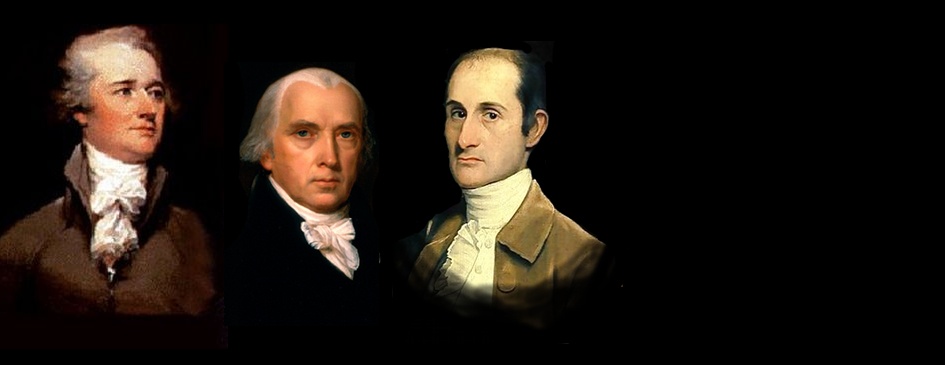
At the Constitutional Convention, Alexander Hamilton suggested a President and senate chosen for life . a constitutional dictatorship needed to not only for constitutional limitations for voting , il lay deeper beyond the constitutional, maintain of class structure and the division of society into rich and poor. For Hamilton the new Union and the new government would be able “to repress domestic faction and insurrection in referring directly to Shays’s Rebellion

Catégories
Archives

Western totalitarianism, its roots and its development (1)

Western Totalitarianism, its roots and its development  (1)

Chapter one : Social roots : era of popular and democratic revolutions

Between 1776 and 1825 took place in both sides of the Atlantic a series of interconnected revolutions during which had been expressed a genuine and real democratic aspirations and had been launched an idea of popular sovereignty and the Rights of Man. These interconnected revolutions were the American Revolution expressing herself in the Declaration of Independence of 1776, the Jacobin short interlude in France 1793-94), the Haitian revolution in the French colony of Saint-Domingue and its influence and its role it played in the accession to independence Spanish colonies in south and central America.

The American revolution and the Declaration of Independence could be considered as the coronation and the outgrowth of a long period of struggle and resistance and democratic aspirations of oppressed peoples in the New world against the European imperialist powers and the beginning of a new one that of model for modern freedom and genuine democracy. As conflicts within the European imperialist powers became planetary in the late seventeenth and early eighteenth centuries, we have to witness a parallel direction with increasing spirit of resistance and a rash of “freedom suits” and assertions of civic liberty, equality, liberty and brotherhood among oppressed people, whatever the color of their skin, whites, blacks and colored people. The slave revolt on both sides of the Atlantic had been joined by other oppressed layers of the society artisans, journeymen and port workers mostly white but some colored. Support for action against the imperial power came from all those felt that the imperial power was arbitrary intrusive and oppressing power and also from white elite and white colonists whither propertied or not and whiter their mother tongue was English German or Dutch. These oppressed people who came to embrace the American cause and to form the impetus and the fuel leading to the first and genuine and successful rebellion in the modern history, the American revolution and the draft of the first declaration of human rights, the Independence declaration of 1776.  The rebellious forces expressing strong convictions stemmed from a widely held doctrine of “republican” liberty seen as synonymous of “abject slavery” and colonial tyranny

Of course, the revolt against the slavery and the tyrannical  English colonialism in North America was not the outcome of spontaneous and unforeseeable movement initiated by  oppressed and disorganized masses but the result of centuries of revolt, rebellions, popular and slave uprising. It was through class struggles over centuries that the class conscious of oppressed masses had been shaped and formed. At the start of class struggle, there were a few occasions that white and black and colored layers did make common cause in their fight against their oppressor. In 1676 the Virginian revolt known as Bacon’s rebellion occasioned a brief allianace between rebellions whites and varying conditions (planters, small-holders, debtors, indentured servants) and eventually came to include rebellious blacks, though not Native Americans Indeed the revolt was ignited by Bacon’s claim that the royal governor was too indulgent to the Indians and that an expedition should ne mounted against them. While planters merchants and the colonial state were ultimately united by religion nationality and the stream of plantation the different contingents of oppressed immigrants and displaced natives were divided by language and tradition and found it difficult to forge a shared vision.  Such acts were isolated and did not come together in a challenge to planter power.

Catégories
Archives

Slavery and Imperialism

 SLAVERY AND IMPERIALISM

Slavery was and still today remains an institution and a global system, albeit under disguised forms, of the first importance. Seen in historical perspective, it was a part of the western imperialism since the discovery of the “new World” and its rise and development till now. In other word, Slavery seems to be unthinkable without imperialism and conversely, the history of imperialism that shaped the modern world order had largely contributed to the rise and the development of the slavery system since the sixteenth century. Albeit this is not the appropriate place to deal with this topic, we can say without making a mistake, that capitalism also like slavery is unthinkable without imperialism that contributed to its rise and its development.

So, the history of slavery beginning with imperialism could not be separate from the history of western imperialism or more precisely of western imperialism rivalries both inside and outside the European continent. The history of western imperialism and therefore the history of European imperialist rivalries in and outside Europe began in the late of the fifteenth century with the famous treaty of Tordisillas which can be considered as the first treaty dividing the world between the two main powers at that time, Portugal and Spain. Thanks to this division, Spain had the first and vast empire ruled by the Spanish king Charles V with had far-flung possessions from Spain to the Andes from Austria to Peru from Lombardy to the Philippines from the Low Countries to Mexico (New Spain. In order to rule at distance through a huge royal bureaucracy and armies their “universal monarchy” and to defend it agaisnt their domestic and foreign enemies, Hapsburgs monarchs counted drawing their source of power, that is, the silver and the golf by exploiting their vast empire in New World colonies.

The first captive African slave had been  in the New world by Portuguese traders who sold them to Spanish colonists. Captive Africans were supplied in order to replace Indigenous slaves on plantation and in the silver mines in the Spanish Caribbean. From the 1520s the Spanish royal authorities authorized the introduction of African slaves into the Spanish colonies in Latin America to supply the deficiency of Indian slavery in the New world. Habsburgs Empire headed by the Spanish king Charles V.

Translate »