Catégories
Archives

French and Bolchevik Revolutions : Sociological and comparative study

French and Bolchevik Revolutions : Sociological and comparative Study

Before investigating the sociological background of revolutions, we have to begin by this unavoidable and redoubtable question: What is a revolution? When we try to study the history of the three famous revolutions in modern time, the American, the French and the Russian, the mainstream and classical theories become fully interested by their only political posture, taking into account the struggle of the main political and social forces and protagonists for conquest and possession of power and the conditions and the means of its exercise. For these mainstream theories, a revolution is essentially the overthrow of the old ruling class and its replacement by a new one doomed to shape its own political system and its own political institutions. However, the weakness of the mainstream theories of revolution reside in the fact that they put aside and have been their neglect of the main factor in revolutionary phenomenon, the social background to the revolution or more precisely the structure of property and the mode of appropriation of the means of production. It is that regime of property and its role in the social distribution of wealth among the classes which determine fundamentally and without appeal the nature, the scope and the course of events of each revolution. That why we have to be careful by employing the terminology and the word revolution, because the mainstream theories of revolution use the term revolution to designate a mere political change without touching to the structure of property and the mode of appropriation of the means of production. It will be this pertinent criteria i.e; the property and the class at which benefit which constitutes the background of revolution. For this purpose, in every study on revolution, we have first to investigate the driving force within a revolution, its projects and its aim in the property field and its attitude vis à vis the question the mode of appropriation of the means of production.

One object of this study has to suggest that what we call the French revolution was not at all a genuine and real revolution. Marxist historians called it “bourgeois revolution” but here the use of term revolution is inappropriate because the bourgeoisie made her best for the conquest of the political power without bringing any fundamental change to the structure of property and the mode of appropriation of the means of production. At the beginning of the French revolution and during her course many new elements it is true, emerged but they formed part of the elites of the ancient régime; We must to recognize that what we call French revolution is nothing but a triumph for the conservative propertied, land-owning classes that The French Revolution was directed by middle and for middle class interest . Her leadership was propertied leadership from beginning to end. Ruffians they were middle-class ruffians Even the most advanced political and radical movement of the revolution, Babeuf’s Conspiracy of the Equals was middle class organization.
Catégories
Archives

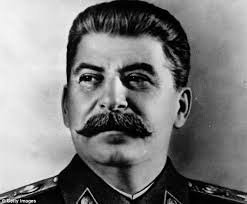
Black legend of stalinism : Stalin, statesman, strategist and geopolitical thinker

Black legend of stalinism : Stalin, statesman, strategist and geopolitical thinker

The black legend of Stalinism transforms the Soviet leader, Stalin into a monster and blood thirsty and his name evokes immediately that of Gulag, camps, purges and million victims of his regime. This black legend of Stalinism deliberately blacks out main distinctive features of Stalin’s personality as statesman, strategist and geopolitical thinker, who always reasoned in terms of security and strategic defense for his country as we will show below.

The Soviet Union suffered of the Allied interventions from 1918 to 1920 sparked and led from London and Paris. For at least years, Litvinov’s policy aiming at breathing life and vitality into the collective security system had unquestionably failed and only to be defeated at every turn; In each crisis that landmarked the European affairs during the decade 1929 to 1939 Ethiopia, Spain, the Rhineland, Austria and Czechoslovakia, where all the initiative and the collaboration of the Soviet Union had been spurned, either she had been ignored, left on one side or her efforts discarded. In the case of Ethiopia, the appeasement governments in London and Paris left Moscow alone in Geneva operating in a vacuum. At Munich conference, Russia was ignored, ostracized and thrown out bodily from any voice in European affairs. This marginalization of the Soviet government had been made under the pretext that Russia could not be trusted and that her assistance would not be worth much in any case. Decidedly, the force in France and Britain which were determined to work with the fascist and Nazi regimes were too strong to be easily unhorsed. The appeasement Governments in Paris and London deliberately planned to turn Hitler toward the East and into a war with Russia.

Catégories
Archives

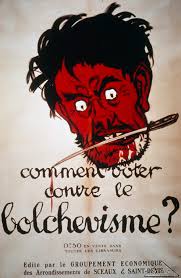
Anti-communism : Formation of the  » cordon sanitaire » against Bolchevism

Anti-communism : Formation of the « Cordon sanitaire » against Bolchevism

In his message to Congress of 8 January 1918, President Wilson announced his Fourteen Points fixing the terms of peace. Wilson’s Fourteen points served as the basis for the peace settlement and the Versailles Treaty of 1919. Chronologically, Wilson’s Fourteen Points came immediately after the victory of the Bolshevik Revolution in Russia two months ago, in November 1917. When Wilson announced his Fourteen Points, he and his European partners, France and Great Britain didn’t have a clear picture of the nature and the development of the new upheaval taking place in the former tsarist empire as one can observe for example Point 6 of the Fourteen Points, claiming “the evacuation of the Russian territory and the independent determination by Russia of her own political development and national policy”. It would be interesting to mention other assertions included in Wilson Fourteen Points announcing the redrawing of new map in Europe and the organization of the new states whose creation could only be justified by their role as bulwark against Bolshevism. We can observe this hidden motive through the points 10 to 14. For example Point 10 claims the self determination for the peoples of Austria Hungary ; point 11 calls for a redrawing of the boundaries of the Balkan states along historically established lines of nationality ; point 12 asserts the self-determination for the people under Turkish rule and freedom; point 13 claims the Independence of Poland with free access to the sea guaranteed by international covenant and finally point 14 appeals to the formation of a general association of nations for the purpose of affording mutual guarantees of political independence and territorial integrity to great and small states alike.

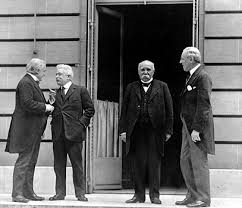
The first forma session of the peace conference took place on 18 January 1919, A Peace conference dominated by the “Big Four” England, France, Italy and the United States. Russia was not represented since the Allies hoped that the new Soviet government would shortly collapse. The main preoccupation of Wilson, Clemenceau, Lloyd George and Orlando was less the sort of peace with vanquished Germany than this new menace henceforth haunting Europe, Bolshevism “that hung over Paris like a dark cloud” Everyone was thinking of it many were talking of it. Rumors and false flag circulated and widespread about Hungary going Bolshevik with Bela Kun, that Germany and Italy the next before invading the entire bourgeois capitalist world. For this reason, Wilson who planned to return to home was forced to stay in Paris in order to thwart Bolshevism reaping the profit.

In order to fight Bolshevism in Russia, The treaty of Versailles had erected a bulwark knowing as the “cordon sanitaire” a ring of anti-communist states to isolate the Soviet Union and formed from pseudo and proxy states created from nothing by the only will of three imperialist victors, the united states, England and France. The first piece of the “cordon sanitaire” was Germany wrested only from her colonies and commercial rights in Africa and the Far East, from Alsace-Lorraine, Posen and parts of Schleswig and Silesia. For United States, Germany was the principal bulwark against Bolshevism and that is why Wilson resisted the  Allies to charge Germany with the whole cost of the war, and opposed Clemenceau claim over Rhineland, the Polish demand for East Prussia. From Austria-Hungary and Tsarist Russia came the newly independent states of Austria, Hungary, Yugoslavia,  The other pieces of the Cordon sanitaire created by other treaties  were Czechoslovakia, Yugoslavia, Finland and a new Poland created from the historic Polish territories that had been parts of three empire with a corridor to the sea according to Wilson willingness.  Wilson and his European colleagues also built a cordon sanitaire (buffer zone) of new westward-proxy nations(Finland, Estonia, Latvia and Lithonia) around Russia to quarantaine the Bolchevik contagion.


Catégories
Archives

Anti-communism :Early Anti-Reds Crusade

Anti-communism : Early Anti-Reds Crusade

On November 18, 1918, Kolchak overthrow the somewhat democratic regime at Omsk;  The allied intervened in behalf of Admiral Kolchak six months afzetr the armictice six months after any . This Allied intervention was done to a country which no one of the four nations(Britian, france, Japan and America) was at war. Tit constituted an official open and avowed attack on the Soviet government of Moscow Allied support to Kolchak constituted an intervention in a civil war a subsidy of one side against the other. In support of the Allied attempt to, defeat and destroy the Bolshevik government THE British Government gave Kolchak seventy-nine shiploads of supplies arms and equipment for 100 000 men but this army while advancing toward Moscow had been defeated and driven back thousands of miles along the Siberian railway in one of the most disastrous retreats of all time. The red Army captured Kolchak and shot him at Irkutsk. Lloyd George declared in the House of Commons Kolcjak’s effort to suppress the Reds had been aided by the presence of British, French American and Japanese troops east of Lake Baikal based on Vladivostok. The decision of the Allied to send troops to Vladivostok was made in July 1918 On July 2 the Allied Supreme War Council decided for intervention and on the 17th Washington notified the Allies that the United States would join the japanese in landing troops at Vladivostok the  American troops remained in Siberia from mid—1918 to early 1920 But the Japanese stayed two years longer. In south Russia the intervention of France was still inglorious when the government sent 140 000 men to the Odessa region and the Crimea On April 4, 1919 General Denikine was informed that the French would control everything in their zone of occupation including “operations against the Bolsheviks. British intervention in South Russia was concentrated in the Caucasus provinces of Turkestan Georgia and Azerbaijan Denikine was forbidden to undertake any operations in the oil regions thus taken under British control. The British clung to Batum until July 1920

In December 1918 the British and French Governments made a special agreement dividing European Russia into two zones of occupation and influence the British zone including the Cossack regions the Caucasus Armenia Georgia and Kurdistan; the French zone comprised the Ukraine, Crimea and east to the Don river in this area the French made agreements with the White leaders giving them “control of Russian railways for fifty years and of economic and military policy for five years”

After the overthrow of Tsarist regime in Russia, there were some 45 000 to Czech deserters in western from the Austrian armies who had been fighting with the Russians. these men were organized by Thomas A Mazaryck for return to the Western front. In western Siberia suspicion developed between the Soviets and the Czechs. Trotsky ordered all the Czechs to be disarmed on pain of being shot on sight.  While their National Council ordered them to comply they defied the authority of the Soviets and very soon controlled much of the Ural region and nearly all of the trans-Siberian railroad; British, French and American agents encouraged them and under their protection two anti-Soviet governments were  set up. The seizure of effective power in Siberia by the Czechs was received with great satisfaction in Allied governmental circles the Czechs could be used to prevent the return of hundreds of thousands of prisoners of war to the central Powers in the wake of this gain it soon became apparent that the Soviet-Czech clash supplied the one element necessary for an international war against the reds with the hope of military success with such a vast area apparently torn from Soviet hands, it seemed feasible to the Allies to arm white forces for assaults on the central red area.

The Polish Invasion

After the Czechs invasion followed the Polish Invasion immediately after the defeat of Denikin’s greta advance toward Moscow the Red Army was confronted with a major war with Poland from December 22, 1919, to February 4, 1920, the Soviet government addressed three separate appeals for peace negotiations to Poland.

Catégories
Archives

Anti-communism : political roots

Anti-communism : political roots

The Revolution of  1917 inaugurates a new era in the modern history and especially that of the Twentieth century.  With the victory of the Russian, emerged in Europe and later over the world a rival system  and this revolution was the most sweeping in all modern history. We have longtime thought that the last revolution was that of French revolution but by following the course of this revolution, we can quickly form an idea, the French revolution do not change fundamentally the structure of the society and albeit horror and upheavals that occurred during her course from 1789 till the end of the Napoleonic wars, Apart the short interval of Jacobin regime which lasted only one year from 1792 to 1793, the old system of provileges was transferred to a new ruling class the bourgeoisie and the old institutions remain unchanged or only altered somewhat. the former ruling classes survived the Revolution down to this very day. The ancien regime continues till today with a new ruling class. the French revolution affected the western world non at because of her breaking with the past and its vestiges but of her uninterrupted and continual wars which lasted a quarter of century. By trying a comparison between the French and the Russian revolution, we can say without deceiving ourselves that the former was a mild affair and a soft uprising. Indeed, the Russian Revolution had not only toppled middle age the ruling class but all the old landmarks were swept away, the autocrat of all Russia was his throne destroyed the Church lost power its wealth and power the landed nobility ceased to exist All land went to the state and several hundred thousands of the larger farm owners were ruthlessly killed or deported to be distributed while the land was organized into great collective farms.

The Bolshevik Revolution deserves the name of revolution for many reasons. First the members of the ruling class had been decimated and had been killed and much larger numbers scattered over Europe as living examples of what Red revolution could do and its leaders could be able to do. All the wealthy families, privileges and power in Tsarist Russia went out and an entirely new leadership drawn from the lower masses took over and ruled solely in the name of the great masses. this is why Bolshevik revolution shook the world and none ever had and divide it as never before  It was in this extraordinary event in the beginning of the twentieth history that resides the political roots of anti-communism.

Catégories
Archives

Origines médiévales de la science et de la technique

Origines Médiévales de la science et de la technique

Jusqu’ici, l’histoire de la science a été racontée d’une façon idyllique par des historiens et des philosophes salariés qui ont proclamé le principe de l’infaillibilité du savoir scientifique face aux autres savoirs jetés au rebut et dévalorisés pour leur non conformité aux critères de la vérité et de l’erreur, du faux et du vrai de l’épistémologie scientifique Ce conformisme ambiant de la science officielle a détourné les regards de l’étude de certains facteurs matériels et intellectuels liés, d’une part, à l’innovation dans les méthodes de l’enseignement scolastique des universités naissantes du Moyen Âge et, d’autre part, à l’atmosphère des polémiques trinitaires et christologiques qui ont émaillé l’histoire religieuse de l’Occident chrétien et qui ont contribué à la naissance des concepts de la théologie naturelle. Ce livre pose également à l’historiographie médiévale, la question épineuse et discutable de l’entrée de l’Aristote païen dans le monde chrétien et de la greffe contre nature entre la métaphysique grecque et la théologie dogmatique monothéiste, en se demandant si l’existence de ce philosophe ne relève pas plus du mythe que de la réalité historique. L’auteur cherche à montrer, par ailleurs, que sans le syncrétisme du milieu technique médiéval, la science et la technologie de nos sociétés industrielles actuelles seraient inconcevables.


Catégories
Archives

Science et Technique, étude comparative d’histoire et d’épistémologie

Science et Technique, étude comparative d’histoire et d’épistémologie

la science est-elle productrice de connaissances au point de déclencher la grande révolution scientifique et ses rejetons, la révolution intellectuelle avec le Siècle des Lumières et la révolution industrielle de al fin du XVIIIe et du début du XIXe  ?  Les grands bouleversements qui se produits entre les XVIe et XVIIIe siècles ne sont-ils pas le résultat de profondes transformations dans les outils techniques ayant entraîné des perfectionnements en série comme par exemple ceux introduits dans les roues hydrauliques et les procédés d’exploitation des matières premières du sous-sol destinées à l’usage de nouvelles armes et à l’amélioration de toute la machinerie technique qui leur est nécessaire. C’est en puisant dans les ressources de l’histoire des techniques et des sciences que l’auteur cherche à élucider quelques uns des problèmes épistémologiques auxquels se trouvent confrontés  eux qui s’interrogent sur les racines et l’histoire des mutations de nos sociétés contemporaines.


Catégories
Archives

What is Totalitarianism ?

What is totalitarianism ?

The first thing to do when we have to deal with the question of totaliatrianism is, as prealable, to  put aside all those received ideas, clicjés,  stereotypes and schèmes established and widespreaded in the aftermath of the Second Wordl War, by the paid and sposored CIA « authors of totaliatrianism » according to whom, totaliatrianism began with the nazi germany and the Stalinist Soviet Union  the first mistake committed by those paid   « the authors of totaliatrianism » is to spread the common schèmes of Democracy versus totaliatrianism and to oppose democratic governments to authoritarian and dictatorial governments.

In order to well understand the real meaning and the real nature of totaliatrianism, it is necessary to start with the term which was at the origin of the cocnept of totaliatrianism, the term of « total war » a term coined in teh 1920s and 1930s.


Translate »