Catégories
Archives

Cold War : the making up of legend

Cold War : the making up of legend

the Cold War is often misinterpreted as a global rivalry between the United States and the Soviet Union, According to dominant and wide-spread mythology in the West, the so-called Cold War began in the wake of the Second World War when  “pacific” western democracies and generally what we called the “Free world” led by the United States of America were assaulted and threatened by totalitarian system and by the thrust of “ remorseless Soviet expansion”. The binary and Manichean picture surrounding the Cold War reduced the post-war period to a mere rivalry and to a simplistic scheme between the “good and evil ”, a  struggle between two rival superpowers and two antagonizing ideologies competing both for the domination of international affairs and looking each and other for world hegemony. Basically, the Cold War was about the Free World versus Communist slavery and its outbreak was to be attributed to the Soviet Union accused to be the full responsible for the onset of the conflict while the United States was tally innocent. In the face of Soviet aggressiveness and territorial and ideological expansionism the United States had no choice only to protect both its own legitimate security interests and democracy in the various European nations and to cope with a real danger, the spread and the contagion of international communism sponsored by the government of the Soviet Union. At the end of his account Potsdam Conference Mr Truman accused the Soviet Union for “planning world conquest”

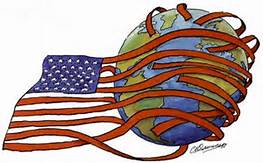
These assumptions by no means exhaust the various fallacies found in the literature on Cold War. When discussing the matter weal with abstractuions and try to isolate to mix and to generalize.  As declasiified U.S. policy documents revealed, the primary threat posed by the soviet Union was not its aggressivessness or its expansionary policy but rather its emergence as alternative pattern and a model for the newly independent countries born from the “decolonization” and its willingness to supply military and economic support to third world regimes that were targets of U.S aggression and subversion. The Soviet Union thus served to deter and restrain U.S imperialism and to restrain its actions in the Third World.
 

Catégories
Archives

United States and the making of Europe

United States and the making of Europe

In early November 1946, the Republicans had won control of both houses of Congress and this unexpected election of an extremely conservative Republican Congress  gave an impetus to the anti-communist crusade inaugurated by Winston Churchill at Fulton, Missouri.  In their campaign of 1946, the Republicans moved over to the offensive and identified all dissent voice with communism which was one of the most potent forces in their electoral victory. It was expected the implementation of  a conservative foreign policy and a strong line against communism and Russia everywhere in the world. This new shift in American foreign policy in the aftermath of WWII was symbolized by The Truman doctrine.

 On January 17, 1947, John Foster Dulles adviser to the State department made a speech urging Western Europe to unite economically around the coal and steel power of the Rhine basin as a bulwark against Soviet Russia. Echoing Winston Churchill, Dulles was trying to establish hurriedly a military bloc of the united States, Britain and France. French diplomatic circles approved Dulles proposition. Dulles sought to restore Germany as bulwark against the Soviet Union and supported her reconstruction by pushing the German industrialists and cartelists to power.  Dulles’s posture was not starnge considering Mr Dulles long pre-war association with the same German interest.

Catégories
Archives

Churchill’s anti-communist crusade and the making of Europe

Churchill’s anti-communist crusade and the making of Europe

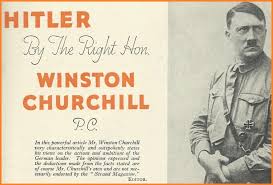
 What is really the origins of the European Union ? To answer this question and to well understand the real origins of Europe,  the mainstream of International relations and European historiography would not be in any way of useful help.  The man who made Europe was the former British warmonger, Winston Churchill who vowed his lifetime, since the infancy of the Bolshevik revolution, for fighting and for ferociously struggling against Communism and its spread first in Europe and then later over the world.  Let us begin by the real origins of the story of what we call today the European Union presented in the media and among the academic circles as the result of a long and a painful history beginning with the utmost willingness of its leaders and its people to unite their efforts within a political and economic framework.

the man who made Europe was Winston Churchill. After launching his anti-communist crusade in his infamous speech of March 5, 1946 at Fulton, Missouri in presence of another warmonger , the American president Harry Truman, and further speeches in pursuit of his aim, Winston Churchill returned to Europe with the main objective to wage his ant-communist crusade within the European continent. Soon he was waging a campaign for united Europe as a means of pushing Russia out of eastern Europe.  As he did in Fulton, Missouri, Churchill gave at the University of Zurich on September 19, 1946, a similar speech bewailing the tragedy of Europe saying « that is all that the Germanic races have got by tearing each other to pieces and spreading havoc far and wide » This meant that the Nazis might not have been so far wrong was followed by an appeal to France and Germany to establish « partnership ». He suggested  the union, as a first step the European states which were out of the « iron curtain »; the implication was clear that the states of east Europe would be brought in eventually. On May 14, 1947, Churchill made it absolutely plain when he said that « our aim is to bring about the unity of all nations of all Europe »; He explained that « the whole purpose of a united democratic Europe is ot give decisive guarantees against aggression ». In short words, Europe must unite with her nearly 400 000 000 people under the American atomic umbrella so that to wage a common anti-communist and racist crusade against inferior races, those of the Soviet Union.


Catégories
Archives

Anti-communism :Early Anti-Reds Crusade

Anti-communism : Early Anti-Reds Crusade

On November 18, 1918, Kolchak overthrow the somewhat democratic regime at Omsk;  The allied intervened in behalf of Admiral Kolchak six months afzetr the armictice six months after any . This Allied intervention was done to a country which no one of the four nations(Britian, france, Japan and America) was at war. Tit constituted an official open and avowed attack on the Soviet government of Moscow Allied support to Kolchak constituted an intervention in a civil war a subsidy of one side against the other. In support of the Allied attempt to, defeat and destroy the Bolshevik government THE British Government gave Kolchak seventy-nine shiploads of supplies arms and equipment for 100 000 men but this army while advancing toward Moscow had been defeated and driven back thousands of miles along the Siberian railway in one of the most disastrous retreats of all time. The red Army captured Kolchak and shot him at Irkutsk. Lloyd George declared in the House of Commons Kolcjak’s effort to suppress the Reds had been aided by the presence of British, French American and Japanese troops east of Lake Baikal based on Vladivostok. The decision of the Allied to send troops to Vladivostok was made in July 1918 On July 2 the Allied Supreme War Council decided for intervention and on the 17th Washington notified the Allies that the United States would join the japanese in landing troops at Vladivostok the  American troops remained in Siberia from mid—1918 to early 1920 But the Japanese stayed two years longer. In south Russia the intervention of France was still inglorious when the government sent 140 000 men to the Odessa region and the Crimea On April 4, 1919 General Denikine was informed that the French would control everything in their zone of occupation including “operations against the Bolsheviks. British intervention in South Russia was concentrated in the Caucasus provinces of Turkestan Georgia and Azerbaijan Denikine was forbidden to undertake any operations in the oil regions thus taken under British control. The British clung to Batum until July 1920

In December 1918 the British and French Governments made a special agreement dividing European Russia into two zones of occupation and influence the British zone including the Cossack regions the Caucasus Armenia Georgia and Kurdistan; the French zone comprised the Ukraine, Crimea and east to the Don river in this area the French made agreements with the White leaders giving them “control of Russian railways for fifty years and of economic and military policy for five years”

After the overthrow of Tsarist regime in Russia, there were some 45 000 to Czech deserters in western from the Austrian armies who had been fighting with the Russians. these men were organized by Thomas A Mazaryck for return to the Western front. In western Siberia suspicion developed between the Soviets and the Czechs. Trotsky ordered all the Czechs to be disarmed on pain of being shot on sight.  While their National Council ordered them to comply they defied the authority of the Soviets and very soon controlled much of the Ural region and nearly all of the trans-Siberian railroad; British, French and American agents encouraged them and under their protection two anti-Soviet governments were  set up. The seizure of effective power in Siberia by the Czechs was received with great satisfaction in Allied governmental circles the Czechs could be used to prevent the return of hundreds of thousands of prisoners of war to the central Powers in the wake of this gain it soon became apparent that the Soviet-Czech clash supplied the one element necessary for an international war against the reds with the hope of military success with such a vast area apparently torn from Soviet hands, it seemed feasible to the Allies to arm white forces for assaults on the central red area.

The Polish Invasion

After the Czechs invasion followed the Polish Invasion immediately after the defeat of Denikin’s greta advance toward Moscow the Red Army was confronted with a major war with Poland from December 22, 1919, to February 4, 1920, the Soviet government addressed three separate appeals for peace negotiations to Poland.

Catégories
Archives

Anti-communism : political roots

Anti-communism : political roots

The Revolution of  1917 inaugurates a new era in the modern history and especially that of the Twentieth century.  With the victory of the Russian, emerged in Europe and later over the world a rival system  and this revolution was the most sweeping in all modern history. We have longtime thought that the last revolution was that of French revolution but by following the course of this revolution, we can quickly form an idea, the French revolution do not change fundamentally the structure of the society and albeit horror and upheavals that occurred during her course from 1789 till the end of the Napoleonic wars, Apart the short interval of Jacobin regime which lasted only one year from 1792 to 1793, the old system of provileges was transferred to a new ruling class the bourgeoisie and the old institutions remain unchanged or only altered somewhat. the former ruling classes survived the Revolution down to this very day. The ancien regime continues till today with a new ruling class. the French revolution affected the western world non at because of her breaking with the past and its vestiges but of her uninterrupted and continual wars which lasted a quarter of century. By trying a comparison between the French and the Russian revolution, we can say without deceiving ourselves that the former was a mild affair and a soft uprising. Indeed, the Russian Revolution had not only toppled middle age the ruling class but all the old landmarks were swept away, the autocrat of all Russia was his throne destroyed the Church lost power its wealth and power the landed nobility ceased to exist All land went to the state and several hundred thousands of the larger farm owners were ruthlessly killed or deported to be distributed while the land was organized into great collective farms.

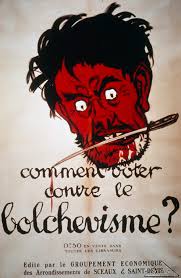
The Bolshevik Revolution deserves the name of revolution for many reasons. First the members of the ruling class had been decimated and had been killed and much larger numbers scattered over Europe as living examples of what Red revolution could do and its leaders could be able to do. All the wealthy families, privileges and power in Tsarist Russia went out and an entirely new leadership drawn from the lower masses took over and ruled solely in the name of the great masses. this is why Bolshevik revolution shook the world and none ever had and divide it as never before  It was in this extraordinary event in the beginning of the twentieth history that resides the political roots of anti-communism.

Catégories
Archives

American totalitarianism (2)

American totalitarianism (2)

.

In the Postwar years, the United States became literally has bees benne firmly established. As in totalitarian Europe, the United States witnessed in the aftermath of the war and during interwar years witnessed the same phenomenon as in Italy and Germany. The slogan « American way of life » was not so different from European racism. during the interwar years, the executive remains dictatorial as during as that during the war enjoyed by Wilson. With Herbert Hoover who came to the presidency in 1929 the executive had been strengthened and became more efficient. Nationalism and chauvinism which had been planted during the war sprouted in terrifying form. Like in Europe, these nationalism and chauvinism had been expressed by widespread hostility to foreigners and to foreign ideas as Well against the political opponents Inside the United States. The American racism and the hunt against all not America, against foreigners and foreign ideas were the same as that which were at the same time widespread in Europe. Aliens suspected of radical ideas and radical notions were rounded up and deported by the scores ; legislatures were « purged » of socialists and states tried to enforce loyalty to political and economic institutions by repressive legislations. like the European racist and chauvinist movements, there was their equivalent in the USA with the Ku Klux Klan which boasted a membership of millions dedicated itself to that notion of Aryan supremacy which European dictators were to take up a decade later in two notorious cases that of Mooney and Billins in California and of Sacco and Vanzetti in Massachusetts in both cases the victims were punished more for their radicalism than for any crimes proved against them.

in the aftermath of the Second World War campaign for loyalty, conformity and hundred-per-cent Americanism reappeared in more virulent as it was the case the first World. Though the Communist party in the United States had at most seventy-five thousand members a number steadily diminishing a clamor arose for outlawing it and for a recklessly indiscriminate investigation of alleged disloyalty especially in the government, the press and the amusement Industry. The movement threatened basic civil rights and the Eugene Dennis secretary of the Communist party had been convicted and sentenced  in order to eradicate any disloyal and specially Communist activities two Committees had been set up : the House Committee on Un-American activities  in the Eightieth Congress and President Truman’s special Civil Rights Committee both of which reported in 1947. In the fall of 1946, Truman issued an executive order creating the President’s temporary commission on Employee Loyalty the following an elaborate machinery was created.  The Civil Service Commission established regional loyalty or subversive were giving hearings before a loyalty board with counsel

Just after Truman’s election for second tenure in 1949 Eleven Communist leaders, the « Politburo » of the party were brought to trial in 1949 on the charge of violing the Smith Act of 1940 which made conspiracy to « advocate and teach » the violent overthrow of the government a crime the jury found all eleven defendants guilty and ultimately they went to jail  Alger Hiss head of the Carnegie Endowment for international Peace went on trial he was charged with perjury. After one jury disagreed another found Hiss guilty and sentenced to five years jail. The government deported a number of aliens charged with Communist activities

Translate »