Catégories
Archives

American and British anti-communist crusade during the WWII

American and British anti-communist crusade during the WWII 1939-1945

On June 22, 1941, German troops invaded Russia’s borders, from the Baltic to the Black Sea. Finland, Hungary Rumania and Italy joined in the War. The first gesture of American and European political establishment was they all were overjoyed cherishing fondly the idea that Nazi Germany represented the only bulwark against Bolshevism and that Hitler was the only western leader having enough power to get rid the whole world of Communism.  Senator Robert A . Taft expressed the state of mind of the American political establishment and also the European appeasers by declaring » A victory for communism would be far more dangerous to the United states than a victory for Fascism » (quoted by Foster rhea Dulles, The Road to Teheran).

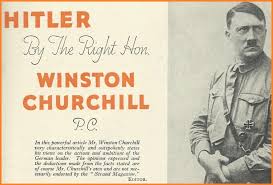
After the invasion and occupation of France, it was Britain’s turn where German bombers had spread fear and terror among Britons. Now, British leaders, those who had helped Hitler and Nazi Germany to relive during the interwar years through the appeasement policy, were well aware that Britain could never defeat Germany without tremendous military aid. Winston Churchill anti-communist crusade was common knowledge, he who had been the power house of Britiain’s huge effort to ward out Bolchevism in Russia during the wars of intervention from 1918 to 1920. in his greatest war-time radio speeches Churchill had said no word of his anti-communist crusade. For the British political establishment, it was matter of life or death and no matter how could be the ally able to save the power, be it communist.

When Hitler invaded Russia, the anti-communist political class both in United States and Europe was convinced that Soviet Russia was doomed to quick conquest and Russia would soon be eliminated from the war and the Soviets would be smashed quickly before aid could arrive. American War Department intelligence officers estimated only one to three months the German campaign in the Soviet Union and this opinion was widespread among military officers in both the United States and Britain they all agreed that the Germans would slash through Russia like a knife through butter and most gave the Reds no more than four to six weeks. This miscalculation was the product of western ideological blindness based on the impression that the Soviet system was a totalitarian system being maintained  only by terror, purges and the so called Gulag system. This false ideas had been deepened by Russia’s poor performance in the early stages of the war with Finland.

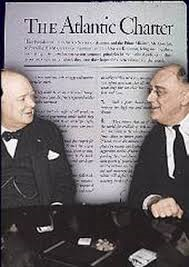
After four weeks of heroic resistance opposed by Russia’s armies to Nazi war machine, which was longer than the minimum life assigned to the Soviet government, American and British leadership began a new stratagem toward Communist Russia shaped at Argentia Conference off Newfoundland on August 9, 1941 at which the Atlantic Charter was drawn up. At this meeting, it was  decided to send a joint mission to Moscow for « help to Russia » through a lend-lease which was only a trickle and ridiculous support regarding the huge military need to resist the Nazi war machine. The Russians had turned the tide at Stalingrad before the alleged American and British help arrived.

the Atlantic Charter must be considered as the first step in the American and British anti-communist crusade during the second World War. This was confirmed by President Roosevelt’s message sent on December 5, 1941, to British Foreign Minister Anthony Eden preventing him of any agreement with Stalin about political agreement concerning Russia’s 1940 boundaries and in eastern Europe..
Catégories
Archives

The myth of Soviet expansionism in Eastern Europe (2)

The myth of Soviet expansionism in Eastern Europe (2)

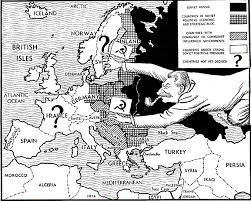
What were the main motives, aims and purposes behind Soviet presence in Eastern Europe ? What did the Soviet they seek to achieve through their presence in Eastern Europe at the end of the Second World War ? The first driving and continuing motive was is security which was also the dominating factor in the outbreak of the so called Cold War. This imperative of security was not new in the Soviet foreign policy and its geopolitical perspective. The cardinal and outstanding motive behind the conclusion of the western propaganda called falsely Molotov-Ribbentrop or Hitler Stalin Pact was in fact a truce having requested by the Soviet Government for a security  purpose aiming at gaining enough time in order to build up its military defence and fortifications. how could anyone who lived the horrible war doubt it ?

Consider briefly the key facts. The Soviet Union had lost roughly 25 million of its citizens, 30 million made homeless and 60 million treated to very degrading and brutalising experience . The Nazis and their satellites destroyed completely or largely 15 large cities 1710 towns and 70 000 villages they burned or demolished 6 million buildings and deprived 25 million people of shelter. they demolished 31 850 industrial enetrprises, 65 000 kilometres of railway track and 41 000 railway stations ; 36 000 postal, telegraph and telephone officies ; 56 000 miles of main highway, 90 000 bridges and 10 000 power stations. The germans ruined 1135 coal mines and 3000 oil wells, carrying off to Germany 14 000 steam boilers, 14 000 turbines and 11 3000 electric generators. the Germans and their satellites sacked 98 000 collective farms and 2890 machine and tractor stations, slaughtered 7 million horses, 17 million cattle, 20 million hogs, 27 million sheep and goats 11 million poultry. the Nazis and their satellites attacked even Soviet cultural institutions by looing and destroying 40 000 hospitals and medical centres, 84 000 schools and colleges and 43 000 public libraries with 110 millions volumes. Some 44 000 theatres were destroyed and 427 museums and more than 2800 churches being wrecked.

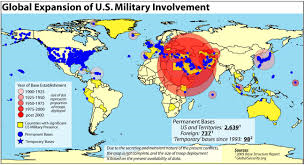
keeping all this figures in mind, we can say that no people in the world who had first suffered as the soviet people have and then won a tremendous military victory would go into eastern Europe merely for the ride. They would be bound to make sure that the invasion gate was closed. Only then could we understand how the Russians feel about their security from future attack through East Europe, since Russia had been invaded three times through eastern Europe  Surely the Reds must know also that frontiers do not mean anything any more. After all those devastations of their country, the Soviets must ask themselves why they were denying the right to buffer zone in Eastern Europe when in the same time they observe  American military bases mushroomed all over the world, located many thousands of miles from home, in Japon and the Philippines, in Greece and Turkey, in the Mediterranean and western Europe all around the Soviet Union. How then can the Russians forget what they have suffered at Germany’s hands through eastern Europe during the next century. Soviet-Union’s security is the beginning of all wisdom in the period after World War II. without a keen understanding of the deepest and strongest psychological posture left by that war all else is vain.  On November 6, 1944, Stalin made it clear in his Party speech in a strikingly statesmanlike utterance recognized that « the only fact which overrides all others is that the aim of Russia is security »

Catégories
Archives

The myth of Soviet expansionism in Eastern Europe (1)

The myth of Soviet expansionism in Eastern Europe(1)

According to dominant belief and widespread ideas in the West, the Cold War was the logical answer to Soviet expansionism in Eastern Europe. Russian-Communist control of East Europe was the basis of western propaganda trying very hard to make believe that the Soviet Union was out to conquer the World. Was there really planned Soviet expansionism in Eastern Europe in the aftermath of the Second World War ?

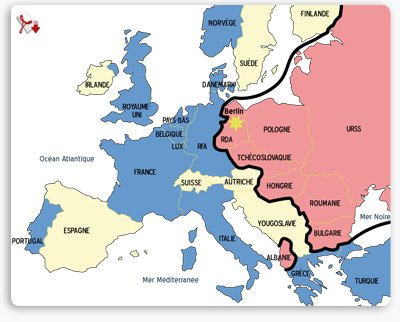
it will be ridiculous to attribute to the Soviet Union any expansionist motives in Eastern Europe in comparison with Hitler’s crazy dream which was really based on  expansionist and imperialist motives. Contrary to France after Sedan defeat and her loss of Alsace Lorraine and Hitler claim to recover German territories lost after the First World War, there was no any claim on the part of the soviet union to recover all the gains of Peter the Great after the conclusion of the treaty of Brest-Litovosk. for example in Poland the Reds had a perfect reason to recover the 8 million Ukrainains and White Russians in east Poland but they never did so.

The Soviet occupation of east Europe was due simply and solely to the outcome of a huge war of aggression waged against the soviet Union. In this onslaught on Russia participated without exception all eastern European countries setting up by the West in the aftermath of the First World as buffer zone against Bolshevism; Finland, Rumania, Hungary and Austria were Hitler’s satellites and his step toward the soviet Union. Some 700 000 Austrians fought in Hitler’s armies and amount of human and matrial damage to Russains . the Finns also fought on several fronts other than their own. the Rumanuians carried out the brunt of the war in the southwestern Ukraine and they massacred 200 000 Soviet citizens in Odessa and troops were captured all the way to Stalingrad. All during 1944 there was no interference in Rumania’s internal affairs. Hungary helped Hitler in his invasion of Russia although the resistance of the Hungarian peasants who were forcibly conscripted by their native masters and sent off to Russia. At the Potsdam Conference Stalin said that the Hungarians had sent 26 divisions against Russia. Even Fascist Italy, as it was the case during the Spanish civil war, did her best by sending several divisions to Russia and Franco Spain contributed the large « Blue Division » Altogether the scores of divisions supplied by Hitler’s satellites contributed their full share to the immeasurable onslaught and devastation in the Soviet Union.

In conclusion, the Soviet Union presence and occupation of eastern Europe was not a planned aggression or the outcome of expansionist and imperialist motives but because of war of aggression waged by Hitler and his satellites to destroy red Russia. there is no other reason . It would be a mere folly on the part of the Soviets and the red Army to stop at their borders and wait. One can remember that at Teheran Conference Roosevelt and Churchill had agreed to concede a sphere of influence to Russia in eastern europe

Catégories
Archives

Cold War : the making up of legend

Cold War : the making up of legend

the Cold War is often misinterpreted as a global rivalry between the United States and the Soviet Union, According to dominant and wide-spread mythology in the West, the so-called Cold War began in the wake of the Second World War when  “pacific” western democracies and generally what we called the “Free world” led by the United States of America were assaulted and threatened by totalitarian system and by the thrust of “ remorseless Soviet expansion”. The binary and Manichean picture surrounding the Cold War reduced the post-war period to a mere rivalry and to a simplistic scheme between the “good and evil ”, a  struggle between two rival superpowers and two antagonizing ideologies competing both for the domination of international affairs and looking each and other for world hegemony. Basically, the Cold War was about the Free World versus Communist slavery and its outbreak was to be attributed to the Soviet Union accused to be the full responsible for the onset of the conflict while the United States was tally innocent. In the face of Soviet aggressiveness and territorial and ideological expansionism the United States had no choice only to protect both its own legitimate security interests and democracy in the various European nations and to cope with a real danger, the spread and the contagion of international communism sponsored by the government of the Soviet Union. At the end of his account Potsdam Conference Mr Truman accused the Soviet Union for “planning world conquest”

These assumptions by no means exhaust the various fallacies found in the literature on Cold War. When discussing the matter weal with abstractuions and try to isolate to mix and to generalize.  As declasiified U.S. policy documents revealed, the primary threat posed by the soviet Union was not its aggressivessness or its expansionary policy but rather its emergence as alternative pattern and a model for the newly independent countries born from the “decolonization” and its willingness to supply military and economic support to third world regimes that were targets of U.S aggression and subversion. The Soviet Union thus served to deter and restrain U.S imperialism and to restrain its actions in the Third World.


Catégories
Archives

Truman Doctrine : containment or Encirclement of Soviet Union and suppression of all revolution ?

Truman Doctrine : containment or Encirclement of Soviet Union and suppression of all revolutions ?

The Truman Doctrine is included in the message read by President Harry Truman to a joint session of the two Houses of Congress on marsh 12, 1947. The official and public reason for Truman message was Greece and turkey where « the Terroristic activities of several thousand armed men, led by communists had created a situation with which the Greek and Turkish Governments could not cope. In order to cope with these « communist subversion », Truman proposed to « help free people to maintain their free institutions and their national integrity against aggressive movements that seek to impose upon them totalitarian regimes »; To Truman, it was matter of life or death to choice between alternative ways of life, between free institutions and the other by terror and oppression  he believed that United States must implement a new policy aiming at supporting free people who are resisting attempted subjugation by armed minorities or by outside pressure » . by concluding his message, Truman asked for four hundred million dollars for Greece and Turkey and authority to detail civilian and military personal to them. In short words, the United States ought to suppress wherever a communiits rebellion developed the United Stets would become the world’s anti-communist, anti-Russian policeman.

Catégories
Archives

United States and the making of Europe

United States and the making of Europe

In early November 1946, the Republicans had won control of both houses of Congress and this unexpected election of an extremely conservative Republican Congress  gave an impetus to the anti-communist crusade inaugurated by Winston Churchill at Fulton, Missouri.  In their campaign of 1946, the Republicans moved over to the offensive and identified all dissent voice with communism which was one of the most potent forces in their electoral victory. It was expected the implementation of  a conservative foreign policy and a strong line against communism and Russia everywhere in the world. This new shift in American foreign policy in the aftermath of WWII was symbolized by The Truman doctrine.

 On January 17, 1947, John Foster Dulles adviser to the State department made a speech urging Western Europe to unite economically around the coal and steel power of the Rhine basin as a bulwark against Soviet Russia. Echoing Winston Churchill, Dulles was trying to establish hurriedly a military bloc of the united States, Britain and France. French diplomatic circles approved Dulles proposition. Dulles sought to restore Germany as bulwark against the Soviet Union and supported her reconstruction by pushing the German industrialists and cartelists to power.  Dulles’s posture was not starnge considering Mr Dulles long pre-war association with the same German interest.

Catégories
Archives

Churchill’s anti-communist crusade and the making of Europe

Churchill’s anti-communist crusade and the making of Europe

 What is really the origins of the European Union ? To answer this question and to well understand the real origins of Europe,  the mainstream of International relations and European historiography would not be in any way of useful help.  The man who made Europe was the former British warmonger, Winston Churchill who vowed his lifetime, since the infancy of the Bolshevik revolution, for fighting and for ferociously struggling against Communism and its spread first in Europe and then later over the world.  Let us begin by the real origins of the story of what we call today the European Union presented in the media and among the academic circles as the result of a long and a painful history beginning with the utmost willingness of its leaders and its people to unite their efforts within a political and economic framework.

the man who made Europe was Winston Churchill. After launching his anti-communist crusade in his infamous speech of March 5, 1946 at Fulton, Missouri in presence of another warmonger , the American president Harry Truman, and further speeches in pursuit of his aim, Winston Churchill returned to Europe with the main objective to wage his ant-communist crusade within the European continent. Soon he was waging a campaign for united Europe as a means of pushing Russia out of eastern Europe.  As he did in Fulton, Missouri, Churchill gave at the University of Zurich on September 19, 1946, a similar speech bewailing the tragedy of Europe saying « that is all that the Germanic races have got by tearing each other to pieces and spreading havoc far and wide » This meant that the Nazis might not have been so far wrong was followed by an appeal to France and Germany to establish « partnership ». He suggested  the union, as a first step the European states which were out of the « iron curtain »; the implication was clear that the states of east Europe would be brought in eventually. On May 14, 1947, Churchill made it absolutely plain when he said that « our aim is to bring about the unity of all nations of all Europe »; He explained that « the whole purpose of a united democratic Europe is ot give decisive guarantees against aggression ». In short words, Europe must unite with her nearly 400 000 000 people under the American atomic umbrella so that to wage a common anti-communist and racist crusade against inferior races, those of the Soviet Union.


Translate »