Catégories
Blog capitalism

BINARY VISION : WESTERN DEMOCRACY VERSUS AUTHORITARIAN CHINA ? (Part I)

President Biden will convene a mix of established democracies and “emerging” ones to summit for Democracy that will take place December 9 and 10. Biden had promised such an event early in his presidency as an answer to Trump and what he and other Democrats see as his predecessor’s undermining of democratic values and American leadership. The two-day gathering of world leaders, human rights groups and others will take place just short of the first anniversary of the Jan. 6 attack on the U.S. Capitol by a pro-Trump mob seeking to overturn Biden’s election victory and install Trump for a second term. Putin will be invited to the summit but it is not clear whether Biden will include other leaders such as Turkish President Recep Tayyip Erdogan or Hungary’s Viktor Orban.

Biden’s summit for democracy against Trump’s coup

Both summits will bring together heads of state, civil society, philanthropy, and the private sector to “speak honestly about the challenges facing democracy so as to collectively strengthen the foundation for democratic renewal. On his European trip, which was capped by a summit with Putin, Biden said he wanted to prove that democracies can deliver better results for their people than autocracies, despite the sometimes slow and messy process of reaching compromise.

CHINA’S « AUTHORITARIANISM » IN THE CORSSHAIRS OF THE SUMMIT FOR DEMOCRACY

The Summit for Democracy will galvanize commitments and initiatives across three principal themes: defending against authoritarianism, fighting corruption, and promoting respect for human rights. The event is likely to be framed in large part as an attempt to unify democratic governments in opposition to China and its efforts to spread its economic, political and military influence. Biden focused much of his first foreign trip as president on a push to confront China. Meeting with the leaders of Group of Seven democracies and with members of the European Union and NATO in June, Biden sought to rally those alliances to confront Beijing. China is also mentioned specifically in Biden’s original campaign document pledging to hold the summit, in particular Beijing’s efforts to restrict free speech through control of technology and social media. Technology companies — which benefit from the fruits of democracy — should make concrete pledges for how they can ensure their algorithms and platforms are not empowering the surveillance state, facilitating repression in China and elsewhere,” Biden urged on his campaign website.

The event was initially envisioned as a marquee gathering, probably in Washington, where democratically elected leaders would symbolically stand together in defense of free elections, free speech and other shared values. Biden has often described his view of foreign affairs as a battle for the future between the world’s true democracies and authoritarian regimes.

When authoritarian regimes point out our imperfections, I think that misses the point, because we’re not claiming perfection,” the official said. “The summit is not about perfection. What we’re saying is, we don’t shrink from scrutiny. We are always trying to use our system to improve ourselves, and because of that, I think it gives democracy a kind of powerful resilience that other systems don’t have.”

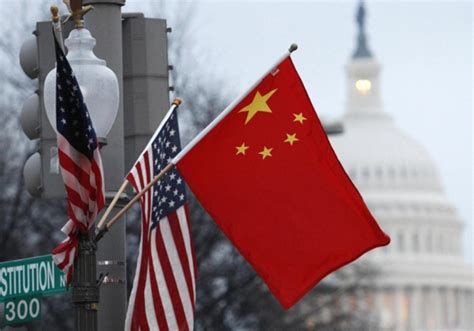
US and China’s flags

To be continued

PART II Why should be rejeted the binary vision of democratic West and authoritarian China ?

Catégories
Archives

French and Bolchevik Revolutions : Sociological and comparative study

French and Bolchevik Revolutions : Sociological and comparative Study

Before investigating the sociological background of revolutions, we have to begin by this unavoidable and redoubtable question: What is a revolution? When we try to study the history of the three famous revolutions in modern time, the American, the French and the Russian, the mainstream and classical theories become fully interested by their only political posture, taking into account the struggle of the main political and social forces and protagonists for conquest and possession of power and the conditions and the means of its exercise. For these mainstream theories, a revolution is essentially the overthrow of the old ruling class and its replacement by a new one doomed to shape its own political system and its own political institutions. However, the weakness of the mainstream theories of revolution reside in the fact that they put aside and have been their neglect of the main factor in revolutionary phenomenon, the social background to the revolution or more precisely the structure of property and the mode of appropriation of the means of production. It is that regime of property and its role in the social distribution of wealth among the classes which determine fundamentally and without appeal the nature, the scope and the course of events of each revolution. That why we have to be careful by employing the terminology and the word revolution, because the mainstream theories of revolution use the term revolution to designate a mere political change without touching to the structure of property and the mode of appropriation of the means of production. It will be this pertinent criteria i.e; the property and the class at which benefit which constitutes the background of revolution. For this purpose, in every study on revolution, we have first to investigate the driving force within a revolution, its projects and its aim in the property field and its attitude vis à vis the question the mode of appropriation of the means of production.

One object of this study has to suggest that what we call the French revolution was not at all a genuine and real revolution. Marxist historians called it “bourgeois revolution” but here the use of term revolution is inappropriate because the bourgeoisie made her best for the conquest of the political power without bringing any fundamental change to the structure of property and the mode of appropriation of the means of production. At the beginning of the French revolution and during her course many new elements it is true, emerged but they formed part of the elites of the ancient régime; We must to recognize that what we call French revolution is nothing but a triumph for the conservative propertied, land-owning classes that The French Revolution was directed by middle and for middle class interest . Her leadership was propertied leadership from beginning to end. Ruffians they were middle-class ruffians Even the most advanced political and radical movement of the revolution, Babeuf’s Conspiracy of the Equals was middle class organization.

Translate »