Historian and author Dr. Gerald Horne is right and deserves to be known and read by naming the things by their names as saying “ The crisis goes beyond just the media, Horne argued, saying it is a crisis of “the entire capital system” and is part of “the inevitable demise of capitalism.” In fact, if capitalism survived its periodic and cyclical crisis as depicted by Marx in his seminal work, the Capital, it is because of two determinant factors,(1) imperialism and colonialism in order to control and to steal the huge wealth of mineral resources outside EUROPE and North America, (2) the manipulation and the reap of the masses by political propaganda researched and as very well explained by these two authors, the Freud’s nephew, Edward Bernay in his seminal book published in 1928, “propaganda,” with this very telling subtitle, “how manipulating public opinion in democracy” and Serge Tchakotine, from Russian descent, in his voluminous book “the reap of the crowd by political propaganda”. In this time, the former colonizing peoples and regions all over the world, in particular in Africa, are realizing and are becoming aware that the main cause of their chronic under development is due to the plunder and the theft of their underground riches, the very precious mineral and agricultural wealth and by the way, the new generation in Africa is waking up, determined to accomplish a second struggle for independence as we have seen last year during the second summit Russia Africa at St Petersburg with the very historical speech of the Burkinabe young president Ibrahim Troaré calling the African people to take their destiny in their hands without waiting for former colonizers’s aid. When it comes to the manipulation of the masses by political propaganda, capitalism shouldn’t survive so long without manipulating the human psychology by the mass media of communications(MMC) which always were the monopole of under the control of big capital and financial corporations whose main objective consists of manipulating and influencing the choice of the voters called to vote in spite of themselves for the same ruling class and for its corrupt political establishment. The emergence of internet early XXI century giving place to diversification of sources of information and analysis, the monopole of political propaganda by the ruling class and the political establishment has been undermined, that is why the western governments in Europe and North America were eager since 20 years to restrict the so called free of speech, to control internet and to silence the dissident voices through legislations witnessed by the latest European legislation called Digital Acts Services( DAS) promoted by the French commissioner André Breton.
Étiquette : mass média
President Biden will convene a mix of established democracies and “emerging” ones to summit for Democracy that will take place December 9 and 10. Biden had promised such an event early in his presidency as an answer to Trump and what he and other Democrats see as his predecessor’s undermining of democratic values and American leadership. The two-day gathering of world leaders, human rights groups and others will take place just short of the first anniversary of the Jan. 6 attack on the U.S. Capitol by a pro-Trump mob seeking to overturn Biden’s election victory and install Trump for a second term. Putin will be invited to the summit but it is not clear whether Biden will include other leaders such as Turkish President Recep Tayyip Erdogan or Hungary’s Viktor Orban.

Both summits will bring together heads of state, civil society, philanthropy, and the private sector to “speak honestly about the challenges facing democracy so as to collectively strengthen the foundation for democratic renewal. On his European trip, which was capped by a summit with Putin, Biden said he wanted to prove that democracies can deliver better results for their people than autocracies, despite the sometimes slow and messy process of reaching compromise.
CHINA’S « AUTHORITARIANISM » IN THE CORSSHAIRS OF THE SUMMIT FOR DEMOCRACY
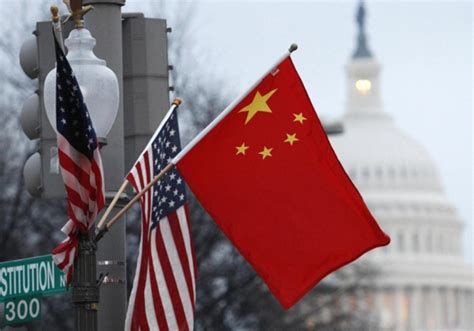
The Summit for Democracy will galvanize commitments and initiatives across three principal themes: defending against authoritarianism, fighting corruption, and promoting respect for human rights. The event is likely to be framed in large part as an attempt to unify democratic governments in opposition to China and its efforts to spread its economic, political and military influence. Biden focused much of his first foreign trip as president on a push to confront China. Meeting with the leaders of Group of Seven democracies and with members of the European Union and NATO in June, Biden sought to rally those alliances to confront Beijing. China is also mentioned specifically in Biden’s original campaign document pledging to hold the summit, in particular Beijing’s efforts to restrict free speech through control of technology and social media. “Technology companies — which benefit from the fruits of democracy — should make concrete pledges for how they can ensure their algorithms and platforms are not empowering the surveillance state, facilitating repression in China and elsewhere,” Biden urged on his campaign website.
The event was initially envisioned as a marquee gathering, probably in Washington, where democratically elected leaders would symbolically stand together in defense of free elections, free speech and other shared values. Biden has often described his view of foreign affairs as a battle for the future between the world’s true democracies and authoritarian regimes.
“When authoritarian regimes point out our imperfections, I think that misses the point, because we’re not claiming perfection,” the official said. “The summit is not about perfection. What we’re saying is, we don’t shrink from scrutiny. We are always trying to use our system to improve ourselves, and because of that, I think it gives democracy a kind of powerful resilience that other systems don’t have.”