Catégories
Archives

Natural right and imperialism

Natural right and imperialism

Natural right had been used by western imperialism as ideological weapon  in order to conquer territories and to dismember old empires in Europe( Spansih and Ottoman empires) and in Asia (Chinese and Persian empires). Broadly defined, the concept of natural right is that of a pretended right conferred by the « Nature » from which is deduced a whole system named « natural law » existing prior to or independently of political society. The idea of « natural rights » originated in natural law, used as well by the Greek and Roman and Stoicism as by different schools of politico-legal thought of Middle age onwards, in order to justify rights of property, civil liberties and the rise of democratic thought rights of popular sovereignty. Philosophers of the eighteenth century brought the concept of natural right into the center of political thought used then by the bourgeoisie and the rising classes as ideological weapon against the monarchies and the system of privileges.

Catégories
Archives

Tools of totalitarianism : domesticating and manipulating the masses

Tools of totalitarianism : domesticating and manipulating the masses

The rising of the masses began in teh eighteenth century and played a key role during the two révolutions, American and French révolutions. Historical research reveraled the active participation of the masses in the success of american and french revolutionaries by overthrowing the English rule in teh America and the ancien régime in France. the main surveys made those who had studied the social and political dynamic of the French revolution  designate thiose who played a key role in the overthrowing of teh monarchy  by difefrent terms such as Mathiez ‘s enragés », Guerin’s  « bras-nus » a term coined initially  by  Michelet, Albert Soboul’s Sans culottes’s, Rudés « menu peuple », Richard Cobb’s « armées révolutionnaires »  All these terms have been coined in order to designate the revolutionary crowds emerged during the french revolution, the lower starta of the urban populace to be distinguised from the poorer elements of the rural popualtion.

Catégories
Archives

Tools of totalitarianism : Education and indoctrination

Tools of toatliatrianism : Education and Indoctrination

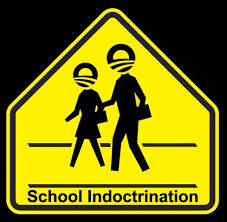
The idea of education or rather in the long run of indoctrination of the people makes its first appearance in the late eighteenth century under the two American and French revolutions. In order to cope with the new situation induced by the rising of Masses in the course of the American and French revolution. For the revolutionary leaders, it was of absolute necessity to educate and to indoctrinate the people making him more conscious of its own interests. The two eminent promoters of a system of public and compulsory education were Condorcet and Robespierre whose the objective was the defense of the new Jacobin Constitution conceived as device in favour of the people against its enemy, the « rich » who possess the financial means to hire mercenary scribblers to mislead the people. To give to this latter the weapon with which I could fight, the people must be educated and the scribblers must be silenced and even to be sued and to be brought in Justice. Robespierre ‘s aim was  to ally the people itself with the Convention and the Convention make in turn use of the people

Catégories
Archives

Tools of totalitarianism : fight against the popular sovereignty

Tools of totalitarianism : fight against the popular sovereignty 

The rise of the masses in History was expressed by their claims for participation and involvement in political activity. But the fear of men of property was accompanied by the erection of barriers and sophisticated and legal hurdles aiming at depriving the masses of any political e against the popular sovereignty expression into the power arena.  The strategy of fight initiated by the new ruling class in the United States and in France began early even though the ink of the Declaration of Rights was not yet dried. Albeit their “Declaration of rights”, the Americans revolutionaries and the French Third Estate tried to usurp the popular victory and they in fact did all their best so that to deprive the real actors who were at the origin of the success of the first two democratic revolutions of modern world. The American and French Declaration begins with the assertion that men are free and equal in rights. But when it was the matter of expressing into the political arena this equality of rights, the new usurpers had made a full volte face when they deprived the people of their rights to be source of all sovereignty which reside henceforth in this vague and lumber-room the so called the nation.  This change in political ideals has been expressed in the clearest language on the eve of the elections in France to the States-General when Sieyès famous “qu’Est-ce que le Tiers-Etat” placed the source of the sovereignty not in that of the people but in that of the nation identified with the new privileged and propertied class, the Third Estate.

During the discussions about a nex cosntitution for the United States, the framers began their fight against democracy and popular participation in political activity when for example, Sherman opposed the election by teh epople who « should have as little to do with governement as possible » and for gerry for whom the « vils of the country flowed from an excess of democracy »

Catégories
Archives

Tools of Totalitarianism : state of exception, state of emergency

Tools of totalitarianism : state of exception, state of emergency

The origins of the state of exception or state of emergency can be traced back to the two American and French Revolutions. After the American Declaration of Independence, the Young American republic was to cope with Shays’s Rebellion of 1786 which was the trigger and the principal motive for elaborating of a constitution and provisions allowing the executive the instauration of the state of exception and the state of emergency. In France, a  » Revolutionary » Government had been set up by the Jacobin National Convention provided with exceptional measures of “public safety” to meet the needs of both war outside and chaotic situation inside especially  after the new situation provoked by General Dumouriez’s defection in March-April 1793 and by a next crisis of August-September giving way to serie of exceptional measures such as the decree of the levée en masse, the Law of Suspects, the control of food prices and the establishment of the armées révolutionnaires. such measures both extraordinary and exceptional were devised in order to deal with critical situations but their control contrary to the American constitution, remained strictly within the hands of the Assembly itself and did not, in themselves entail any strengthening of the executive at the expense of the legislature and these measures were perfectly compatible with the provision of the Constitution proclaimed by the new Jacobin majority in June 1793.

Catégories
Archives

European totalitarianism (2)

European totalitarianism (2) 

In the aftermath of the First World War, the main concern of the victorious powers was less the peace in itself that of how dealing with this new and dangerous threat which was the Bolshevism. Indeed, Versailles’s peace-settlement imposed by the major victors (USA, Britain, France, Italy) was dominated by  two main considerations  : First how the surviving dictatorial regimes in Europe and in the USA  would deal with  the new revolutionary regime in Russia and second how to avoid its spread and its contamination of West European countries, the old and new ones,  by an alternative revolutionary regime, that of Bolshevism.  In short, the main preoccupation of the Victor powers during Versailles negotiations was how making the world safe from Bolshevism  and how re-mapping Europe domestic politics either within the Victor countries as well within the new states in eastern Europe those which had been built on the overthrow of the Russian and Habsurg empires. The  priority for the Allied was  to thwart Bolchevism through direct intervention into Russian territory or by setting up a mercenary and proxy troops, the « Whites » in order to stamp out the new revolutionary Bolshevik regime. The second thing was to redraw the map of Europe by creating proxies regimes and proxies states around dedicated to isolate it behind a « quarantine belt » (cordon sanitaire), in the contemporary language of diplomacy) of  anti-communist states built both on the spoils of the formerly Russian lands and on those of Austro-Hungary empire. This « quarantaine belt » went from north to South : from Finland an autonomous region allowed by lenin to secede; three new little Baltic republics(Estonia, Latvia, Lithuania) proxies states created ex-nihilo having any historical precedent ; Poland restored to independent statehood after 120 years and an enormously enlarged Rumania in size doubled by accessions from the Hungarian and Austrian lands of the Habsburg empire and ex-Russian Bessarabia. The attempt to form proxies states into the Caucasus failed because of the support brought by an anti-communist but  revolutionary Turkey to revolutionary Bolshevik Russia. The attempt to create proxies states such as Armenian and Georgian proxies states setting up after Brest Litowosk and attempts under the British to detach oïl-rich Azerbaijan, had failed after the victory of the Bolsheviks in the Civil War of 1918-1920 and the Soviet-Turkish treaty of 1921;  Other proxies states had been created out of nothing like Czechoslovakia and Yugoslavia combinations.

Catégories
Archives

European totalitarianism (1)

European totalitarianism (1) 


 European totalitarianism can be traced back first to the « total war » waged by the French armies during the Revolution, to Bonaparte dictatorship and to his nineteenth century’s offshoot the Bonapartism embodied by Napoleon III and Bismarck and then to the First World War which played a key role in the passage from Bonapartism and dictatorship with strong executive and strong government to totalitarianism properly so called.    Indeed, after the outbreak of the First World War, western totalitarianism has been progressively set up step by step when European governments transformed their civil societies into militarized societies. Henceforth European governments played not only a role in the management and the direction of military operations but actively intervened in all domains of social and material, by controlling economic production, nationalizing factories determining production targets, allocating manpower and resources During the Fist World War, European governments arrogate to themselves the right of life and death on their own citizens by imposing conscription introduced to strengthen military forces. All civil liberties and the privileges of the habeas corpus had been put aside by implementing press censorship and imposing strict punishments in order to silence any dissident voice. In order to control public opinion and to mobilize the masses for war, European government waged a huge psychological war and made extensive use of propaganda inventing a new device and new techniques in the mental manipulation.

Catégories
Archives

Rise of Bonapartism (2)

Rise of Bonapartism (2)

Behind the The rise and the srenghtening of Bonapartism after the Napoleonic wars in europe lay major changes and  radical innovation and the major and determinant fact the emergence of the working-xclass as an indepdendent and self-concious force in politics in Britina and in France. urban discontent was universal in the West a proletarian and socialist movement was chiefly visible and palpable in the countries biritna and France  because of Jacobinism and babouvism France possessed the was more predisposed and rmorre ready for revolution  working class or urban revolution and socialism appeared very real dangers in Western Europe. Radical democracy had made major advances both in the USA Under President Andrew Jackson(1829-37) as in Europe where the European revolution rehained its momentum. For the mass of the common people the problem pushed them inevitably towards social revolution.  their hatred of the rich and the greta gave their desperation eyes and a purpsoe were concious of taht purpose.  the greta awakening provoked by the jacobin model had taught them that common men. this was the « spectre of communism » which haunted Europe the fear of « teh proletariat » which affected not merely with the revolution which broke out in the firts months of 1848 was not a social revoltuion merely that it involved and mobilized all social classes. it was the rising of the labouring poor.

In 1848, Revolution triumphed In France and the republic was proclamied on 24 February. during the firts months of the springtilme of people all governements were swept away or reduced to impotence. In France where the revolution succeded rapidly  in France the firts Landmark of conservative revival was the lecetion of April in which universal suffarge teh second Landmark was the isolation and defeta of the revolutionary workers in paris defeated in the June insurrection where the urban plebeians or more the enw proletarians came within the ardius of jacobin, socialist or democratic republcan idleogy they became a political force at least as rioters.

As Thermidorean reaction during the French revolution and its subsequent napoloenic miliatry dictatorship which had destroyed the Jacobin Revolution and its ideals, the dream of equality liberty and fraternity, Louis Napoleon coup d’état of dcemeber 1851 played the same role than that of his illustrous uncle by destroying the dream of popualr democracy and the people rising to shake off oppression after 1848 Revolution in franxce and in Europe too. The revolution of 1848 in France was not merely a brief historical episode without consequence. it was, like the jacobinism, the achievment of real popualr democracy with large popualr political participation by contrast with the cosntitutional monarchy where barriers and institutional hurdles had been erceted based on property or educational quallifications for the voters and where there wasthere was only 168 000 voters. the Jacobin experience servend as set of models and patetrs for popualr upheavals during the post-napoleonic period in europe and over the world.

Catégories
Archives

Rise of Bonapartism (1)

Rise of Bonapartism (1)

After the collapse of the democratic Republic of the Year II created with the aid of the sans-culottes, succeeded the property-owners’ republic of Thermidor and the Directory, giving way to Bonaparte and his military dictatorship. With the accession of Robespierre and the Jacobins to power, the French Revolution took  a new pace, that of popular democracy and the achievement in concreto of what really means the concept of  popular sovereignty. In this respect, the Jacobin Declaration and Constitution of 1793 marked a turning-point not only in French political history but in that of the world. Here for the First time in history a nation was provided (on paper at least) with a system of government under which all male citizens had the right to vote and a huge measure of control over its representatives and rulers. But following Thermidor reaction, after the fall of Robespierre, Jacobinism and popular Jacobinism died in 1797 when Augereau dispersed the Jacobin mob  Two year later, Bonaparte  ordered his grenadiers to disperse the Five Hundred in 1799 and with it, the first democratic and popular democracy was over and a new began in the history of France, that of Bonaparte dictatorship and the rise of a new form of modern dictatorship, the Bonapartism.

Catégories
Archives

American totalitarianism (2)

American totalitarianism (2)

.

In the Postwar years, the United States became literally has bees benne firmly established. As in totalitarian Europe, the United States witnessed in the aftermath of the war and during interwar years witnessed the same phenomenon as in Italy and Germany. The slogan « American way of life » was not so different from European racism. during the interwar years, the executive remains dictatorial as during as that during the war enjoyed by Wilson. With Herbert Hoover who came to the presidency in 1929 the executive had been strengthened and became more efficient. Nationalism and chauvinism which had been planted during the war sprouted in terrifying form. Like in Europe, these nationalism and chauvinism had been expressed by widespread hostility to foreigners and to foreign ideas as Well against the political opponents Inside the United States. The American racism and the hunt against all not America, against foreigners and foreign ideas were the same as that which were at the same time widespread in Europe. Aliens suspected of radical ideas and radical notions were rounded up and deported by the scores ; legislatures were « purged » of socialists and states tried to enforce loyalty to political and economic institutions by repressive legislations. like the European racist and chauvinist movements, there was their equivalent in the USA with the Ku Klux Klan which boasted a membership of millions dedicated itself to that notion of Aryan supremacy which European dictators were to take up a decade later in two notorious cases that of Mooney and Billins in California and of Sacco and Vanzetti in Massachusetts in both cases the victims were punished more for their radicalism than for any crimes proved against them.

in the aftermath of the Second World War campaign for loyalty, conformity and hundred-per-cent Americanism reappeared in more virulent as it was the case the first World. Though the Communist party in the United States had at most seventy-five thousand members a number steadily diminishing a clamor arose for outlawing it and for a recklessly indiscriminate investigation of alleged disloyalty especially in the government, the press and the amusement Industry. The movement threatened basic civil rights and the Eugene Dennis secretary of the Communist party had been convicted and sentenced  in order to eradicate any disloyal and specially Communist activities two Committees had been set up : the House Committee on Un-American activities  in the Eightieth Congress and President Truman’s special Civil Rights Committee both of which reported in 1947. In the fall of 1946, Truman issued an executive order creating the President’s temporary commission on Employee Loyalty the following an elaborate machinery was created.  The Civil Service Commission established regional loyalty or subversive were giving hearings before a loyalty board with counsel

Just after Truman’s election for second tenure in 1949 Eleven Communist leaders, the « Politburo » of the party were brought to trial in 1949 on the charge of violing the Smith Act of 1940 which made conspiracy to « advocate and teach » the violent overthrow of the government a crime the jury found all eleven defendants guilty and ultimately they went to jail  Alger Hiss head of the Carnegie Endowment for international Peace went on trial he was charged with perjury. After one jury disagreed another found Hiss guilty and sentenced to five years jail. The government deported a number of aliens charged with Communist activities

Translate »