Catégories
Non-classé

Comment on Hersh’s Gaza turning into Hiroshima

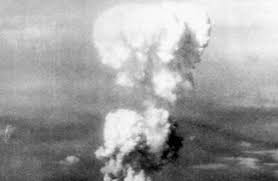
What Sy Herch is reporting is not a scoop that Israel would turn Gaza into Hiroshima. Over the past two decades Palestinian territories had already been turned into Hiroshima without Little Boy atomic bomb following every Israeli onslaught. Palestinian territories and in particular Gaza are the only sites turned into Hiroshima as the countries victims of the US bloody wars since the end of the WWII have already been turned into Hiroshima. It is worth reminding that the launch of atomic bombs on August 6 and 9, 1945 on Hiroshima and Nagasaki were made on experimental basis serving to produce more powerful atomic bombs destined to wipe out 76 major cities inside the USSR. In the collective imagination, Hiroshima became a legend making believe that atomic weapon is most destructive and the most deadly than conventional weapons, which it is not true. One can remember that Tokyo months ago before Hiroshima and Nagasaki had been turned into Hiroshima without atomic bomb. German city, Dresden, had been turned into Hiroshima without atomic weapon. By using biological weapons, Agent Orange containing dioxin, Napalm and other biological weapons prohibited by the Biological weapons Convention(BWC) created in 1972.  In Bao Loc (Lâm Dông Province), a welcoming centre for dioxin-poisoned children (an orange agent sprayed through the Vietnamese forests during the war. Gaza is the latest territory turned into Hiroshima but all countries invaded and attacked by the US and its vassals chiefly in the Middle have already been turned into Hiroshima. Hersh who witnessed the US bloody and destructive wars is aware that Gaza is not the only territory turned into Hiroshima and the carpet bomb launched by B52 on has already turned invaded and attacked countries mostly in the middle East into Hiroshima. One final remark about Sy Herch’s article, it seems to be one -sided as he is reporting without any critical distance of what he was told by his interlocutors who are participating in western Israeli psychological warfare against Palestinians.

Catégories
Blog

What was behind the atomic attack against Japan ?

75th ANNIVERSARY OF HIROSHIMA AND NAGASAKI

What was behind the atomic attack against Japan?

At the occasion of the 75th anniversary of bombing the two Japanese cities Hiroshima and Nagasaki on August 6 and 9, 1945, the debate over the use of nuclear arms against Japan is not yet close. The official story propagated by conventional historiography assumes that the US resorted to the atomic bomb against Japan in order to put an end to the WWII, to save American lives and to alleviate the suffering of the Japanese people. Eminent historians shunned the dominant these rejecting the humanitarian motivation highlighting rather the geopolitical reasons behind the atomic attack against Japan.

By April, 1945, Japanese leadership had no choice but to surrender as American forces had gained a firm foothold on Okinawa. The combined US-Australian island-hopping attack from the Solomons, near New Guniea, all the way to Japan had begun in 1943. By April 1945 it had reached Japan’s Okinawa, close to three months before the deadline Moscow had set for its attack on Japan.

Through the Allied intelligence operations, in particular Australian Military forces, the US leadership knew all about the imminent Japan surrender. There are leakages of information and interception of Japanese signals which contained details of Allied ‘plans for certain operations in the Philippines’ and details of recent Australian army intelligence estimates of Japanese strength there. There were messages from Moscow being passed on to the Japanese consulate in Harbin, northern Manchuria, and then on to Tokyo and among those messages were those US plans for the island-hopping attack on Japan.

From then, the Japanese Foreign Ministry established contacts with Moscow to broker a peace agreement. The emperor also still pinned hopes on those contacts with Moscow while US requested unconditional surrender. That wishful thinking only ended on August 8 when the USSR formally declared war on Japan and immediately began to attack into Japanese-occupied territories in Manchuria and elsewhere. On August 9 the US nuclear bombed Nagasaki. Six days later Japan surrendered unconditionally to the Allied forces.

Non conventional historical findings show irrefutably it was the prospect of Soviet war against Japan more than the nuclear attacks that forced Tokyo to surrender. After Nazi Germany’s defeat, Soviet forces turned toward Japan with the aim to gain some lost territories – southern Sakhalin and the Kuril islands. It was only hours from landing Soviet troops at Rumoi for the occupation of Hokkaido when Truman reportedly said the troops should go to take some traditionally Japanese islands in the Kurils close to Hokkaido, a deed which Tokyo still uses to refuse a peace treaty with Moscow.

Catégories
Blog Histoire

For which was meant US Atomic bomb?

75 years ago

For which was meant US Atomic bomb ?

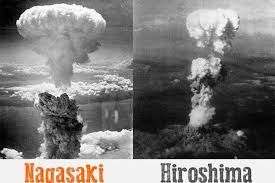
On August 6,1945, Japan’s Hiroshima was bombed by US atomic bomb, nicknamed “Fat Man,” exploded with a force equivalent to 21 kilotons of TNT fired an area that covered three square miles, killing instantly 140000 civilians. On August 9, Nagasaki was bombed by the plutonium core atomic bomb the U.S. dropped that day from the B29 Bockscar, captained by Major Charles Sweeney, killing instantly around 70000 civilians. Despite the Nagasaki bomb was more powerful than that of Hiroshima, material and human damage was limited by the fact that the bomb missed its target and that the mountains surrounding Nagasaki, which is located in a valley, contained the blast. However, in Urakami Valley, where the bomb landed, nearly 70 percent of the population perished.

In the aftermath of the WWII, politicians, military and historians have challenged the official narrative of Truman’s administration that the launch of atomic bomb was aimed at “saving American lives” Admiral William D. Leahy, Truman’s personal Chief of Staff, was critical of using the atomic bombs saying the U.S. “adopted an ethical standard common to the barbarians of the dark ages.” Even the National Museum of the U.S. Navy in Washington, DC acknowledges that the vast death and destruction wreaked by atomic bombings “made little impact on the Japanese military.

Truman even knew very well, through the intelligence reports, Japanese leadership were looking for honorable conditions to surrender. Truman was aware of civilians that were becoming increasingly demoralized for lack of food and energy supplies. To this must be added the huge destruction as the U.S. had firebombed and largely destroyed more than 100 Japanese cities, leaving millions homeless.

The question is not whether the atomic bombs were militarily or morally justifiable—they clearly were not. The question is why Truman chose to use them when he knew the end of the war was imminent and said so repeatedly and knew they were putting humanity on a glide path to annihilation.

Some studies point out that the U.S. wanted to test the uranium and plutonium-type bombs to show off their military muscle and take the advantage in the post-World War II diplomacy. As historians have increasingly come to realize, Truman had been obsessed with the Soviet Union since April 13, 1945—his first full day in office. Truman’s confrontation with Foreign Minister Vyacheslav Molotov on April 23, in which he erroneously accused the Soviets of having broken their Yalta promises, marked how dramatically the wartime alliance between the U.S. and the U.S.S.R. had deteriorated in the 11 days since Roosevelt’s death.

James Byrnes, who became Truman’s Secretary of State in early July but had been his most trusted advisor since his first day in office, and Gen. Leslie Groves, the driving force behind the Manhattan Project, both asserted that the Soviet Union loomed as the real target behind the bomb project. Groves stated on another occasion, “There was never from about two weeks from the time I took charge of the Project any illusion on my part that Russia was our enemy, and the Project was conducted on that basis.”

Byrnes told three visiting scientists in late May that the bomb was needed to reverse Soviet gains in Eastern Europe. The future Nobel laureate physicist Joseph Rotblat who quit the project a few months later, when he said in March 1944, “You realize of course that the main purpose of this project is to subdue the Russians.” Some studies point out that the U.S. wanted to test the uranium and plutonium-type bombs to show off their military muscle and take the advantage in the post-World War II diplomacy.

Catégories
Archives

The myth of Soviet expansionism after WWII(4)

The myth of Soviet expansionism after WWII(4)

 Before the use of the atomic bomb by the United States, before the creation of Nato, before Western and West German rearmament before the spiralling  and debilitating arms race had seized hold of Europe, the Soviet Union and communism were adequately  and effectively « contained » by the greater and more vastly extended power of U.S.  And this was fully realized by by the very man who was the foremost proponent of a rearmed and re-miliatrized world who attempt to to revive the military will of atom-blasted Japan. In March 1949,  John Foster Dulles declared « the Soviet Government, under conditions now prevailing, does not contemplate the use of war as an instrument of its national policy.  I do not  know any responsible official, military or civilian in this government or any Government who believes that the Soviet Government  now plans conquest by open military aggression » Dulles statement  is corroborated by more than half  a dozen  estimates of America leaders from 1946 to 1949 cited in the Forestal Diaries. On June 10, 1946, Forestall himself wrote that he thought the Russians « would not move this summer in fact at any time »   On August 3, 1948, two months after Berlin Blockade, General Walter bided Smith ambassador to the Soviet Union reported to the War Council his impression  » that the Russians do not want war »   and of course Kennan  who was Chairman of the Policy planning staff at the State department had been categorical on this question « I cannot think of a time when the Soviet Government desired that there should be such a conflict(war with the West) planned to launch it .

Undoubtedly, as showed by Gar Alperovitz’s Atomic diplomacy, the main reasons behind the mass killing in the two Japanese cities, Hiroshima and Nagasaki, on August 6 and 9, 1945, were political and that the A-bomb used to Japan before Russia could enter the war Against Japan and in the long run to restrict Russia’s gains and voice in the Far East.Indeed, after Hiroshima and Nagasaki, American highest military authorities, the testimony of the surviving Japanese leaders and Survey’s opinion  produced detailed investigations of all the facts showing that certainly prior to December 31, 1945, Japan would have surrendered even if the atomic bombs had not been dropped even if Russia had not entered the war and even if no invasion had been planned . Even Secretary of States Byrne has also admitted that the bomb did not end the war that Japan was beaten and suing for peace when it was dropped. At the time the bomb was used on Hiroshima and Nagasaki Japan was exhausted because of the destruction of her navy and her air force, Japan cities and industries were being destroyed at will . It was apparent even to headline readers that Japanese resistance could not continue much longer.  On July the daily news releases made it plain that japan was defeated.

As has been showed by Gar Alporowitz, the first goal of using the atomic bomb was rather political than militarily directed against the Soviet Union in order to minimize her gains both in Eastern Europe and the Far East. When economic coercion failed to achieve United States goals in eastern Europe, Truman bided his time until  acquiring the atomic bomb with which he meant to cow the Russians into submission the sue of nuclear weapon aganst an already defeated Japan amounted to a diplomatic rather than a military act. the bombs were used primarily to demonstrate to the Russians the enormous power America would have in its possession during subsequent negotiations. Up to this time control of eastern Europe had seemed vital to the Russians as a means of preventing a German come-back. Now the same region was even more vital as buffer against the atomic-armed West. the wish for the United States to end the war quickly before the Russians could establish a strong position in the Far East. As it was the case in eastern Europe, Stalin was trying to attain for the Soviet Union its legitimate security needs in the face of increasing American militance.

Translate »