35 years ago, on February 15, 1989, the Soviet troops withdrew from Afghanisatn. Russia today is denigrating the key role played the USSR coming to support its ally. this narrative of the so called Soviet mistake in Afghanistan coming to support its ally is biased and incorrect insight over the USSR intervention in Afghanistan, a story manufactured by the worthy successors of Gorbachev and Yeltsin. In the name of internationalism and the support to colonized peoples all over the world the USSR was ready to help to provide support at the national liberation from the yoke of western colonialism and imperialism. conversely, All the colonized peoples have always considered the USSR as the big brother, wise partner on which one can count to lead heroic and epical struggle against powerful western colonizers. Ho Chi Minh went from Paris to Moscow to learn the principles and the methods to liberate his country from the French colonization. Ther is always Patrice Lumumba’s university in Moscow. Nasser’s Egypt turned to the USSR for help to build Assouan dam and to Tito for military equipment. without the support of the USSR, there is no country called the DRPK on the map of the globe. In only few years following the USSR support to Najibullah’s government schools and hospitals in the most remote corners of the country. Unfortunately, this successful experience in Afghanistan came to end with the destruction of the USSR by Gorbachev and Yeltsin. One can say also that inertia and inaction of Russia post USSR giving free hand to western imperialism helped the destruction of Afghanistan going returned today to the middle age, of Serbia bombed during 78 days, of Iraq’s two wars in 1991 and 2003, of Libya in 2011 and Syria. it is no coincidence that the countries which were victims of invasions and wars of aggression in the Middle East and in Africa, committed by western imperialism following the demise of the USSR were all former allies of the Soviet Union.
Étiquette : USSR
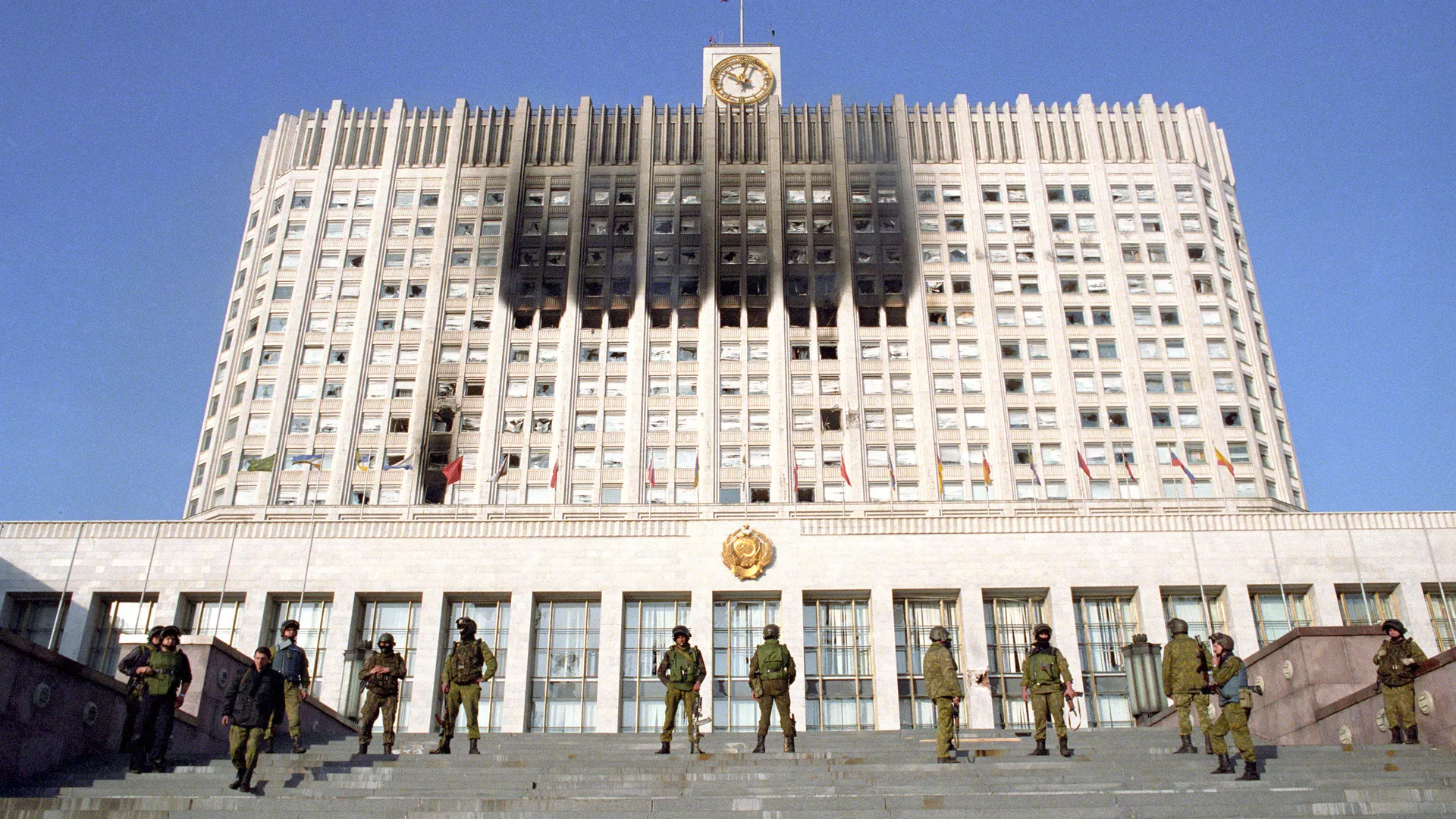
This post and analysis are pf great importance to well understand this critical period following the restoration of wild and unbridled capitalism in Russia transforming a global great power the USSR into US colony caused by the action of only man, Mikhail Gorbatchev qualified by China’s Xi Jinping as the big criminal of the XXth century allowing the United states and its European vassals to unleash their endless wars, destroying whole countries in the Middle East, Iraq 1991, starting the dismantlement of ex Yugoslavia by sowing among the then federal state, the roots of ethnic division followed by NATO’s aggression in 1999, Afghanistan, 2001, Iraq 2003, fomenting colour revolutions chiefly in Ukraine and Georgia, encircling Russia’s borders by NATO’s new member states passing from 16 in 2004 to 30 in 2022 and 32 today, NATO’s invasion of Libya, destruction of then prosperous African nation, and the horrible murder of its leader Kaddafi. to be continued fomenting civil war in Syria with the main objective, regime change, murdering Assad like before him Libyan Kadafi. A former commander of NATO’s forces in Europe, Clark claims he met a senior military officer in Washington in November 2001 who told him the Bush administration was planning to attack Iraq first before taking action against Syria, Lebanon, Libya, Iran, Somalia and Sudan.in one word, the collapse of the USSR caused by renegade and turning anticommunist Gorbatchev, representing a counterweigh in International relations since the end of the XXII gave free hand to US military and its greedy imperialism. It is interesting to compare the event occurred in Moscow 30 years ago with nazi coup in Ukraine in 2014 with the support of the US and its European puppets. what happened in October 4, 1993 was a constitutional coup d’état fomented by Eltsine and its cronies by ordering the dissolution of the Soviet Supreme and its replacement by the State Duma. As revealed through Eltsine-Clinton phone call, the United states ordered the use of violence by bombing of the Parliament and killing the courageous and resistant communists inside led by the acting president of the Supreme Soviet, Alexander Rutskoy, backed by the regions victims of Eltsine’s archeo liberalism. the black page of Russian history lies on 2 former communists turning anticommunists, Gorbatchev and Eltsine whose subservient and slavish posture to the West has caused the current Ukraine’s conflict.
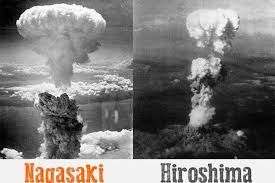
75th ANNIVERSARY OF HIROSHIMA AND NAGASAKI
What was behind the atomic attack against Japan?
At the occasion of the 75th anniversary of bombing the two Japanese cities Hiroshima and Nagasaki on August 6 and 9, 1945, the debate over the use of nuclear arms against Japan is not yet close. The official story propagated by conventional historiography assumes that the US resorted to the atomic bomb against Japan in order to put an end to the WWII, to save American lives and to alleviate the suffering of the Japanese people. Eminent historians shunned the dominant these rejecting the humanitarian motivation highlighting rather the geopolitical reasons behind the atomic attack against Japan.
By April, 1945, Japanese leadership had no choice but to surrender as American forces had gained a firm foothold on Okinawa. The combined US-Australian island-hopping attack from the Solomons, near New Guniea, all the way to Japan had begun in 1943. By April 1945 it had reached Japan’s Okinawa, close to three months before the deadline Moscow had set for its attack on Japan.
Through the Allied intelligence operations, in particular Australian Military forces, the US leadership knew all about the imminent Japan surrender. There are leakages of information and interception of Japanese signals which contained details of Allied ‘plans for certain operations in the Philippines’ and details of recent Australian army intelligence estimates of Japanese strength there. There were messages from Moscow being passed on to the Japanese consulate in Harbin, northern Manchuria, and then on to Tokyo and among those messages were those US plans for the island-hopping attack on Japan.
From then, the Japanese Foreign Ministry established contacts with Moscow to broker a peace agreement. The emperor also still pinned hopes on those contacts with Moscow while US requested unconditional surrender. That wishful thinking only ended on August 8 when the USSR formally declared war on Japan and immediately began to attack into Japanese-occupied territories in Manchuria and elsewhere. On August 9 the US nuclear bombed Nagasaki. Six days later Japan surrendered unconditionally to the Allied forces.
Non conventional historical findings show irrefutably it was the prospect of Soviet war against Japan more than the nuclear attacks that forced Tokyo to surrender. After Nazi Germany’s defeat, Soviet forces turned toward Japan with the aim to gain some lost territories – southern Sakhalin and the Kuril islands. It was only hours from landing Soviet troops at Rumoi for the occupation of Hokkaido when Truman reportedly said the troops should go to take some traditionally Japanese islands in the Kurils close to Hokkaido, a deed which Tokyo still uses to refuse a peace treaty with Moscow.
Catégories
WEST-USSR’s unnatural Alliance
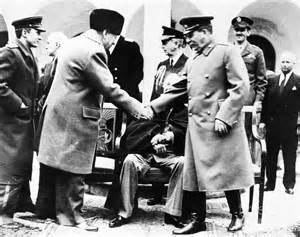
WEST-USSR’s unnatural Alliance
By entering the Second World War, war along the united States, Britain and France, the Soviet leadership was well aware not only that their alliance had been, all things considered, dictated by fortuitous conjunction of circumstances but also and at first, unnatural alliance. . Indeed, Stalin who directly participated in the Bolshevik revolution, the Soviet Government had learned the lessons of the their country since 1917 onwards and particularly the numerous declared and undeclared wars western imperialist powers the permanent war waged by the western imperialist powers during the interwar period until the breakup of the Second World War. A survey of key facts provided by the diplomatic, political and military history and the policies implemented toward the Soviet Union since 1917 till the Nazi invasion of the U.S.S.R on June 22, 1941 were sufficiently eloquent and talking so that the Soviet leadership would aware and could realize quickly that its Alliance with the West was but a short truce, an interlude dictated by exceptional circumstances before the re-starting of longer and continued anti-communist crusade.
Since 1917, the Soviet leadership understood the situation accurately and clearly when the Western powers and its objective allies in the interwar period had adopted a definite position regarding the Soviet Union in the International life. Here it is not the appropriate place for detailing exposition of the West-U.S.S.R relations, but it is useful to mention briefly some of these hostile and ostracized diplomatic and political actions toward the Soviet Union or at least they had been seen and interpreted as such by the Soviet Government. In reviewing the chronology of key facts characterizing the West-U.S.S.R relations during the Bolshevik revolution afterwards, and the interwar period till the outbreak of the Second World War, the Soviet leadership and Stalin at first, that the West supported by its natural offspring, the fascism and Nazism in Europe and in Japan, did not allowed the establishment first in European Continent and then over the world, of a political system based on the abolition of the private ownership of the means of production and the setting up of collective ownership of these means of production. In short words, for the West and its leading power, the United States, the struggle against Bolshevism, and later against the Soviet Union during the interwar period and in the aftermath of the Second World War, against the communism and even against any political regime having any sympathy with the Soviet Union, became a matter of life or death.
here are some key facts suggesting this unnatural alliance and irreducible antagonism between the West and the Soviet Union.
-Western intervention on behalf the anti-Reds forces, the Czechs, the Kornilovs, the Kolchaks, the Denikins, the Yudenitchs, the Alexiev, the Wrangel, the Miller, the Der Glotz
-Allied intervention and foreign invasion by United states (1918-21), Britain, France, Germany (after armistice=, Japan, Poland) of North and South Russia, Siberia, Odessa, Crimea, Murmansk, occupation of Kiev, in the Baltic (Estonia, Latvia Lithuania), Finland
British War Minister, Winston Churchill directed general Ironside to prepare for an offensive in the direction of Kotlas with the object of making a junction with Kolchak
The failure of foreign intervention to crush the Bolshevik revolution
the Social democrat leader Ebert called for the Army high Command, General Groner, Hindenburg and Ludendorff to crush with artillery the Communist Spartacus
The Soviet Russia not desired a a member of the League of Nations
An anti-red Crusade in the United States, in Britain and in France after the failure of their intervention in Russia
Pretexting the forged story called « Zinoviev », the British Conservatives severed on May 26, 1927 their diplomatic with the Soviet Union
Chicherin ostracized and treated as pariah during the Genoa economic conference in April 10, 1922
In response, Chicherin concluded the Treaty of Rapallo on April 16, 1922 with Germany
It was notorious that the so called Stalin-Churchill-Roosevelt Alliance was in fact an unnatural, hypocritical and fortuitous Alliance. At the end of the WWII, when the Russians came out of the war and they decided to take their own security measures, they were through with being treated as pariahs and inferiors and undermenschen.