Catégories
Archives

The Nazi-soviet Pacts : Stalin and Molotov’s geopolitcal masterpiece

The Nazi-soviet Pacts : Stalin and Molotov’s geopolitcal masterpiece

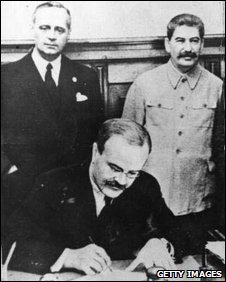
The 1939 Nazi-Soviet pacts were concluded on August 23 between Nazi Germany and the USSR. The Nazi-Soviet pacts include two parts : the Non-Aggression Treaty and the Secret Protocol. The Non-Aggression Tretay bound the parties : (1) to « desist from any act of violence any aggressive action and any attack on each other either individually or jointly with other powers ; (2) to give no aid to any belligerent enemy of the other; (3) to maintain « continual contact » for consultation about « problems » affecting their common interest » ; (4) not to take part even indirectly in any grouping hostile to either ; and (5) to settle any disputes or conflicts by friendly exchange or through arbitration commissions.

the Secret Protocol named the northern boundary of Lithuania as the line between  » the spheres of influence of Germany and the U.S.S.R » Through Poland the line ran along the rivers Narew, Vistula and San. In south-eastern Europe, the soviets called attention to its interest in Bessarabia and the German side declares its full political disinterestedness in these areas.. The text of this last article is important because of later disagreement between the two parties over South-eastern Europe.

the both sides regarded the pact as a purely temporary arrangement before coming together. When the Munich men, the British and French leaders discovered belatedly the soviet Pact they were furious and in a rage, because all their efforts made during the five-year appeasement policy had flown to pieces. Hitler thought that it was not aware to leave the British and French in his rear while hi disposed of the Soviets. this deep suspicion was confirmed by his Pact with Soviets which obliged them to fight. the pact surpised them since they had hoped to neutralize Russia and even to destroy the Soviet regime at the hands of the Nazi Germany;

On September 3-4, 1939, Hitler invaded Poland and promptly and easily destroyed. At present Russia is not dangerous  but no one can know how long it will remain so. in the meantime the partition of Poland had taken place without conflict between the soviets and Germans; After Hitler’s Blitzkrieg the German Government sent on September 3, 1939, an urgent telegraph requesting Russia to occupy her sphere of influence in Poland at once Molotov was surprised by the German speed and sought to avoid a joint announcement of Russia’s entry into the Polish struggle but agreed when Stalin’s draft was accepted;
Catégories
Archives

Western « democracies » and fascism united against communism

Western « democracies » and fascism united against communism

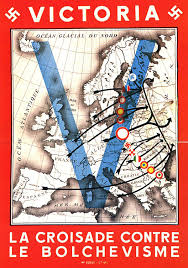
Not only Western “democracies” and their hypocritical politicians permitted German rearmament but they also hugely assisted it. At the very least a secure bulwark against communism would be erected.” The sturdy young Nazis of Germany are Europe’s guardians against the Communist danger” said lord Rothermere in the daily Mail on November18, 1933 “Once Germany has acquired the additional territory she need s in Western Russia her need for expansion would be satisfied” This was the basic calculation upon which the whole structure of what we called appeasement policy in the interwar period was reared.

After the Second World War, western propaganda tried to disseminate in the public two clichés : (1) that the German –Soviet pact of August 23, 1939 was the cause of the second World War and (2) that that the Soviet Union was so avaricious that it over-reached itself with its partner in crime. These two clichés had been published by the state department in January 1948 under the title Nazi-soviet relations 1939-1941. These clichés had then been published in the press aiming at public delusions and by establishing associate ideas and, according to Pavlov theory, conditioned reflex between Hitler and Stalin. Hundreds of newspaper articles and radio speakers had inculcated these clichés to many millions of Americans without ever suggesting that the Nazi-soviet Pact was the result of the long and dismal appeasement drive on the part of the West. It was this propaganda which contributed to create mentally conditioned peoples in Europe and in United States without a fuller examination of the issues and consequences at stake. In that event Walter Lippmann wrote on February 12, 1948 “this publication is a classic example of bad propaganda bound to backfire that the state department book was the work of propagandists and not of scholars is self-evident on the face of it. It contained only Nazi documents and no self-respecting historian would dream of basing his judgment on the documents of only one side of a grave historical event. Moreover, only those Nazi documents were selected for publication which bore on Nazi-Soviet relations after April 1939 to embarrass our Western allies and ourselves by inviting the publication of docuements for the period up to the Munich appeasement is not astute indeed it is altogether incompetent – propaganda”

Catégories
Archives

Marshall plan, tool of US informal imperialism in Europe

Marshall plan, tool of US informal imperialism in Europe 

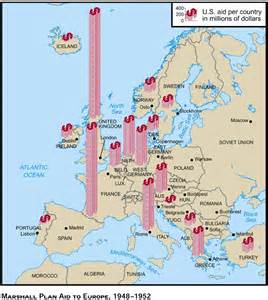
On March 25, 1947, shortly after the Truman Doctrine speech, rumours circulated that koura would be the next beneficiary of American aid after Greece and Turkey, but by June, the Marshal plan idea had replaced this program. The Marshall Plan’s idea originated both from the vacuum left by Britain after her bankruptcy and her collapse as important centre of world power and from the speech delivered by Under Secretary of State dean Acheson at Cleveland in which he proposed to add economic tool along the military aid of the Truman Doctrine. According to Acheson, American economic aid and assistance must be concentrated in « areas where it will be most effective in building world political and economic stability in promoting human freedom and democratic institutions, in fostering liberal trade policies and in strengthening the authority of the United nations » The terms « human freedom » and « democratic institutions » mean that American aid and assistance should be go to those countries which accepted U . S understanding and interpretation of these words.

On June 5, 1947, Secretary Marshall delivered his famous speech at Harvard University. exploiting the destruction of Europe’s economy, Marshall proposed American help so as to contribute to the revival of a working economy and to permit the emergence of political and social conditions in which free institutions can exist. Undoubtedly, the Marshal plan was the continuance of the Truman doctrine of containment and encirclement of the Soviet Union especially when he warned that « governments, political parties or groups which seek to perpetuate human misery in order to profit therefrom political or otherwise will encounter the opposition if the United States »  This was a cry from the principle of the Truman Doctrine that the Soviets must be ringed in and contained. Coming after the Truman Doctrine  the Marshall Plan must be seen as  economic weapon aiming at implementing the Truman doctrine. It was obvious that Marshall’s offer would not go to countries under Soviet control ; it was rather a move to consolidate Western Europe as a counter-weight to the concentration of Russian power in the east

Catégories
Archives

Cold War : the making up of legend

Cold War : the making up of legend

the Cold War is often misinterpreted as a global rivalry between the United States and the Soviet Union, According to dominant and wide-spread mythology in the West, the so-called Cold War began in the wake of the Second World War when  “pacific” western democracies and generally what we called the “Free world” led by the United States of America were assaulted and threatened by totalitarian system and by the thrust of “ remorseless Soviet expansion”. The binary and Manichean picture surrounding the Cold War reduced the post-war period to a mere rivalry and to a simplistic scheme between the “good and evil ”, a  struggle between two rival superpowers and two antagonizing ideologies competing both for the domination of international affairs and looking each and other for world hegemony. Basically, the Cold War was about the Free World versus Communist slavery and its outbreak was to be attributed to the Soviet Union accused to be the full responsible for the onset of the conflict while the United States was tally innocent. In the face of Soviet aggressiveness and territorial and ideological expansionism the United States had no choice only to protect both its own legitimate security interests and democracy in the various European nations and to cope with a real danger, the spread and the contagion of international communism sponsored by the government of the Soviet Union. At the end of his account Potsdam Conference Mr Truman accused the Soviet Union for “planning world conquest”

These assumptions by no means exhaust the various fallacies found in the literature on Cold War. When discussing the matter weal with abstractuions and try to isolate to mix and to generalize.  As declasiified U.S. policy documents revealed, the primary threat posed by the soviet Union was not its aggressivessness or its expansionary policy but rather its emergence as alternative pattern and a model for the newly independent countries born from the “decolonization” and its willingness to supply military and economic support to third world regimes that were targets of U.S aggression and subversion. The Soviet Union thus served to deter and restrain U.S imperialism and to restrain its actions in the Third World.


Catégories
Archives

Truman Doctrine : containment or Encirclement of Soviet Union and suppression of all revolution ?

Truman Doctrine : containment or Encirclement of Soviet Union and suppression of all revolutions ?

The Truman Doctrine is included in the message read by President Harry Truman to a joint session of the two Houses of Congress on marsh 12, 1947. The official and public reason for Truman message was Greece and turkey where « the Terroristic activities of several thousand armed men, led by communists had created a situation with which the Greek and Turkish Governments could not cope. In order to cope with these « communist subversion », Truman proposed to « help free people to maintain their free institutions and their national integrity against aggressive movements that seek to impose upon them totalitarian regimes »; To Truman, it was matter of life or death to choice between alternative ways of life, between free institutions and the other by terror and oppression  he believed that United States must implement a new policy aiming at supporting free people who are resisting attempted subjugation by armed minorities or by outside pressure » . by concluding his message, Truman asked for four hundred million dollars for Greece and Turkey and authority to detail civilian and military personal to them. In short words, the United States ought to suppress wherever a communiits rebellion developed the United Stets would become the world’s anti-communist, anti-Russian policeman.

Catégories
Archives

The Truman Doctrine and the Open Door policy

The Truman Doctrine and the Open Door policy

On march 6, 1947, President Truman made a speech at Baylor University on foreign economic policy laying down what we called the Truman Doctrine. In his speech, Truman announced united States planetary crusade for  : (1) rule of freedom of enterprise and (2) Containment of communism. Truman tried to explain that freedom of enterprise was more important than peace and that freedom of speech were dependent on freedom of enterprise. State trade or planned economy should be considered as contrary to both peace and freedom. For Truman, the Government of the United States had to fight both for markets and for raw materials and what was serious enough but more ominous in Truman’s speech that « the whole world should adopt the American system » and that « the American system could survive in America only if it became a world system.

Baylor speech was the pursuit of the American ideology of industrial Manifest  destiny and it fell into line with the old American open Door policy which can be traced back according to William Appleman Williams to James Madison’s federalist#10 but it really began at the end of the nineteenth century from McKinley onward and John Hay’s China-oriented declarations of 1899 and 1900;

Catégories
Archives

United States and the making of Europe

United States and the making of Europe

In early November 1946, the Republicans had won control of both houses of Congress and this unexpected election of an extremely conservative Republican Congress  gave an impetus to the anti-communist crusade inaugurated by Winston Churchill at Fulton, Missouri.  In their campaign of 1946, the Republicans moved over to the offensive and identified all dissent voice with communism which was one of the most potent forces in their electoral victory. It was expected the implementation of  a conservative foreign policy and a strong line against communism and Russia everywhere in the world. This new shift in American foreign policy in the aftermath of WWII was symbolized by The Truman doctrine.

 On January 17, 1947, John Foster Dulles adviser to the State department made a speech urging Western Europe to unite economically around the coal and steel power of the Rhine basin as a bulwark against Soviet Russia. Echoing Winston Churchill, Dulles was trying to establish hurriedly a military bloc of the united States, Britain and France. French diplomatic circles approved Dulles proposition. Dulles sought to restore Germany as bulwark against the Soviet Union and supported her reconstruction by pushing the German industrialists and cartelists to power.  Dulles’s posture was not starnge considering Mr Dulles long pre-war association with the same German interest.

Catégories
Archives

Churchill’s anti-communist crusade and the making of Europe

Churchill’s anti-communist crusade and the making of Europe

 What is really the origins of the European Union ? To answer this question and to well understand the real origins of Europe,  the mainstream of International relations and European historiography would not be in any way of useful help.  The man who made Europe was the former British warmonger, Winston Churchill who vowed his lifetime, since the infancy of the Bolshevik revolution, for fighting and for ferociously struggling against Communism and its spread first in Europe and then later over the world.  Let us begin by the real origins of the story of what we call today the European Union presented in the media and among the academic circles as the result of a long and a painful history beginning with the utmost willingness of its leaders and its people to unite their efforts within a political and economic framework.

the man who made Europe was Winston Churchill. After launching his anti-communist crusade in his infamous speech of March 5, 1946 at Fulton, Missouri in presence of another warmonger , the American president Harry Truman, and further speeches in pursuit of his aim, Winston Churchill returned to Europe with the main objective to wage his ant-communist crusade within the European continent. Soon he was waging a campaign for united Europe as a means of pushing Russia out of eastern Europe.  As he did in Fulton, Missouri, Churchill gave at the University of Zurich on September 19, 1946, a similar speech bewailing the tragedy of Europe saying « that is all that the Germanic races have got by tearing each other to pieces and spreading havoc far and wide » This meant that the Nazis might not have been so far wrong was followed by an appeal to France and Germany to establish « partnership ». He suggested  the union, as a first step the European states which were out of the « iron curtain »; the implication was clear that the states of east Europe would be brought in eventually. On May 14, 1947, Churchill made it absolutely plain when he said that « our aim is to bring about the unity of all nations of all Europe »; He explained that « the whole purpose of a united democratic Europe is ot give decisive guarantees against aggression ». In short words, Europe must unite with her nearly 400 000 000 people under the American atomic umbrella so that to wage a common anti-communist and racist crusade against inferior races, those of the Soviet Union.


Catégories
Archives

French and Bolchevik Revolutions : Sociological and comparative study

French and Bolchevik Revolutions : Sociological and comparative Study

Before investigating the sociological background of revolutions, we have to begin by this unavoidable and redoubtable question: What is a revolution? When we try to study the history of the three famous revolutions in modern time, the American, the French and the Russian, the mainstream and classical theories become fully interested by their only political posture, taking into account the struggle of the main political and social forces and protagonists for conquest and possession of power and the conditions and the means of its exercise. For these mainstream theories, a revolution is essentially the overthrow of the old ruling class and its replacement by a new one doomed to shape its own political system and its own political institutions. However, the weakness of the mainstream theories of revolution reside in the fact that they put aside and have been their neglect of the main factor in revolutionary phenomenon, the social background to the revolution or more precisely the structure of property and the mode of appropriation of the means of production. It is that regime of property and its role in the social distribution of wealth among the classes which determine fundamentally and without appeal the nature, the scope and the course of events of each revolution. That why we have to be careful by employing the terminology and the word revolution, because the mainstream theories of revolution use the term revolution to designate a mere political change without touching to the structure of property and the mode of appropriation of the means of production. It will be this pertinent criteria i.e; the property and the class at which benefit which constitutes the background of revolution. For this purpose, in every study on revolution, we have first to investigate the driving force within a revolution, its projects and its aim in the property field and its attitude vis à vis the question the mode of appropriation of the means of production.

One object of this study has to suggest that what we call the French revolution was not at all a genuine and real revolution. Marxist historians called it “bourgeois revolution” but here the use of term revolution is inappropriate because the bourgeoisie made her best for the conquest of the political power without bringing any fundamental change to the structure of property and the mode of appropriation of the means of production. At the beginning of the French revolution and during her course many new elements it is true, emerged but they formed part of the elites of the ancient régime; We must to recognize that what we call French revolution is nothing but a triumph for the conservative propertied, land-owning classes that The French Revolution was directed by middle and for middle class interest . Her leadership was propertied leadership from beginning to end. Ruffians they were middle-class ruffians Even the most advanced political and radical movement of the revolution, Babeuf’s Conspiracy of the Equals was middle class organization.

Catégories
Archives

Black legend of stalinism : Stalin, statesman, strategist and geopolitical thinker

Black legend of stalinism : Stalin, statesman, strategist and geopolitical thinker

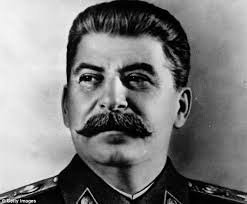
The black legend of Stalinism transforms the Soviet leader, Stalin into a monster and blood thirsty and his name evokes immediately that of Gulag, camps, purges and million victims of his regime. This black legend of Stalinism deliberately blacks out main distinctive features of Stalin’s personality as statesman, strategist and geopolitical thinker, who always reasoned in terms of security and strategic defense for his country as we will show below.

The Soviet Union suffered of the Allied interventions from 1918 to 1920 sparked and led from London and Paris. For at least years, Litvinov’s policy aiming at breathing life and vitality into the collective security system had unquestionably failed and only to be defeated at every turn; In each crisis that landmarked the European affairs during the decade 1929 to 1939 Ethiopia, Spain, the Rhineland, Austria and Czechoslovakia, where all the initiative and the collaboration of the Soviet Union had been spurned, either she had been ignored, left on one side or her efforts discarded. In the case of Ethiopia, the appeasement governments in London and Paris left Moscow alone in Geneva operating in a vacuum. At Munich conference, Russia was ignored, ostracized and thrown out bodily from any voice in European affairs. This marginalization of the Soviet government had been made under the pretext that Russia could not be trusted and that her assistance would not be worth much in any case. Decidedly, the force in France and Britain which were determined to work with the fascist and Nazi regimes were too strong to be easily unhorsed. The appeasement Governments in Paris and London deliberately planned to turn Hitler toward the East and into a war with Russia.

Translate »