Catégories
Archives

WEST-USSR’s unnatural Alliance

 WEST-USSR’s unnatural Alliance

By entering the Second World War, war along the united States, Britain and France, the Soviet leadership was well aware not only that their alliance had been, all things considered, dictated by fortuitous conjunction of circumstances but also and at first, unnatural alliance. . Indeed, Stalin who directly participated in the Bolshevik revolution, the Soviet Government had learned the lessons of the their country since 1917 onwards and particularly the numerous declared and undeclared wars western imperialist powers the permanent war waged by the western imperialist powers during the interwar period until the breakup of the Second World War.  A survey of key facts provided by the diplomatic, political and military history and the policies implemented toward the Soviet Union since 1917 till the Nazi invasion of the U.S.S.R on June 22, 1941 were sufficiently eloquent and talking so that the Soviet leadership would aware and  could realize quickly that its Alliance with the West was but a short truce, an interlude dictated by exceptional circumstances before the re-starting of longer and continued anti-communist crusade.

Since 1917, the Soviet leadership understood the situation accurately and clearly  when the Western powers and its objective allies in the interwar period had adopted a definite position regarding the Soviet Union in the International life. Here it is not the appropriate place for detailing exposition of the West-U.S.S.R relations, but it is useful to mention briefly some of these hostile and ostracized diplomatic and political actions toward the Soviet Union or at least  they had been seen and interpreted as such by the Soviet Government. In reviewing the chronology of key facts characterizing the West-U.S.S.R relations during the Bolshevik revolution afterwards, and the interwar period till the outbreak of the Second World War, the Soviet leadership and Stalin at first, that the West supported by its natural offspring, the fascism and Nazism in Europe and in Japan, did not allowed the establishment first in European Continent and then over the world, of a political system based on the abolition of  the private ownership of the means of production and the setting up of collective ownership of these means of production. In short words, for the West and  its leading power, the United States, the struggle against  Bolshevism, and later against the Soviet Union during the interwar period and in the aftermath of the Second World War, against the communism and even against any political regime having any sympathy with the Soviet Union, became a matter of life or death.

here are some key facts suggesting this unnatural alliance and irreducible antagonism between the West and the Soviet Union.

-Western intervention on behalf the anti-Reds forces, the Czechs, the Kornilovs, the Kolchaks, the Denikins, the Yudenitchs, the Alexiev, the Wrangel, the Miller, the Der Glotz

-Allied intervention and foreign invasion by   United states (1918-21), Britain, France, Germany (after armistice=, Japan, Poland) of North and South Russia, Siberia, Odessa, Crimea, Murmansk, occupation of Kiev, in the Baltic (Estonia, Latvia Lithuania), Finland

British War Minister, Winston Churchill directed general Ironside to prepare for an offensive in the direction of Kotlas with the object of making a junction with Kolchak

The failure of foreign intervention to crush the Bolshevik revolution

the Social democrat leader Ebert called for the Army high Command, General Groner, Hindenburg and Ludendorff to crush with artillery the Communist Spartacus

The Soviet Russia not desired a a member of the League of Nations

An anti-red Crusade in the United States, in Britain and in France after the failure of their intervention in Russia

Pretexting the forged story called « Zinoviev », the British Conservatives  severed on May 26, 1927 their diplomatic with the Soviet Union

Chicherin ostracized and treated as pariah during the Genoa economic conference in April 10, 1922

In response, Chicherin concluded the Treaty of Rapallo on April 16, 1922 with Germany

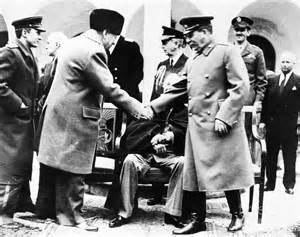
It was notorious that the so called Stalin-Churchill-Roosevelt Alliance was in fact an unnatural, hypocritical and fortuitous Alliance. At the end of the WWII, when the Russians came out of the war and they decided to take their own security measures, they were through with being treated as pariahs and inferiors and undermenschen.

Catégories
Archives

The myth of Soviet expansionism after WWII(4)

The myth of Soviet expansionism after WWII(4)

 Before the use of the atomic bomb by the United States, before the creation of Nato, before Western and West German rearmament before the spiralling  and debilitating arms race had seized hold of Europe, the Soviet Union and communism were adequately  and effectively « contained » by the greater and more vastly extended power of U.S.  And this was fully realized by by the very man who was the foremost proponent of a rearmed and re-miliatrized world who attempt to to revive the military will of atom-blasted Japan. In March 1949,  John Foster Dulles declared « the Soviet Government, under conditions now prevailing, does not contemplate the use of war as an instrument of its national policy.  I do not  know any responsible official, military or civilian in this government or any Government who believes that the Soviet Government  now plans conquest by open military aggression » Dulles statement  is corroborated by more than half  a dozen  estimates of America leaders from 1946 to 1949 cited in the Forestal Diaries. On June 10, 1946, Forestall himself wrote that he thought the Russians « would not move this summer in fact at any time »   On August 3, 1948, two months after Berlin Blockade, General Walter bided Smith ambassador to the Soviet Union reported to the War Council his impression  » that the Russians do not want war »   and of course Kennan  who was Chairman of the Policy planning staff at the State department had been categorical on this question « I cannot think of a time when the Soviet Government desired that there should be such a conflict(war with the West) planned to launch it .

Undoubtedly, as showed by Gar Alperovitz’s Atomic diplomacy, the main reasons behind the mass killing in the two Japanese cities, Hiroshima and Nagasaki, on August 6 and 9, 1945, were political and that the A-bomb used to Japan before Russia could enter the war Against Japan and in the long run to restrict Russia’s gains and voice in the Far East.Indeed, after Hiroshima and Nagasaki, American highest military authorities, the testimony of the surviving Japanese leaders and Survey’s opinion  produced detailed investigations of all the facts showing that certainly prior to December 31, 1945, Japan would have surrendered even if the atomic bombs had not been dropped even if Russia had not entered the war and even if no invasion had been planned . Even Secretary of States Byrne has also admitted that the bomb did not end the war that Japan was beaten and suing for peace when it was dropped. At the time the bomb was used on Hiroshima and Nagasaki Japan was exhausted because of the destruction of her navy and her air force, Japan cities and industries were being destroyed at will . It was apparent even to headline readers that Japanese resistance could not continue much longer.  On July the daily news releases made it plain that japan was defeated.

As has been showed by Gar Alporowitz, the first goal of using the atomic bomb was rather political than militarily directed against the Soviet Union in order to minimize her gains both in Eastern Europe and the Far East. When economic coercion failed to achieve United States goals in eastern Europe, Truman bided his time until  acquiring the atomic bomb with which he meant to cow the Russians into submission the sue of nuclear weapon aganst an already defeated Japan amounted to a diplomatic rather than a military act. the bombs were used primarily to demonstrate to the Russians the enormous power America would have in its possession during subsequent negotiations. Up to this time control of eastern Europe had seemed vital to the Russians as a means of preventing a German come-back. Now the same region was even more vital as buffer against the atomic-armed West. the wish for the United States to end the war quickly before the Russians could establish a strong position in the Far East. As it was the case in eastern Europe, Stalin was trying to attain for the Soviet Union its legitimate security needs in the face of increasing American militance.

Catégories
Archives

American totalitarianism (2)

American totalitarianism (2)

.

In the Postwar years, the United States became literally has bees benne firmly established. As in totalitarian Europe, the United States witnessed in the aftermath of the war and during interwar years witnessed the same phenomenon as in Italy and Germany. The slogan « American way of life » was not so different from European racism. during the interwar years, the executive remains dictatorial as during as that during the war enjoyed by Wilson. With Herbert Hoover who came to the presidency in 1929 the executive had been strengthened and became more efficient. Nationalism and chauvinism which had been planted during the war sprouted in terrifying form. Like in Europe, these nationalism and chauvinism had been expressed by widespread hostility to foreigners and to foreign ideas as Well against the political opponents Inside the United States. The American racism and the hunt against all not America, against foreigners and foreign ideas were the same as that which were at the same time widespread in Europe. Aliens suspected of radical ideas and radical notions were rounded up and deported by the scores ; legislatures were « purged » of socialists and states tried to enforce loyalty to political and economic institutions by repressive legislations. like the European racist and chauvinist movements, there was their equivalent in the USA with the Ku Klux Klan which boasted a membership of millions dedicated itself to that notion of Aryan supremacy which European dictators were to take up a decade later in two notorious cases that of Mooney and Billins in California and of Sacco and Vanzetti in Massachusetts in both cases the victims were punished more for their radicalism than for any crimes proved against them.

in the aftermath of the Second World War campaign for loyalty, conformity and hundred-per-cent Americanism reappeared in more virulent as it was the case the first World. Though the Communist party in the United States had at most seventy-five thousand members a number steadily diminishing a clamor arose for outlawing it and for a recklessly indiscriminate investigation of alleged disloyalty especially in the government, the press and the amusement Industry. The movement threatened basic civil rights and the Eugene Dennis secretary of the Communist party had been convicted and sentenced  in order to eradicate any disloyal and specially Communist activities two Committees had been set up : the House Committee on Un-American activities  in the Eightieth Congress and President Truman’s special Civil Rights Committee both of which reported in 1947. In the fall of 1946, Truman issued an executive order creating the President’s temporary commission on Employee Loyalty the following an elaborate machinery was created.  The Civil Service Commission established regional loyalty or subversive were giving hearings before a loyalty board with counsel

Just after Truman’s election for second tenure in 1949 Eleven Communist leaders, the « Politburo » of the party were brought to trial in 1949 on the charge of violing the Smith Act of 1940 which made conspiracy to « advocate and teach » the violent overthrow of the government a crime the jury found all eleven defendants guilty and ultimately they went to jail  Alger Hiss head of the Carnegie Endowment for international Peace went on trial he was charged with perjury. After one jury disagreed another found Hiss guilty and sentenced to five years jail. The government deported a number of aliens charged with Communist activities

Catégories
Archives

American totalitarianism (1)

American totalitarianism (1)

Making a pretext of sinking of eight American vessels and of revealing of a « plot » to involve the United States in a war with Mexico and Japan, President Wilson appeared on April 2 1917 before the Congress and asked for a declaration of a state of war and on friday April 6, 1917, the United States went to war. Wilson’s slogan « force, force to the uttermost, force without stint or limit » was a declaration for a « total war and marked the passage from American dictatorship to American totalitarianism. At this juncture, the austere and stern scholar turned, under the circumstances of the war, into one of the greatest of war Presidents controlling every aspect of the war effort maintaining morale at home and abroad, mobilizing the nation for war and fight. The government became dictator over industry labor and agriculture ; it took over the railroads and the telegraph lines, farm production was increased  by one fourth and fuel and coal production was raised by two fifths, a colossal shipbuilding program, with more than three million tons in a single year was launched  Conscription had been voted putting Under arms some twenty-five million men; Wilson made use of propaganda at home and abroad. From the beginning of the war Wilson waged a wide and aggressive psychological warfare against Germany; He tried to sow dissension in Germany by insisting that the United States was not fighting against the German people but against his tyrannous and autocratic government. The hunt against dissent and “disloyalty” had been implemented and the First World revealed a constant continuity and a logical development between Alien and Sedition Acts of the 1790s and the Sedition and espionage Acts of Wilson’s presidency during the first World War or lately the Smith Act of 1940.

Catégories
Archives

Rise of American dictatorship (2)

Rise of American dictatorship (2)

American dictatorship entred a new phase at the beginning of the ninettenth century with the netry to the White House of Andrew Lackson in 1828 jackson’s inauguarated a new eraa in American dictatorship . Jackson had been described according to Justice Story as the « king of Mob » because of his populism and his appeal to the people as he had always  one of them. Once in popwer, Jackson vigorously carrieed his main ideas into practice ; Under his presidency he strenthened the power of the executive by opposing his « Maysville veto » disapproving voting money by Congress for olocal roads an d canals from Maysville to Lexington into  Kentucky. He opposed South carolina when it attempted to nullify the protective tariff of 1828; in 1832, Jackson strenly vetooed a bill for recharter of the second bank of the United States

Catégories
Archives

Rise of American dictotatorship (1)

Rise of American dictatorship (1)

The genesis of American dictatorship began with Sahys’s Rebellion (1786-1787) in massachusetts. A series of popular uprisings  at Northampton and Worcester. At Springfield, the leader of popualr uprising was daniel Shays an former captain in  the Continental army. To end the rebellion an army of four thousand four hundred men was raised and put Under the command of general Lincoln supported by troops funded by voluntary loans from wealthy citizens iof Boston and othe towns. thanks to the governor james Bowdoin the insurrection was at lenght suppressed but Shays’s Rebellion had a far-reaching political conséquences. the rebellion by disclosing the danger strengthen the hands of the conservatives who were seeking for a strong power able to prevent further popualr uprisings. the ultimate  and the most ultimate conséquences of Shays’s rebellion was the laying down the foundations of American dictatorship with the establsihment of political institutions and the creation of a strong governemetn and a striong executive capable of insuring domestic tranquility » and the proetction of the property. shays’s rebellion was the pretext for Wahington for underlying the inadequacy of the Articles of Confederation  and for  claiming  a corecive power and a new political reorganization.. Experience of Shays’s rebellion taught the necessity of bestowing on some central authority the power to prevent more disorders and social and popualr uprisnings.  A partir fo these cosndierations emegede the necessity of building an imperial organization  Virginia Plan recommended that a national executive was to be estabslished consisting of a supreme legisaltive, Executive and judiciary. the establishment of the United States was the making and the outcome of a coup d’étata fomented by the federalists as the supporters of the Cosntitution called themselves. in pennsylvania state convention whicj met Novemver 21, 1787. On September 17, 1787, The new constitution of the United states had been definitely ratiifed

The firts chapter of American dictatorship has been inaugurated by the repression of the « Whiskey rebellion. On the 6th of April 1789, the first Congress elected george Washingtion as President and Adams as Vice-President. five years after Washington took office, broke out the whiskey rebellion, an insurrection of inhabitants of western Pennsylavania  and Virginia agaiants Hamilton’s excise tax of march 3, 1791.  On Hamilton’s recomemndation, washington orderd out the militia in order to suppress the rebellion . Wasghington in his address to Congress justified the repression of the rebellion by the « subversive » proceedings and the « spriti of opposition » to the « just authority of governement and the rights of individuals » Washington qualified acts committed by the insurgents as acts of treason « being overt acts of levying was against the United States »

the second chapter of American dictatorship was the two infamous Alien and SEDITION ACTS of 1798 aseries of four Laws directed against foreigners suspexcted for dissent and disloyalty.


Catégories
Archives

Political roots of western totalitarianism

Political roots of western totalitarianism

The struggle against the democracy and popular aspirations for democracy began before the American revolution through pamphlets and writings of its major leaders.  Among those who very early opposed democracy and popular aspirations for democracy ther was John Adams who “wanted to make sure that American revolution didn’t goo too far in the direction of democracy “ opposing Paine’s plan for single-chamber reprehensive bodies elected by the people, Adams denounced Paine’s plan as “s democratical without restraint or even an attempt at any equilibrium. Adams  also opposed “popular assemblies which needed to be chakec because there were “productive of hasty results and absurd judgments”  While proposing a representative bodies elected by the people, Paine, was resolutely opposed to crowd action of lower-class people. Later during the controversy over adopting the Constitution, Paine was partisan of conservative and strong government .

The language of popular control over government, the right of rebellion and revolution indignation at political tyranny , all these words sounded hollow as they merely aimed at uniting colonists and dissatisfied people against England  but in reality, a wide range of American people Indians, blacks slaves, women had been excluded from the great manifesto of freedom of the declaration.  “We the people of the United states”, a phrase coined by the very rich Governor Morris did not mean slaves Indians or blacks or woman or white servants but struggle for office and power between members of an upper class the new against the established ; the men who engineered the revolt were largely members of the colonial ruling class .

In order to protect the large economic interest of the makers of the United states constitution but also to cope with rebellion by discontented and oppressed people the new ruling class decide in 1787 in Philadelphia Convention to erect strong gand dictatorship legalized by the ratification of the Constitution. The main reason for the ratification of the constitution was an uprising in the summer of 1786 in western Massachusetts known as Shay’s rebellion.

Shays’s rebellion merits attention not because it was the only evidence of social disturbance but because it was the conspicuous uprising that startled the thoughtful men of every state and made wonder what the end of their great war for independence might prove to be; the rebellion by disclosing the danger helped to bring about a reaction, strengthen the hands of the conservatives discredit extreme democratic tendencies and aid the men that were seeking to give vigor to the Union.

The reaction immensely helped the establishment of new institutions and the creation of a government capable if insuring “domestic tranquility”

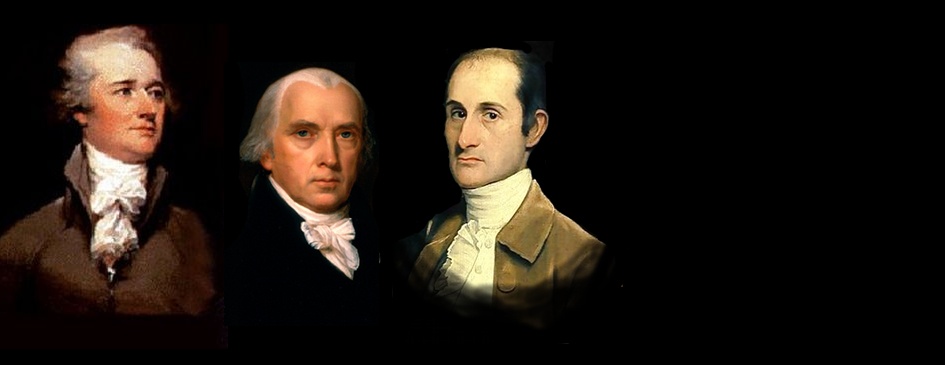
At the Constitutional Convention, Alexander Hamilton suggested a President and senate chosen for life . a constitutional dictatorship needed to not only for constitutional limitations for voting , il lay deeper beyond the constitutional, maintain of class structure and the division of society into rich and poor. For Hamilton the new Union and the new government would be able “to repress domestic faction and insurrection in referring directly to Shays’s Rebellion

Translate »