Catégories
Blog

BLOW TO INDIAN FARMING COMMUNITY AS MODI’S GOVERNMENT OPENS AGRICULTURE SECTOR TO MONOPOLE AND AGRIBUSINESS

BLOW TO INDIAN FARMING COMMUNITY AS MODI’S GOVERNMENT OPENS AGRICULTURE SECTOR TO MONOPOLE AND AGIOBUSINESS

The lower house passed on Thursday two farm bills, the Farmers’ Produce Trade and Commerce (Promotion and Facilitation) Bill, 2020 and The Farmers (Empowerment and Protection) Agreement on Price Assurance and Farm Services Bill, 2020. Both bills are aiming at deregulating the agriculture sector, one to free up agricultural trade from all restrictions and the other to create a new contract farming putting the Indian farmer at the mercy of big agro industry and multinationals. The bills seek to open up the Indian farming community to monopole and enabling bigger agribusinesses to control the access to markets, which are currently fragmented.

The bills were first announced by finance minister Nirmala Sitharaman on May 15 in the second of her series of briefings on proposed reforms. The main provisions of the Farming Produce Trade and Commerce (Promotion and Facilitation) Bill, 2020 abolish regulations of the inter-state and intra-state trade of primary agricultural commodities. Under the old system, farm produce are sold mainly in notified wholesale markets run by so-called agricultural produce marketing committees, or APMCs, under state laws which require farmers to only sell to licensed middlemen in these notified markets, usually in the same area where the farmers reside, rather than in open markets. The bill enables farmers and buyers of their produce to trade outside these tax-free markets and will therefore open up APMCs to competition. The bill will enable food traders to buy farmers’ produce from any market, rather than bind them to the specific markets where they are licensed to operate.

The Farmers (Empowerment and Protection) Agreement on Price Assurance and Farm Services Bill, 2020 abolishes the old regulations related to contract farming. It provides for a national framework on farming agreements, enabling a farmer to engage with agribusiness firms, processors, wholesalers, exporters or large retailers for sale of future farming produce at a pre-agreed price imposed by big agribusiness.

Union minister Harsimrat Kaur Badal of the Shiromani Akali Dal (SAD) has resigned on Thursday from Prime Minister Narendra Modi’s government, as the BJP ally on Thursday opposed the two farm bills that seek to liberalise the agriculture sector, exposing a crucial rift on the issue of farmers and agricultural reforms. “I have resigned from Union Cabinet in protest against anti-farmer ordinances and legislation. Proud to stand with farmers as their daughter & sister,” tweeted Harsimrat Badal. “I think I was probably the lone voice who came from a 100% agrarian state. The officers who made the ordinances were unable to see Punjab differently from rest of the country” she saif in interview to the Hindustan news agency.

On September 12, the party had formally asked the Centre not to enact three farm ordinances during the monsoon session of Parliament, which began on September 14.

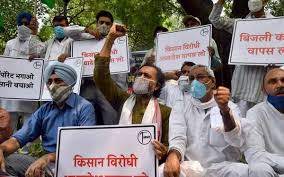
Farmer groups said they feared the new changes would lead to big monopolies. Farmers are already protesting these ordinances in food bowl states, such as Haryana and Punjab, and influential farmers’ unions are also preparing to square off with the government on the demand of making profitable sales in the form of minimum support prices, or MSPs, a legal right. The All-India Kisan Sangharsh Coordination Committee (AIKSCC), a front for nearly 200 farmers’ groups, has opposed the bills. The Rashtriya Swayamsevak Sangh (RSS)-affiliated Bharatiya Kisan Sangh demanded safeguards for the farming community, so has the Bhartiya Kisan Union.

Major parties that opposed the bills were the main opposition Congress, Bahujan Samaj Party, Siromani Akali Dal, Samajwadi Party, the Trinamool Congress, the Aam Aadmi Party, the Left parties, Nationalist Congress Party, the Indian Union Muslim League and the Dravida Munnetra Kazhagam. The Congress’s Adhir Ranjan Chowdhury said: “Show me one farmer who is happy over this bills. Haryana and Punjab are on fire.” Adding ““I appreciate the sentiments of Harsimrat Kaur (the minister who resigned from Modi Cabinet) who had the gumption to oppose the bills. These bills are no silver bullet.”

Parties opposing the bill accused the government of taking advantage of the Covid pandemic to introduce “anti-farmer legislations”. “Had there been no corona, farmers’ anger would have been visible in the streets , who does the BJP stand with, foreign investors, Adani-Ambani, dhanna seth (moneyed traders) or farmers?” asked Ritesh Pandey of the Bahujan Samaj Party, registering the opposition of party chief Kumari Mayawati.
Catégories
Blog

CHINA-INDIA’S DEFENSE MINISTERS MEETING : TURNING POINT OR FOOL’S GAME?

CHINA-INDIA’S DEFENSE MINISTERS MEETING : TURNING POINT OR FOOL’S GAME?

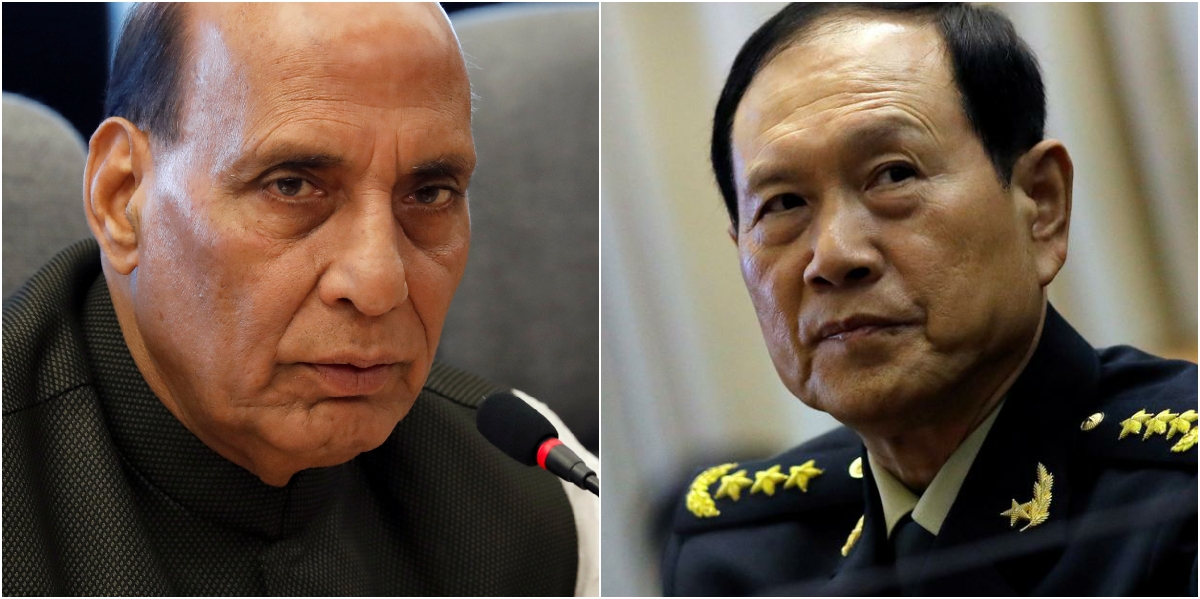
While thousands of Indian and Chinese troops have been poured into eastern Ladakh in a stand-off which has lasted for over four months, Indian defence minister Rajnath Singh and his Chinese counterpart Wei Fenghe have accepted to start talks on the sidelines of the Shanghai Cooperation Organisation (SCO), the highest face-to-face political contact between India and China since the current stand-off began in early May. The fact that the two defense ministers are sitting face-to-face is in itself a positive signal and provides the necessary atmosphere for the two countries to manage their border disputes and cool down the situation on the ground.

Both countries asserted their positions, the talks concluded with each country stating that the other side had agreed to peacefully “de-escalate” the situation. Following the meeting which lasted nearly two and half hours in a Moscow hotel, both countries had agreed to peacefully “de-escalate” the situation. Both sides asserted that they will protect their own sovereignty and territorial integrity.

The Indian statement issued on Saturday afternoon stated that Singh had “emphasised that the actions of the Chinese troops including amassing of large number of troops, their aggressive behaviour and attempts to unilaterally alter the status quo were in violation of the bilateral agreements and not in keeping with the understandings reached between the Special Representatives of two sides”. The Chinese ministry of defence conveyed that “it was important for the two defence chiefs to have a frank exchange of views on relevant issues face-to-face”. Wei had noted that the “causes and truth of the current tension on the China-India border are clear, and the responsibility is entirely with India”.

There also seemed to be a consensus that talks are the only way forward, with China claiming that Singh had underlined that “both sides should keep the channels of military and diplomatic dialogue open.

The fact that the two defense ministers are sitting face-to-face is in itself a positive signal and provides the necessary atmosphere for the two countries to manage their border disputes and cool down the situation on the ground. Chinese State Councilor and Foreign Minister Wang Yi and Indian Minister of External Affairs Subrahmanyam Jaishankar will also plan to meet on September 10. The meeting between Wei and Singh laid an important foundation for the meeting between the two foreign ministers. The complex border issue between China and India cannot be resolved in one meeting, but the role of the two defense ministers will be crucial in cooling border frictions.

The tensions might persist in the near future because the boundary issue is very difficult to solve immediately. The China-India boundary issue, which had been dormant for decades, has become « an active volcano » again in recent years, and it should not be. Before delimiting the border, it should be a common goal for both countries to manage the border issue by letting the disputes become « dormant » between the two sides again.

China and India have not yet demarcated their borders and the Line of Actual Control (LAC) shouldn’t be subject to constant change and different interpretations. The LAC of November 7, 1959 should be the base for both sides.

In the ongoing border tensions, the United States is encouraging India to take aggressive line on the border issue, by waging a border war « at any cost. » The right wing government in New Delhi also believes its alignment with the United States has increased India’s strategic strength and provided it with additional capital for risky adventure along the China-India border. Objectively, China’s military strength, is much stronger than India’s. Although China and India are both great powers, when it comes to the ultimate competition of combat capability, the Indian side will lose. If a border war starts, India will have no chance of winning.

Catégories
Blog

FRANCE’S GEOPOLITICAL GAME IN LEBANON TO COUNTER TURKEY

FRANCE’S GEOPOLITICAL GAME IN LEBANON TO COUNTER TURKEY

On August 6, only two days after the deadly explosion that literally destroyed Beirut’s port and ravaged a large part of the Lebanese capital, killing 190 people, injuring another 6,500 and leaving 300,000 citizens homeless,  French President Emmanuel Macron has made his first trip to Lebanon before returning for the second time in less than a month. According to a World Bank, the damages caused by the explosion could be between $6.7 billion and $8.1 billion in total in addition to a crippling financial crisis.

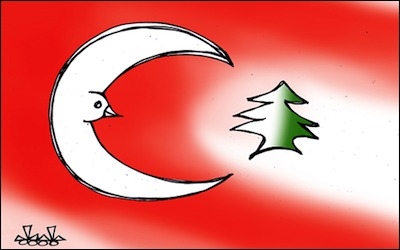
After landing on August 31, Macron announced clearly the main objective of his second visit aimed to avoid Lebanon ending up “in the hands of the vileness of the regional powers” and to prevent the country from falling into a new civil war. What did Macron mean by “the hands of evilness of the regional powers”? Those regional powers are Turkey, Saudi Arabia and Iran, which are competing to carve out an area of influence in this tiny country of 10000m² and barely seven million inhabitants.

Macron’s declared objective is to provide financial assistance to Lebanese people following the deadly explosion but his undeclared objective is to reaffirm France’s former colonies as its spheres of influence, to protect and to guarantee the French political and commercial interests, not only in the East Mediterranean, but also in the Middle East. This is occurring most notably in Africa, where it is currently challenging Turkish attempts to spread its interests. By gaining a foothold in Lebanon, Macron can weaken Turkish attempts to become the gatekeeper of the Sunni stronghold of north Lebanon.

Turkey’s activities are centered around the northern port of Tripoli, a stronghold of Sunni political Islam and an urban center for the Lebanese Sunni population. As such, the area is a natural focus for Turkey. The Akkar Governorate, home to Lebanon’s tiny Turkmen minority, is also an area of interest.

Turkey seeks to leverage both its Sunni Islamist credentials to appeal to Sunni Arab populations, and where relevant its Turkic ethnicity to appeal to Turkic remnant populations in the Levant. Available evidence suggests that in Lebanon, a similar pattern is being followed. Turkey has been working slowly and assiduously, via NGOs and government relief organizations such as the Turkish Cooperation and Coordination Agency – TIKA to establish its foothold in the country. On July 4 two Turkish and two Syrian citizens on a flight to Lebanon from Turkey were arrested as they attempted to smuggle $4 million into the country. Lebanese Interior Minister Mohammed Fahmi claimed that the money was intended to finance street-level protests against the Lebanese government. As of now, however, the first signs are emerging that Sunni Islamist Turkey is seeking to fill the vacuum, and to recruit the Lebanese Sunni street to its banner.

Catégories
Blog

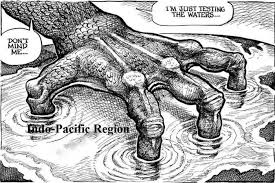
US BUILDING UP OF INDO PACIFIC NATO TO COUNTER CHINA

US BUILDING UP OF INDO PACIFIC NATO TO COUNTER CHINA

On August 31,in the framework of the ongoing summit of the US-India Strategic Partnership Forum, the US Deputy Secretary pf State Stephen Biegun said in an online discussion that the US is working to strengthen closer defence ties with countries of the India-Pacific region, India, Japan and Australia, to build up Indo- Pacific Alliance modeled on the North Atlantic Treaty Organisation (NATO) with an aim to counter China

Stepehn Biegen is a necons, he’s the number 2 official in the US state department, an American businessman, fluent Russian-speaking diplomat former staffer on the National Security Council in the George W Bush administration and the US special Representative for North Korea in the Trump administration.

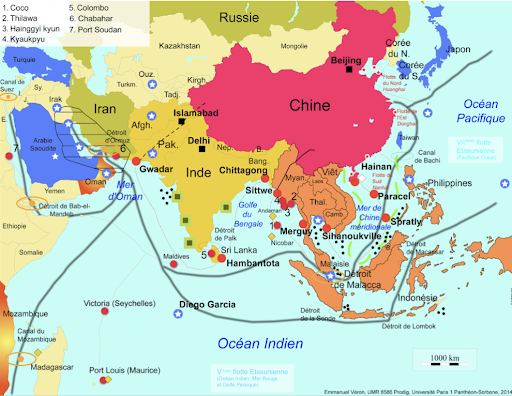
Washington’s aim is to create in the Indo-Pacific region a strong multilateral structures, ultimately to align in a more structured manner, similar to those of NATO. The Donald Trump administration’s Indo-Pacific Strategy is the role played by the Quadrilateral Security Dialogue, or “Quad,” comprised of Australia, India, Japan, and the United States. Since the Quad’s resurrection from a decade-long hiatus in November 2017, the group has met five times and has emphasized maintaining the liberal rules-based international order, which China seeks to undermine or overturn. Washington’s aim is to get the Quad grouping of four countries to work together as a bulwark against a potential challenge from China and to create a critical mass around the shared values and interests.

It is expected that the Quad grouping will meet in New Delhi this autumn with Australia’s possible participation in India’s forthcoming Malabar naval exercise as an example of progress towards a formal defence bloc.

The US wants to see Vietnam, South Korea and New Zealand to eventually join an expanded version of the ‘Quad’ to form an alliance grouping the seven nations working together in order to safeguard their common and shared interests in the Inod Pacific region.

The ongoing standoff with China provides a pretext for the Modi government to unveil its real agenda, the timing alibi to align the Indian foreign policy establishment to openly transform the Quad into a Indo Pacific NATO.

Catégories
Blog

DEUSCHLAND UND EU FORDERN DEN AUFBAU EINER „INDO-PACIFIK“ ALLIANZ, EINES GEGENGEWICHTS GEGEN CHINA

DEUSCHLAND UND EU FORDERN DEN AUFBAU EINER „INDO-PACIFIK“ ALLIANZ, EINES GEGENGEWICHTS GEGEN CHINA

Kürzlich hat der deutsche Außenminister Heiko Maas erklärt: « Der Indo-Pazifik ist eine Priorität der deutschen Außenpolitik. » Im Klartext muss Bundesregierung ihrer Aktivitäten in Süd-, Südost- und Ostasien, darunter militärische Maßnahmen intensivieren, mit doppeltem Ziel:  Wirtschaftskooperation mit China aber ein Gegengewicht gegen Beijing.

Diese deutsche Doktrin wird unter dem Titel  neue « Leitlinien zum Indo-Pazifik » veröffentlicht. Die Bundesregierung versteht unter dem Indo-Pazifik die Gesamtheit des vom Indischen Ozean und vom Pazifik geprägten Raums. Das Dokument plädieret für der Aufbau der ökonomischen Kooperation mit der Volksrepublik aber militärische Kooperation mit  NATO-Partnern Japan und Australien. Eingeführt im Jahr 2007 von dem indischen Marinestrategen Gurpreet S. Khurana,  ist der Begriff „Indo-Pacifik“ eine aktualisierten Version des Kalten Kriegs wo die Regionen nach Freund und Feind aufgeteilt sind.

In ihren veröffentlichten « Leitlinien zum Indo-Pazifik » zielt die Bundesregierung die Bildung   einen « Schulterschluss mit den Demokratien und Wertepartnern der Region », eine Zusammenarbeit mit ihnen nicht nur politisch und wirtschaftlich, sondern auch militär- und rüstungspolitisch ; nicht nur die Teilnahme an sicherheitspolitischen Foren sondern auch die Teilnahme an Übungen in der Region, die Entsendung von Verbindungsoffizieren sowie verschiedene Formen maritimer Präsenz, die bilaterale Verteidigungszusammenarbeit, und Ausbildungsprogrammeder Bundeswehr für ausländische Streitkräfte Dabei handelt es sich vor allem um Japan und Südkorea, um Australien und Neuseeland, um den südostasiatischen Staatenbund ASEAN und um Indien.

Catégories
Blog

WILL INDIA FIGHT A TWO-FRONT WAR WITH CHINA AND PAKISTAN ?

WILL INDIA FIGHT A TWO-FRONT WAR WITH CHINA AND PAKISTAN ?

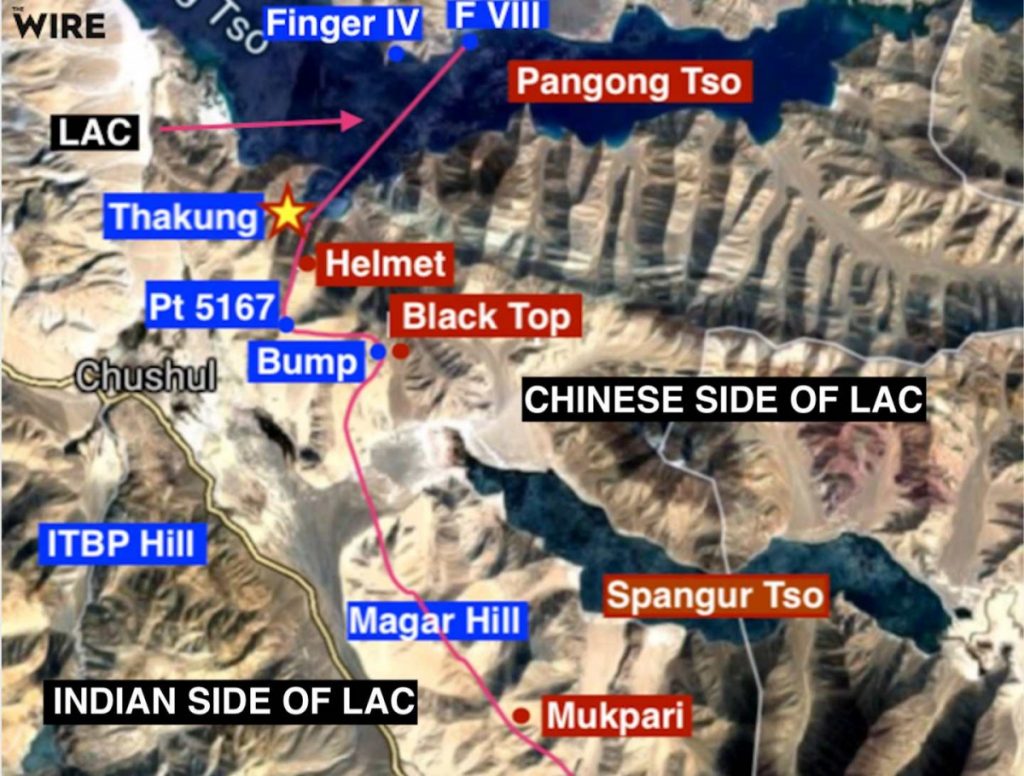
Like China’s Popular of Liberation Army that recently conducted military exercises simultaneously in four seas in preparation for a multi-front war, India military prepares for a possibility to fight a two-front war against collusive military and nuclear allies Pakistan and China. The latest fracas taking place on the night of August 29-30 between China’s People’s Liberation Army and Indian Army along the Line of Actual Control (LAC) in eastern Ladakh along the southern bank of the Pangong Tso lake, has further exacerbated the military standoff continuing since early May and raising the spectre of military confrontation between the most two populous nations.

The key area and the hardest point of friction remains Pangong Lake and Depsang, particularly the Finger Area — a set of eight cliffs jutting out of Sirijap range overlooking Pangong where both armies have deployed almost 100,000 soldiers and weaponry in their forward and depth areas. the quantum of forces currently deployed by both sides of the LAC was also unprecedented. In a sign of dissuasion, Indian army has deployed three additional Indian Army divisions of around 60,000-70,000 personnel to supplement some 20,000 troops from the Leh-based 3 Division tasked with minding the LAC in eastern Ladakh against the PLA. These formations are backed by over 120-odd T72M1 and T90S main battle tanks positioned at various sensitive locations in eastern Ladakh, which in turn are augmented by the newly inducted BAE Systems M777 155mm light weight howitzers, varied missile batteries and associated systems. All these platforms have furthermore been airlifted to the region by the Indian Air Force’s (IAF’s) latest CH-47F Chinook heavy lift helicopters and C-17 and C-130J-30 fixed wing transport aircraft.These extra troops had escalated the situation ominously along the LAC as the corresponding PLA ‘forces-in being’ too are amply supported by formidable armour, artillery and missile assets.

In recent years, Pakistan’s and China’s strategic and territorial interests with regard to India had coalesced, hinting that he anticipated increased military collaboration between the two against Delhi, especially with regard to the strategic Siachen Glacier. Pakistan as a whole, its military, polity and people have longtime suspected India working to break their country into pieces. Consequently, in case of war between India and China, Pakistan will not hesitate to side with China and could swing into action to take advantage of India’s preoccupation with China.

The opening up of a second live conflict front for India, in addition to the one prevailing with Pakistan along the restive Line of Control or LOC in Kashmir, further reinforces the operationally apocalyptic ‘two-front’ war scenario for India. Despite all three countries possessing nuclear arms, conventional war would not be excluded along India’s northern and western borders with China and Pakistan.

Translate »