Catégories
Blog

WILL INDIA FIGHT A TWO-FRONT WAR WITH CHINA AND PAKISTAN ?

WILL INDIA FIGHT A TWO-FRONT WAR WITH CHINA AND PAKISTAN ?

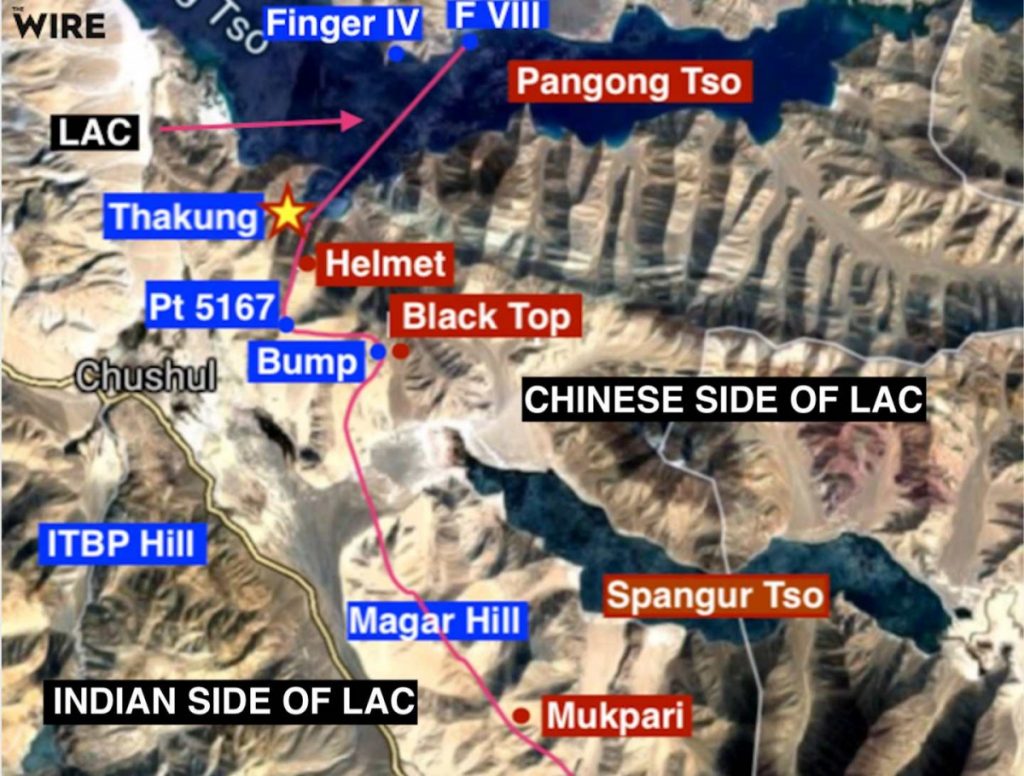
Like China’s Popular of Liberation Army that recently conducted military exercises simultaneously in four seas in preparation for a multi-front war, India military prepares for a possibility to fight a two-front war against collusive military and nuclear allies Pakistan and China. The latest fracas taking place on the night of August 29-30 between China’s People’s Liberation Army and Indian Army along the Line of Actual Control (LAC) in eastern Ladakh along the southern bank of the Pangong Tso lake, has further exacerbated the military standoff continuing since early May and raising the spectre of military confrontation between the most two populous nations.

The key area and the hardest point of friction remains Pangong Lake and Depsang, particularly the Finger Area — a set of eight cliffs jutting out of Sirijap range overlooking Pangong where both armies have deployed almost 100,000 soldiers and weaponry in their forward and depth areas. the quantum of forces currently deployed by both sides of the LAC was also unprecedented. In a sign of dissuasion, Indian army has deployed three additional Indian Army divisions of around 60,000-70,000 personnel to supplement some 20,000 troops from the Leh-based 3 Division tasked with minding the LAC in eastern Ladakh against the PLA. These formations are backed by over 120-odd T72M1 and T90S main battle tanks positioned at various sensitive locations in eastern Ladakh, which in turn are augmented by the newly inducted BAE Systems M777 155mm light weight howitzers, varied missile batteries and associated systems. All these platforms have furthermore been airlifted to the region by the Indian Air Force’s (IAF’s) latest CH-47F Chinook heavy lift helicopters and C-17 and C-130J-30 fixed wing transport aircraft.These extra troops had escalated the situation ominously along the LAC as the corresponding PLA ‘forces-in being’ too are amply supported by formidable armour, artillery and missile assets.

In recent years, Pakistan’s and China’s strategic and territorial interests with regard to India had coalesced, hinting that he anticipated increased military collaboration between the two against Delhi, especially with regard to the strategic Siachen Glacier. Pakistan as a whole, its military, polity and people have longtime suspected India working to break their country into pieces. Consequently, in case of war between India and China, Pakistan will not hesitate to side with China and could swing into action to take advantage of India’s preoccupation with China.

The opening up of a second live conflict front for India, in addition to the one prevailing with Pakistan along the restive Line of Control or LOC in Kashmir, further reinforces the operationally apocalyptic ‘two-front’ war scenario for India. Despite all three countries possessing nuclear arms, conventional war would not be excluded along India’s northern and western borders with China and Pakistan.
Catégories
Blog

Eskalation im Mittelmeer zwischen Griechenland und der Türkei

Eskalation im Mittelmeer zwischen Griechenland und der Türkei

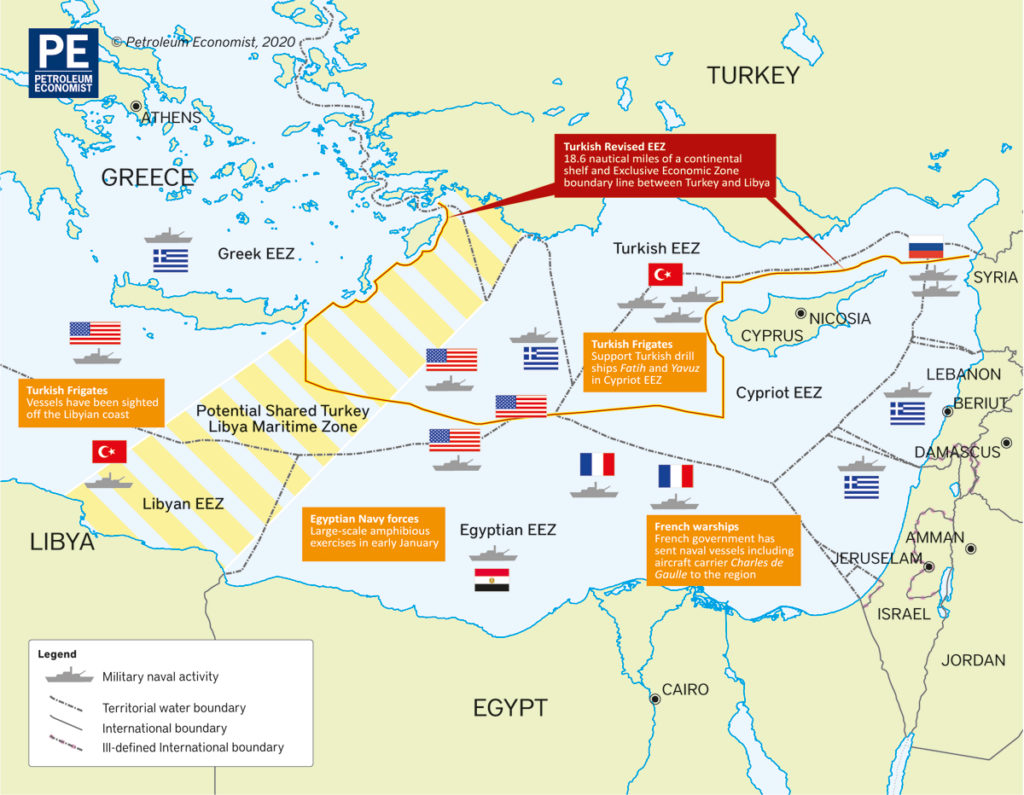
Griechenland und die Türkei streiten sich um Gewässer rings um die griechischen Ägäisinseln; der Streit verbindet sich mit erbitterten Auseinandersetzungen zwischen der Türkei und Zypern um Erdgasvorkommen ebenfalls im östlichen Mittelmeer. Kern sind sich gegenseitig ausschließende Ansprüche auf große Seegebiete, insbesondere auf diejenigen, die rings um die zahlreichen griechischen Ägäisinseln liegen. Der Konflikt eskaliert, als ein türkisches Forschungsschiff unweit einer griechischen Insel Erkundungstätigkeiten durchführte und dabei von türkischen Kriegsschiffen eskortiert wurde.

Der Streit zwischen Griechenland und der Türkei im östlichen Mittelmeer eskaliert. Der griechisch-türkische Konflikt droht jetzt militärisch zu eskalieren. Seit Mitte Juli ist der Konflikt mehrmals scharf eskaliert. Der Konflikt ist Teil eines Machtkampfs um Erdgasvorräte im östlichen Mittelmeer, in den neben Griechenland insbesondere das EU-Mitglied Zypern involviert ist Die Türkischen suche im östlichen Mittelmeer nach Öl und Gas wird kontert von Griechenland mit einer militärischen Übung im Verbund mit Frankreich. In den vergangenen Tagen hat sich Konflikt  zugespitzt seit Ankara am Dienstag angekündigt hat, vor der griechischen Insel Kastellorizo, liegt vor der türkischen Provinz Antalya, knapp zwölf Quadratkilometer groß, Erdgaserkundungen aufzunehmen. Athen protestiert gegen die türkischen Explorationspläne, da es das Meer um Kastellorizo für sich beansprucht.

Der Konflikt zwischen Griechenland und der Türkei im östlichen Mittelmeer hat sich in den vergangenen Wochen erheblich zugespitzt, um all seine Inseln eine « Ausschließliche Wirtschaftszone » (AWZ, « 200-Meilen-Zone ») für sich in Anspruch zu nehmen. Die Turkei hatte angekündigt, Erkundungen in den Gewässern vor Kastellorizo vorzunehmen, einer der östlichsten griechischen Inseln. Kastellorizo, lediglich zwölf Quadratkilometer groß, von nur 500 Menschen bewohnt, liegt unmittelbar vor der türkischen Provinz Antalya; laut griechischem Maximalanspruch darf es eine AWZ beanspruchen, die 200 Seemeilen weit reicht, wodurch Antalya den Zugriff auf große Teile seiner Küstengewässer verlöre. Ankara hatte im Juli Kriegsschiffe entsandt, um die Arbeit des Forschungsschiffs Oruç Reis vor Kastellorizo durchzusetzen. Athen wiederum hatte seine Streitkräfte in Alarmbereitschaft versetzt.

Am 6. August schloss Griechenland mit Ägypten ein Abkommen, in dem die Seegrenze zwischen den zwei Ländern im Mittelmeer abgesteckt wurde. Das Abkommen, das türkischen Ansprüchen offen zuwiderläuft, wurde am 18. August vom ägyptischen Parlament ratifiziert; das griechische Parlament soll dies am heutigen Mittwoch tun. Am 10. August, wenige Tage nach der Unterzeichnung des griechisch-ägyptischen Abkommens, nahm Ankara seine zuvor ausgesetzten Erkundungen vor Kastellorizo durch das Forschungsschiff Oruç Reis wieder auf, eskortiert von die Fregatte Kemal Reis, eine von vier Fregatten der türkischen Barbaros-Klasse, die von der Hamburger Werft Blohm & Voss gebaut wurden.

Der griechisch-türkischen Streit ist innerhalb der EU hoch umstritten; Frankreich etwa positioniert sich klar auf Seiten Griechenlands und baut seine Militärpräsenz im östlichen Mittelmeer aus. Die Differenzen in der EU sollen auf dem informellen Treffen der EU-Außenminister am Donnerstag und Freitag dieser Woche besprochen werden.

Catégories
Blog

The two main objectives aimed by the backers of the color revolution in Belarus

THE TWO MAIN OBJECTIVES AIMED BY THE BACKERS OF THE COLOR REVOLUTION IN BELARUS

Undoubtedly, the ongoing protests in Belarus look like a color revolution theorized by the late Gene Sharp writings. A color revolution instrumentalizes the psyche of the youth in order to change regime and to topple heads of states targeted by the US and the European Union. A color revolution is heavily funded by a myriad of foundations and NGO themselves financed directly or indirectly by the US government and the EU states. To mobilize the youth, the backers of the Color revolution resort to sophisticated methods and techniques of modern propaganda meticulously studied and researched by the eminent Russian physiologist, influenced by Ivan Pavlov Russian School, Serge Tchakoutine in his seminal classic book “the rape of the masses by the political propaganda”

The main trigger of color revolution consist in the contestation of presidential election results or increasing of prices of basic commodities in case of a severe economic crisis. The basic technique of color revolution is the civil disobedience and pacific gatherings organized generally in symbolic locations of the capital designed to form a crowd waving flags and chanting slogans against the authorities. A color revolution begins always peacefully with organizers seemly sympatric distributing cookies and flowers to the by passers. The second basic technique of color revolution is to provoke the police prompted to riposte with often wounded and dead protesters, triggering condemnation by the “international community” that is US and Europe

By observing the events in Belarus since August 9 and the victory of the incumbent president Alesander Lukashenko, one can say without fooling oneself, this pacific country is undergoing in this time a color revolution. It is an open secret to say that Belarus and Lukashenko were since longtime targeted by color revolution backed by the US and Europe.

The headquarter of Belarusian opposition propaganda is located in neighboring Poland. Poland’s Central Psychological Operations Group “King Stefan Báthory” is situated in Bydgoszcz. It is a city in northern Poland, on the Brda and Vistula rivers. Currently, to make it seem less “offensive” and “harmless”, PsyOps are called “Information operations”. Similarly, to how the UK transitioned

The question is to ask oneself what the backers of color revolution are looking for in this relatively tiny land. One element of the answer is easy to guess as Belarus is considered as a buffer zone against the advance of NATO towards the western Russian border. So Belarus is located in a strategically location viewed by the Kremlin as a bulwark against NATO expansionism

The second element of the answer is less evident as Belarus is not Libya with huge oil and gas reserves. But Belarus has natural resources coveted by the western corporations: the forest attracting the West after Carpathians are cut down to zero now and the decimation of the Białowieża Forest World Heritage site, on the border between Poland and Belarus, which is an immense range of primary forest including both conifers and broadleaved trees covering a total area of 141,885 hectares.

Catégories
Blog

What was behind the atomic attack against Japan ?

75th ANNIVERSARY OF HIROSHIMA AND NAGASAKI

What was behind the atomic attack against Japan?

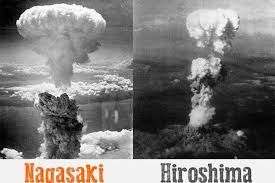
At the occasion of the 75th anniversary of bombing the two Japanese cities Hiroshima and Nagasaki on August 6 and 9, 1945, the debate over the use of nuclear arms against Japan is not yet close. The official story propagated by conventional historiography assumes that the US resorted to the atomic bomb against Japan in order to put an end to the WWII, to save American lives and to alleviate the suffering of the Japanese people. Eminent historians shunned the dominant these rejecting the humanitarian motivation highlighting rather the geopolitical reasons behind the atomic attack against Japan.

By April, 1945, Japanese leadership had no choice but to surrender as American forces had gained a firm foothold on Okinawa. The combined US-Australian island-hopping attack from the Solomons, near New Guniea, all the way to Japan had begun in 1943. By April 1945 it had reached Japan’s Okinawa, close to three months before the deadline Moscow had set for its attack on Japan.

Through the Allied intelligence operations, in particular Australian Military forces, the US leadership knew all about the imminent Japan surrender. There are leakages of information and interception of Japanese signals which contained details of Allied ‘plans for certain operations in the Philippines’ and details of recent Australian army intelligence estimates of Japanese strength there. There were messages from Moscow being passed on to the Japanese consulate in Harbin, northern Manchuria, and then on to Tokyo and among those messages were those US plans for the island-hopping attack on Japan.

From then, the Japanese Foreign Ministry established contacts with Moscow to broker a peace agreement. The emperor also still pinned hopes on those contacts with Moscow while US requested unconditional surrender. That wishful thinking only ended on August 8 when the USSR formally declared war on Japan and immediately began to attack into Japanese-occupied territories in Manchuria and elsewhere. On August 9 the US nuclear bombed Nagasaki. Six days later Japan surrendered unconditionally to the Allied forces.

Non conventional historical findings show irrefutably it was the prospect of Soviet war against Japan more than the nuclear attacks that forced Tokyo to surrender. After Nazi Germany’s defeat, Soviet forces turned toward Japan with the aim to gain some lost territories – southern Sakhalin and the Kuril islands. It was only hours from landing Soviet troops at Rumoi for the occupation of Hokkaido when Truman reportedly said the troops should go to take some traditionally Japanese islands in the Kurils close to Hokkaido, a deed which Tokyo still uses to refuse a peace treaty with Moscow.

Catégories
Blog Histoire

For which was meant US Atomic bomb?

75 years ago

For which was meant US Atomic bomb ?

On August 6,1945, Japan’s Hiroshima was bombed by US atomic bomb, nicknamed “Fat Man,” exploded with a force equivalent to 21 kilotons of TNT fired an area that covered three square miles, killing instantly 140000 civilians. On August 9, Nagasaki was bombed by the plutonium core atomic bomb the U.S. dropped that day from the B29 Bockscar, captained by Major Charles Sweeney, killing instantly around 70000 civilians. Despite the Nagasaki bomb was more powerful than that of Hiroshima, material and human damage was limited by the fact that the bomb missed its target and that the mountains surrounding Nagasaki, which is located in a valley, contained the blast. However, in Urakami Valley, where the bomb landed, nearly 70 percent of the population perished.

In the aftermath of the WWII, politicians, military and historians have challenged the official narrative of Truman’s administration that the launch of atomic bomb was aimed at “saving American lives” Admiral William D. Leahy, Truman’s personal Chief of Staff, was critical of using the atomic bombs saying the U.S. “adopted an ethical standard common to the barbarians of the dark ages.” Even the National Museum of the U.S. Navy in Washington, DC acknowledges that the vast death and destruction wreaked by atomic bombings “made little impact on the Japanese military.

Truman even knew very well, through the intelligence reports, Japanese leadership were looking for honorable conditions to surrender. Truman was aware of civilians that were becoming increasingly demoralized for lack of food and energy supplies. To this must be added the huge destruction as the U.S. had firebombed and largely destroyed more than 100 Japanese cities, leaving millions homeless.

The question is not whether the atomic bombs were militarily or morally justifiable—they clearly were not. The question is why Truman chose to use them when he knew the end of the war was imminent and said so repeatedly and knew they were putting humanity on a glide path to annihilation.

Some studies point out that the U.S. wanted to test the uranium and plutonium-type bombs to show off their military muscle and take the advantage in the post-World War II diplomacy. As historians have increasingly come to realize, Truman had been obsessed with the Soviet Union since April 13, 1945—his first full day in office. Truman’s confrontation with Foreign Minister Vyacheslav Molotov on April 23, in which he erroneously accused the Soviets of having broken their Yalta promises, marked how dramatically the wartime alliance between the U.S. and the U.S.S.R. had deteriorated in the 11 days since Roosevelt’s death.

James Byrnes, who became Truman’s Secretary of State in early July but had been his most trusted advisor since his first day in office, and Gen. Leslie Groves, the driving force behind the Manhattan Project, both asserted that the Soviet Union loomed as the real target behind the bomb project. Groves stated on another occasion, “There was never from about two weeks from the time I took charge of the Project any illusion on my part that Russia was our enemy, and the Project was conducted on that basis.”

Byrnes told three visiting scientists in late May that the bomb was needed to reverse Soviet gains in Eastern Europe. The future Nobel laureate physicist Joseph Rotblat who quit the project a few months later, when he said in March 1944, “You realize of course that the main purpose of this project is to subdue the Russians.” Some studies point out that the U.S. wanted to test the uranium and plutonium-type bombs to show off their military muscle and take the advantage in the post-World War II diplomacy.

Catégories
Blog

War of low intensity in the Himalayan China-India border

WAR OF LOW INTENSITY IN THE HIMALAYAN CHINA-INDIA BORDER

Since the bloody skirmish, the Chinese and Indian Corps Commanders have held four rounds of talks so far on June 6, 22, 30 and July 14 to de-escalate from the build-up areas in Galwan Valley, Gogra-Hot Springs and Finger area along the Pangong Tso (lake) in Ladakh. The fourth talks on July 14 went lasting for 15 hours failed to implement the disengagement process despite a consensus for full disengagement and de-escalation. On August 2, the fifth round of talks between Chinese and Indian top diplomats resumed at Moldo on the Chinese side to take forward the stalled process of disengagement on the Line of Actual Control (LAC).

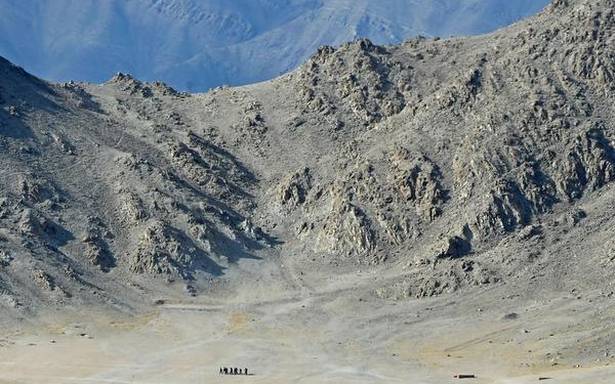
The stumbling blocks relates to the Finger area. The ‘fingers’ are mountain spurs on the northern bank of the lake, a set of eight cliffs jutting out of the Sirijap range overlooking the Pangong Lake. India accused China’s PLA of grabbing positions on Finger Four overlooking Indian deployments, curtailing the scope of Indian patrols right up to finger 8. Fingers Four and Eight are eight kilometres apart.

At Pangong Lake, following earlier talks, Chinese troops pulled back from the base of Finger 4, where Beijing’s claimed border is, and moved to Finger 5, still well within where India sees the LAC at Finger 8.

As a sign of determination of the PLA to hold its positions on the north bank of Pangong Tso, the new constructions in the Finger Area where  set up permanent bunkers, pillboxes, observation posts and tented camps over the last three months.

De-escalation of the border conflict with China can only begin complete disengagement between the two armies along the LAC. The ground situation remains unchanged in the Ladakh sector where both armies have deployed almost 100,000 soldiers and weaponry in their forward and depth areas and are prepared for a long haul through the winter months.

Catégories
Blog

Rivalitäten zwischen Frankreich, Italien und der Türkei um die Kontrolle über Libysches Öl und Gas

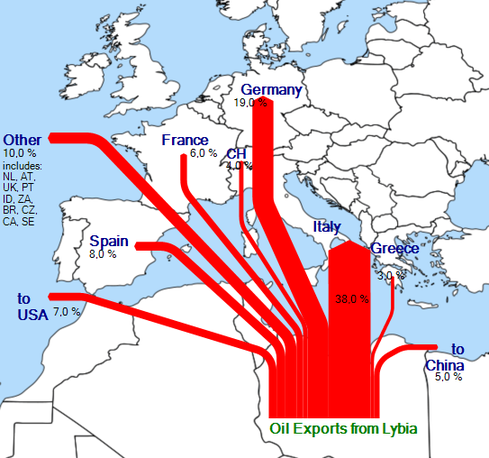
Seit der Ermordung von Kadaffi durch die NATO Invasion im Jahr 2011,ist Libyen Schauplatz von Bürgerkrieg und geopolitischen Interessen und zum Schlachtfeld geworden. Die drei Hauptakteure, die hinter der Zerstörung Libyens stehen, sind Frankreich, Italien und die Türkei. Zur Kontrolle und Förderung des libyschen Erdöls führen diese drei Protagonisten einen verdeckten Krieg und tragen zur Aufrechterhaltung der Rivalitäten zwischen den verschiedenen Konfliktparteien bei.

Abgesehen von ihrem Interesse an der Kontrolle und Plünderung der fossilen Ressourcen Libyens, versuchen diese drei Länder, eine neokolonialistische Vergangenheit für Italien und Frankreich und eine imperiale Vergangenheit für die Türkei wiederzubeleben.

Für die Türkei, ist Libyen nicht ein unbekanntes Land. Libyen kein unbekanntes Terrain: über 350 Jahre war das Land Teil des Osmanischen Reiches. Kemal Atatürk, der Mann, die neue Republik Türkei begründete, kämpfte 1911 als Major gegen die Italiener in der libyschen Wüste. Er machte sich die Guerilla-Techniken der Beduinen zu eigen, die er später erfolgreich im türkischen Befreiungskrieg gegen die europäischen Großmächte einsetzen sollte. Heute begehrt die Türkei Libyen sowohl für ihr Öl als auch als Markt für ihre wachsende Rüstungsindustrie. Die Türkei unter Staatspräsident Erdogan hat es sich zum Ziel gesetzt, an der nordafrikanischen Küste einen militärischen Stützpunkt zu errichten. Sie konnte binnen weniger Jahre im Bereich der bewaffneten Drohnentechnik zu einem Marktführer aufsteigen und ihre Systeme an aufstrebende Entwicklungsländer verkaufen. Die Türkei hat der Tripolis-Regierung zugesichert, die Ölfelder militärisch zu sichern. Der türkische Minister für Energie und Ressourcen, Fatih Dönmez, plant in Zusammenarbeit mit der libyschen Konzern NOC eine Ölförderung für den türkischen Markt.

Die ehemalige Kolonialmacht Italien stellt mit dem Ölkonzern ENI den größten ausländischen Akteur für die Exploration und Förderung von Erdöl und Gas in Libyen. Italien unterstützt die Türkei, um Frankreichs Ambitionen zur Erweiterung ihrer Einflusssphäre in der Sahel-Region zu unterbinden und den französischen Konzern Total vom libyschen Öl-Markt fernzuhalten.

In einem Telefongespräch sichert Macron EL Sisi die Unterstützung Frankreichs im Falle einer ägyptischen Militärintervention in Libyen gegen die von der Türkei unterstützten Söldner.

In den nächsten Tagen werden wir sehen, wer von den drei Protagonisten den Löwenanteil an der Ausplünderung von libyschem Öl und Gas haben wird

Catégories
Blog

How EU is playing India against China in Indo-Pacific geopolitical rivalry

How EU is playing India against China in Indo-Pacific geopolitical rivalry

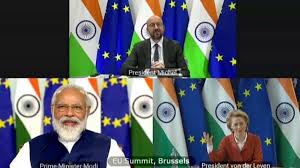
On Wednesday, European Council President Charles Michel held a news conference in Brussels following a virtual summit with the Indian prime minister Narendra Modi in the framwork of what officially called the Bilateral Trade and Investment Agreement set up in 2007.

European Council President Charles Michel pleaded for reinforcement of “ strategic goals” and an “indispensable partner” amid increasingly tensions with China. “The EU and India are more than economic partners – we are political partners,” Michel told reporters after the summit. “India can count on the European Union, and we count on India to be a key partner.”

Michel justified the warmth EU leaders bestowed on India, by the fact that both partners share common values grounded on democracy and human rights against what it calls a systemic rival in China, witnessed by the last development  in Hong Kong prompting Europe to consider a “revision” in its approach to Beijing. Michel cast light on the shared values between Europe and India saying “India and the European Union are two democracies with traditions and respecting human rights and the international rule of law. So we do have the potential to make further strides forward when it comes to the economy, the environment or digital issues,” he said. “When it comes to the political side of things, India is a partner because we share the same vision of globalisation, inspired by democratic standards, principles of freedom and liberty and inclusivity,” he added.

The EU and India will further develop security and defence consultations and military contact, including maritime security in the Indian Ocean.

Ursula von der Leyen, president of the European Commission, said that India is a partner for the EU’s role of “defending our values”.

 “We share a human-centric approach. That means using secure digital technologies to improve the quality of life of citizens, but at the same time respecting privacy and individual freedoms,” von der Leyen added.

The EU’s foreign policy chief, Josep Borrell, said this week that the “draconian” national security law Beijing imposed on Hong Kong “would require revision of our approach and will clearly have an impact on our relations”.

As a sign of increasing tensions with Beijing, New Delhi and Brussels also came up with a joint statement after the summit – a contrast to the inability of Beijing and Brussels to come to terms with President Xi Jinping and Premier Li Keqiang last month.

Catégories
Blog Coronavirus

L’épidémie du coronavirus face à la logique implacable de la loi du profit

L’ÉPIDÉMIE DU CORONAVIRUS FACE A LA LOGIQUE IMPLACABLE DE LA LOI DU PROFIT

Les premiers cas du coronavirus font leur apparition en Chine, à Wuhan dans la province du Hubei au mois de décembre 2019. Du fait de son carcatère contagieux, le coronavirus connu aujourd’hui sous le nom de COVID-19 se répand comme une trainée de poudre infectant 2,1 millions de personnes et entraînant plus de 140 000 morts. La France comptabilise plus de 108 000 contaminations et plus de 17 900 décès.

Des sources officielles, non vérifiées, données par les gouvernements et les instances sanitaires qui en dépendent, on assiste à une baisse du nombre d’admis à la réanimation et celui de morts. Si les chiffres communiqués par les médias de propagande donnent une idée approximative de l’évolution de l’épidémie du coronavirus, ils ne nous disent rien sur les raisons de cette baisse. Celle-ci est-elle due à un certain reflux de l’épidémie atteignant son « pic » ou est-elle due aux mesures de confinement imposées aux populations depuis le 17 mars dernier ?

Inspirés par les principes du capitalisme sauvage, élaborés par les Friederick von Hayek et les Milton Friedmann, qui ne jurent que par la loi sacro sainte du marché, les gouvernements actuels en Europe et en Amérique du Nord, de droite comme de gauche, ont procédé à des privatisations des principaux services publics, au démantèlement des acquis sociaux arrachés de haute depuis le XIX ème siècle et ont appliqué des politiques austéritaires dont l’éducation et la santé ont fait les frais. Le système de santé a été la première victime des politiques austéritaires et archéo libérales et le personnel des hôpitaux publics n’ont pas attendu le coronavirus pour tirer la sonnette d’alarme. Les naïfs et les simplistes pendent que la macronie et le représentant du « business mondialisé » ont décrété des mesures de confinement, par souci de la santé des Français. En réalité, les mesures de confinement ont été prises à contre cœur, non pas pour protéger les populations contre la contamination par le coronavirus mais pour désengorger les hôpitaux publics comparables à ceux d’un pays sous développé selon l’expression d’un médecin urgentiste Après quatre semaines de ralentissement de l’exploitation quotidienne de la force de travail des millions de salariés, le capital et le gouvernement qui sert ses intérêts en bon père de famille, sont à bout ; ils n’en peuvent plus. Il faut absolument et le plus vite possible envoyer ces millions de travailleurs au casse-pipe et à leur lieu d’exploitation, au détriment de leur santé pour recommencer à générer de la plus-value et du profit, peu importe qu’ils soient contaminés par le coronavirus. En effet, l’épidémie du coronavirus a montré d’une façon lumineuse la vraie nature d’un système qui produit non pas pour satisfaire des besoins vitaux mais pour la demande solvable et pour le profit. La santé des hommes est le cadet des soucis du capital, des capitalistes et des gouvernements qui sont là non pas pour le soi disant intérêt général mais pour celui d’une archi minorité qui a fait main basse sur les richesses produites par des générations de travailleurs et grâce auxquelles elle met au pouvoir les politicards dévoués à la protection de ses intérêts grâce à cette mascarade d’élections organisés à intervalles olympiques où ce sont toujours les mêmes qui sont aux commandes depuis deux siècle

Catégories
Blog

VICTOIRE DU PEUPLE DU HONDURAS CONTRE LA POLITIQUE DE PRIVATISATION DE L’ÉDUCATION ET DE LA SANTE

VICTOIRE DU PEUPLE DU HONDURAS CONTRE LA POLITIQUE DE PRIVATISATION DE L’ÉDUCATION ET DE LA SANTE

Depuis Thatcher et Reagan,le capital a pris le dessus sur le travail et les rapports de force se sont inversés. Désormais depuis bientôt 40 ans,les attaques en règle contre les acquis sociaux du monde du travail,obtenus de haute lutte depuis la fin du XIX siècle, des attaques légitimées par ce catéchisme qui se répète comme des paroles d’évangile, « trop de dépenses » »il faut réduire les dépenses publiques » etc deviennent au centre de toutes les politiques économiques des gouvernements de droite comme de gauche. Cette politique de casse sociale est illustrée aujourd’hui en France par la macronie, un pur rejeton du grand capital français européen et international

Parallèlement à leur politique de regression et de casse sociale, les différents gouvernements instaurent des « Etats forts », un euphémisme qui signifie au fond dictature et terrorisme d’Etat sous le fallacieux prétexte de lutte contre le terrorisme islamique mais qui sont dirigés essentiellement contre les mouvements sociaux et syndicaux de protestation et de contestation. Les lois ultra répressives et ultra sécuritaires mises en place contre le mouvement des gilets jaunes sont le dernier exemple en date en matière de criminalisation des luttes sociales et politiques;

L’Amérique latine qui fut le laboratoire des politiques archéo libérales avec les fameux « Boys de Chicago », les enfants chéris de Von Hayel et de Milton Friedman, est devenue aussi le symbole de résistance à cette même politique, une résistance incarnée par la révolution bolivarienne de Hugo Chavez, devenue une référence et un exemple pour les autres pays de ce continent qui a toujours été la chasse gardée de l’impérialisme américain en vertu de la doctrine Monroe de 1823. Aujourd’hui, le Venezuela est de nouveau en ligne de mire des Etats unis et de leurs vassaux européens qui cherchent à renverser le gouvernement démocratiquement élu de Maduro en le remplaçant par leur pantin Joan Guiado.

Malgré le basculement des deux grands pays d’Amérique latine, l’Argentine et Brésil gouvernés par des néo fascistes à la solde des Etats unis, la résistance continue et s’affirme jour après jour. Le dernier exemple en date est celui de ce petit pays dont personne ne parle, le Honduras qui fêtera le 28 juin prochain, le 10ème anniversaire du coup d’Etat « constitutionnel », une nouvelle technique qui sera utilisée quelques années plus tard contre Dilma Roussef au Brésil, qui renversa un président de gauche démocratiquement élu, Manuel Zelaya.

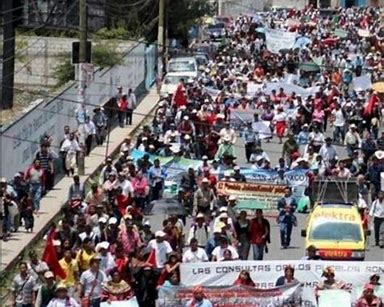
Aujourd’hui, au Honduras, le peuple est de retour sur le devant de la scène avec un soulèvement populaire contre la politique de casse sociale et de privatisation, comme sous la macronie en France, du président Juan Orlando Hernandez qui était contraint de céder et d’annuler les deux décrets contestés par les docteurs et les enseignements qui accusent le gouvernement de privatiser les deux secteurs de la santé et de l’enseignement.

Translate »