Catégories
Blog Coronavirus

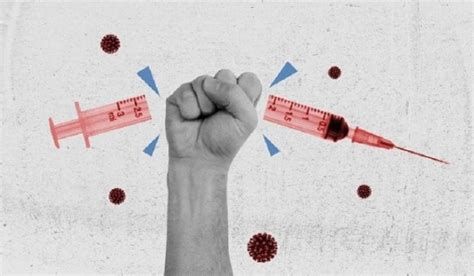
Intensification de la guerre psychologique contre les opposants à la dictature sanitaire

INTENSIFICATION DE LA GUERRE PSYCHOLOGIQUE CONTRE LES OPPOSANTS A LA DICTATURE SANITAIRE

Il a fallu un virus invisible à l’œil nu, mesurant moins de 0,3 micromètre pour révéler au grand jour la nature du système politique et économique que les mass médias et leurs experts attitrés appellent démocratie, mot répété à satiété à longueur de journée faisant croire à l’existence d’un régime réellement démocratique dès lors qu’un morceau de papier mis dans les urnes à intervalle olympique.

Depuis l’apparition du virus à la fin de l’année 2019, les stratégies mises en œuvre par les « démocraties » consistaient à confiner les populations et mis au ralenti de l’économie fondée sur la production des biens et des services dans le seul et unique but, le profit et au délà l’accumulation. Autrement dit, les biens et services sont produits uniquement pour la demandé solvable et cette économie que l’on appelle capitalisme, terme tabou que personne n’ose prononcer, abhorre et méprise tout ce qui est gratuit.

L’avènement du virus a lourdement perturbé les processus de production de profit et les gouvernements, comme pour la crise financière de 2008, se sont mis à quatre pattes pour venir au secours du capital et des détenteurs des moyens de production, en distribuant des milliards par des aides, des subventions et diverses exonérations de charges fiscales et sociales

face aux restrictions à répétition suite à la propagation du virus et l’apparition du variant delta, le capital et détenteurs des moyens de production ont intimé l’ordre au gouvernement de ne plus « fermer l’économie » en procédant à la vaccination des populations, présentée comme la panacée universelle et les responsables de la politique sanitaire ont exercé de fortes pressions sur les fabricants des vaccins pour fournir à la va vite un vaccin. Les Pfizer, les Moderna, les Johnson & Johnson n’en espéraient pas plus, car la production d’un vaccin resté au stade expérimental, sera une occasion en or pour engranger des profits juteux

c’est dans ce contexte que le gouvernement français a mis en place le « pass sanitaire », une formule vague, un euphémisme pour ne pas dire vaccination obligatoire. Mais la résistance n’a pas tardé à se manifester à cette « dictature sanitaire » par des manifestations de plus 6 semaines rassemblant des centaines de milliers voire des millions de protestataires.

Pou venir à bout de cette résistance, comme à l’époque des gilets jaunes, le pouvoir aidé par des médias de propagande aux ordres déclenche une guerre psychologique contre les anti pass et anti vaxx, qui jour après jour, va en s‘intensifiant. Pour mener cette guerre psychologique, des médecins et des soi disant experts rompus à l’art de la propagande et de surcroît stipendiés ont été mobilisés dans les médias de propagande pour pousser les récalcitrants à servir de cobayes, ce qui représente un changement radical par rapport aux précédents vaccins dont les essais cliques étaient pratiqués sur rats et souris alors que les essais cliniques des vaccins actuels sont pratiqués directement sur des humains.

Les formes mises en œuvre par les stratèges de la guerre psychologiques contre les anti pass et anti vaccin sont multiformes. Outre les médias de propagande qui martèlent à longueur de journée, 24/24 et 7/7 incitant les hésitants et les récalcitras à se servir de cobayes, le pouvoir à déployé une campagne émotionnelle, jouant sur les affects et les bas instincts des individus, par l’affichage sur l’ensemble du territoire, avec l’argent du contribuable, des slogans associant vaccination et la « liberté retrouvée » Des spots publicitaires passant en boucle dans les médias de propagande publics et privés créant une association d’idées et un réflexe pavlovien entre vaccination, sociabilité, bars, restaurants etc Un signe qui ne trompe pas de l’intensification de la guerre psychologique initiée par la macronie, les sondages faisant croire que les partisans de la vaccination sont majoritaires alors qu’il ne s’agit au fond qu’une opération de manipulation comme lors de chaque période précédant l’élection présidentielle, car les 2/3 des vaccinés ont été forcés à la vaccination soit pour garder leur travail soit pour aller dans les lieux de loisirs des masses. Il convient de le répéter d’abord que les sondages sont un des outils de la propagande officielle visant à la manipulation du psychisme de certains groupes cibles et non pour refléter l’« état de l’opinion à un instant t », et ensuite, les sociétés chargées de sonder appartiennent à des groupes privés et financiers bénéficiant des largesses du pouvoir.

Mots clés : COVID, guerre psychologique,sondages,propagande, vaccin

Catégories
Blog

Does Democracy really exist?

Does Democracy really exist ?

What we call today democracy in the West is but a fake and trompe l’oeil democracy that has nothing to do with the very definition of the term, a government of the people, by the people and for the people. Multipartism is but a fake and trompe l’oeil multipartism as since 200 years, the political parties accepted to run for and to rise to power are those prone to protect the interests of capitalists and exploited class inside and outside the borders of the state. The history of US interventions since the end of the WWII to topple hostile regimes and to replace them by puppet ones all over the world shows that only parties or politicians subject to capitalist class imperatives can come to power.The freedom of expression is but a fake and trompe l’oeil freedom of expression as the mass media doomed to manipulate the public opinion and determine the choice of the voters in the ballot box are controlled by capitalist class and the its subservient state whose role is to tame the labor force, to reproduce classes and relations of production, to maintain oppressed layers into submission and to preserve the statu quo through laws and legislation benefiting the ruling class and both repressive apparatus police, army and ideological apparatus committed to manipulate the human psychism, to make the masses mindless, idiot, to bewitch and to deceive them

Catégories
Blog

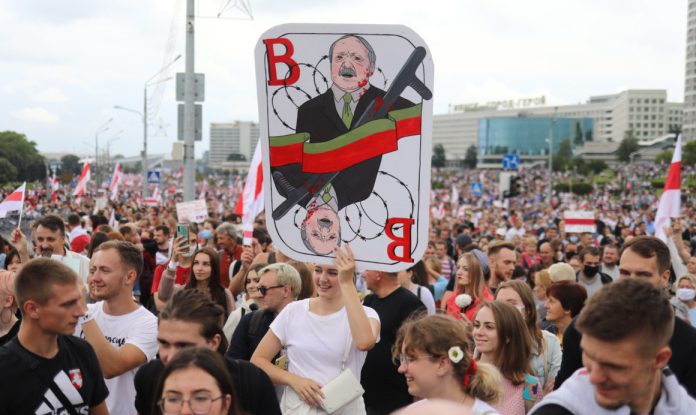
HOW US,UK AND EUROPEAN UNION TRIGGERED REGIME CHANGE IN BELARUS

The recent Kidnapping by Belarus of the Neo Nazi Toman Protasevith catapulted back to the top of the mainstream news the at-times fiery protests that raged across Belarus throughout 2020. Similar to previous color revolution for regime change, western propaganda created leader and Belarus was not the exception with the creation of a stooge of the west in the person of Svetlana Tikhanovskaya recognized by Western leaders as the legitimate Belarusian leader.

Western propaganda has deigned to mention that for many years prior to the unrest’s eruption, London and Washington had funded, trained, and promoted the very elements that took to the streets in opposition to President Alexander Lukashenko. Belarusian opposition movement promoted the killing of Belarusian President Alexander Lukashenko in a similar way to Muammar Qaddafi of Libya.

RAND, US think tank published report with a dedicated section of the 354-page report dealt with “promoting regime change in Belarus.” with the objective to undermine Moscow’s proposed Eurasian Economic Union, complicating “any attempt to employ military force against the Baltic States,” and further isolating Kaliningrad,” the Russian exclave situated between Lithuania and Poland.Furthermore, there was little tangible public appetite for democratization. RAND cited a 2015 survey conducted by the Independent Institute for Socio-Economic and Political Research, which found that 78% of Belarusians believed regime change was “not worth people’s blood” and 70% “did not want a Ukrainian-style revolution.”“People don’t want more freedom. They want more government. They want the better life they used to have,” a Belarusian expert quoted in the report said in 2017.

Trigering unrest in Belarus aiming at removing a long-standing Russian-allied dictator “could come in a variety of forms, ranging from public declarations of support by U.S. leaders to more direct financial and organizational assistance helping the opposition parties.”

Promoting liberalization in Belarus was predicted to require European support, and given the bloc faced “a host of other challenges from Ukraine to refugees to Brexit,” Brussels [European Union] “might not want to add Belarus to the mix” and “rock the boat.”

Still, there was perceived value to attempting to precipitate regime change even if the effort ultimately failed as such a campaign would “create apprehensions among Russian leaders,” making them “worry about the prospect of such a movement in their own country.” This would in turn prompt Moscow to reinforce its military presence and political influence within Belarus, burdening Russia with a “weak, corrupt dependency” and possibly even generating “some degree of local resistance,” the report approvingly suggested.

Prior to this section of RAND’s report, U.S. policymakers subsequently is somewhat moot, given Washington had been engaged in precisely the destabilization efforts proposed therein, by way of the National Endowment for Democracy (NED). Founded in November 1983, then-U.S. Central Intelligence Agency (CIA) Director William Casey was central to its creation. He sought to construct a public mechanism to support groups and individuals overseas to engage in propaganda and political action undermining “enemy” governments from within—activities historically organized and paid for clandestinely by the Agency—under the bogus aegis of democracy and human rights promotion. For example, during the Reagan administration’s brutal secret war against Nicaragua’s progressive Sandinista government during the 1980s, in which tens of thousands died, NED allocated millions of dollars to “civic opposition” entities—including La Prensa, the country’s primary anti-Sandinista newspaper. The CIA trained, funded, and armed the Sandinistas’ fascist opponents, the Contras. In particular, the Agency’s “Tayacan” manual on guerrilla warfare was highly influential, leading the group to incite mob violence, “neutralize” government officials and civilian leaders, and attack “soft targets” such as schools and hospitals, among other hideous atrocities. The NED funded at least 159 civil society initiatives in Belarus, costing $7,690,689, from 2016 to 2020 alone aiming at promoting

Publicly available data indicates the NED funded at least 159 civil society initiatives in Belarus, costing $7,690,689, from 2016 to 2020 alone, coordinated with the Warsaw-based Belsat TV station promoting anti Lukashenko propaganda were behind the unrest aiming at regime change in Belarus. According to  investigative journalist Robert Parry  after the March 2014 Maidan coup, the NED bankrolled 65 projects in Ukraine in the years prior to that uprising.

In September 1991, The Washington Post published an article on the subject of “spyless coups” abroad, in which it referred to the NED as the “sugar daddy of overt operations,” and noted that throughout the late 1980s, it had “dispensed money to anti-communist forces behind the Iron Curtain.”

“Covert funding for these groups would have been the kiss of death, if discovered. Overt funding, it would seem, has been a kiss of life,” the newspaper concluded.

NED funding has very clearly been a “kiss of life” to a large number of oft-dubious opposition actors within and without Belarus, in turn unleashing all manner of chaos—and what’s more, its “sugar daddy” status is now being challenged by a number of other spectral, malign Western actors.

U.S. meddling in Belarus dates much further back than 2016. Five years earlier, an official White House press release on U.S.-Polish “efforts to advance democracy worldwide” had a dedicated section on the pair’s work to “pressure” the Lukashenko government and “support civil society,” which stated the Broadcasting Board of Governors (BBG) would work with the Warsaw-based Belsat TV station “to develop content and programming on democracy education.”

Founded in December 2007 by the Polish Ministry of Foreign Affairs, Belsat dubs itself “reminiscent of” U.S. propaganda outlets Radio Free Europe and Voice of America—assets of BBG [now U.S. Agency for Global Media]—describes its mission as “promoting democratization processes” in Minsk, and boasts that events in Ukraine “have shown Belsat TV has influenced the public opinion not only in Belarus, but elsewhere in the region, too.”

On an official visit to Warsaw in late 2017, then-UK Prime Minister Theresa May allocated £5 million of UK funding to Polish organizations to “detect and counter the spread of Russian information operations,” with some of the money specifically earmarked for Belsat. UK Foreign, Commonwealth & Development Office (FCDO) files leaked by hacktivist collective Anonymous shed some light on the support provided by London to the station via Thomson Reuters Foundation (TRF), the internationally renowned newswire’s charitable arm.

In all, Belsat received 150 days of intensive consultancy in a three-month period—“of which 97 were delivered in-country”—from consultants, interpreters, and project and finance managers, among them Reuters staff. If TRF sought to greatly ramp up Belsat’s propaganda capabilities, then its counsel was certainly successful. TRF’s guidance was informed by the findings of an extensive “target audience analysis” of Belarusian citizens’ perceptions and motivations conducted in January 2017, which sought to “identify opportunities” to “appropriately communicate” with them. The study was commissioned by the FCDO in January 2017, under the auspices of a £100 million Whitehall effort to weaken Russia’s influence in its “near abroad.”  In particular, London was interested in Belarusians’ “existing or potential grievances against their national government” that could be leveraged, and “channels and messages” through which the UK government could “appropriately engage with different sub-groups.”

The FCDO’s “target audience analysis” was carried out by long-time Whitehall contractor Albany Associates, central to a number of London’s covert information warfare operations aimed at Russia.

In one such connivance, the firm sought to “develop greater affinity” among the region’s Russian-speaking minority for the UK, European Union, and NATO. In another, it collaborated with French NGO IREX Europe to “promote media plurality, balance and literacy in Central Asia.”

In its submissions to the FCDO, Albany noted IREX had been working in Belarus since 2006 “with print, online and radio outlets,” to “improve the quality of their coverage,” and “increase their understanding of the EU and EU member states.” As part of its youth audience offering in the country, the organization was said to have founded Warsaw-based Euroradio, along with online outlet 34mag.

IREX is closely connected with the NED, and created Euroradio in 2006 with funding from the U.S. Agency for International Development (USAID), another entity that has frequently been used to insidiously undermine governments in Washington’s crosshairs. Just like the FCDO, USAID—now under the direction of war hawk Samantha Power—operates a multi-faceted program targeted at Russia’s “near abroad,” Countering Malign Kremlin Influence, “in alignment with U.S. national security strategy.”

A 2015 report on backing provided by IREX to “independent” media across Eastern Europe under the terms of its “cooperative agreement” with USAID details Euroradio’s exponential rise following its launch. Within four years, it was also receiving sizable funding from the European Union and numerous foreign governments, and running elaborate promotional multimedia campaigns.

By 2008, it was sponsoring 300 events in the region annually, receiving “significant free exposure” by “placing its banners at music and cultural events,” including the annual Right to be Free concert in Lviv, Ukraine. Bands from Belarus, Ukraine, and elsewhere played to a 10,000-strong crowd, “with many bused in from Belarus.”

During the 2010 election, it broadcast live footage of protests following the vote via the web, Skype, and various instant messaging platforms, “interviewed leading opposition candidates, reported on the arrests of protesters, reported from the election commission, and provided reports from six regions through regional stringers,” tailoring its “content and marketing efforts” specifically for 17-35-year-olds.

These activities among others cemented Euroradio as Belarus’s “leading external radio broadcaster” and, come 2012, its “potential audience for terrestrial broadcasts” was two million, more than one-fifth of the country’s population, the website receiving hundreds of thousands of visitors monthly.

Throughout 2020 and beyond, Euroradio almost endlessly published footage of violent crackdowns on protesters in Minsk, which in turn was routinely aired by the mainstream media. The BBC went to the extent of issuing an open call for activists on the ground to submit pictures and videos for use in its coverage, which Euroradio enthusiastically amplified.

Much of the content featured in Western news reporting on the unrest was created by individuals and organizations secretly in receipt of funding and training from Open Information Partnership (OIP), the “flagship” strand of the FCDO’s multi-pronged propaganda assault on Russia. OIP maintains a network of 44 partners across Central and Eastern Europe, including “journalists, charities, think tanks, academics, NGOs, activists, and factcheckers.”

Internal Whitehall documents reveal one of its primary objectives is influencing “elections taking place in countries of particular interest” to the FCDO. It achieves this disruption by helping organizations and individuals produce slick propaganda masquerading as independent citizen journalism, which is then amplified globally via its network.

In Ukraine for example, OIP worked with a dozen online “influencers” to “counter Kremlin-backed messaging through innovative editorial strategies, audience segmentation, and production models that reflected the complex and sensitive political environment,” allowing them to “reach wider audiences with compelling content that received over four million views.”

Similarly, in Russia and Central Asia, OIP established a network of YouTubers, helping them create videos “promoting media integrity and democratic values.” Participants were taught to “make and receive international payments without being registered as external sources of funding” and “develop editorial strategies to deliver key messages,” while the consortium minimized their “risk of prosecution” and managed “project communications” to ensure the existence of the network, and OIP’s role, were kept “confidential.”

Belarus, along with Moldova and Ukraine, is referred to in the leaked files as “the most vital space in the entire [OIP] network,” and a “high-impact priority” country for London. This suggests its 2020 election was very much “of interest”—and the shock results of Moldova’s November 2020 presidential vote suggest OIP’s informational influence can be decisive.

In Moldavia, that election pitted upstart pro-Western Maia Sandu against incumbent pro-Russian leader Igor Dodon, with the former emerging victorious in a win widely acknowledged by the Western media to be surprising. Two Moldovan organizations, the Association of Independent Press and Newsmaker, are fellow OIP network members, and could well have served as conduits for FCDO-funded, pro-Sandu, anti-Dodon material. Maia Sandu speaks to reporters during election. Slovakian OIP member MEMO 98, coincidentally also funded by NED, published an extensive study of the election campaign, attributing Sandu’s upset to her social media Nous.

MEMO 98 similarly kept a close eye on the Belarus protests, publishing several analyses of media reporting and social media activity related to the strife, in the process drawing particular attention to the output of none other than Belsat, praising its “extensive coverage of protests and related intimidation of activists.”

An American father-son duo ­accused of orchestrating former Nissan chief Carlos Ghosn’s audacious escape from Japan admitted their role on Monday as they made their first appearance before a Tokyo court.

Former special forces operative Michael Taylor, 60, and his 28-year-old son Peter,now in trial in Japan for orchestrating former Nissan chief Carlos Ghosn’s audacious escape, who is currently an international fugitive living in Lebanon,smuggled in a music equipment case received 144 million yen ($1.3 million) spent on preparations for the escape including the costs of chartering a private jet 

An American father-son duo ­accused of orchestrating former Nissan chief Carlos Ghosn’s audacious escape from Japan admitted their role on Monday as they made their first appearance before a Tokyo court.

Former special forces operative Michael Taylor, 60, and his 28-year-old son Peter were ­extradited by US authorities over claims they smuggled Ghosn out of Japan in a music equipment case as he awaited trial.

At the Tokyo district court on Monday, the pair said they did not contest the facts laid out by prosecutors in an indictment, effectively conceding their role in the saga.

The pair face up to three years in prison if convicted of helping Ghosn, who is currently an international fugitive living in Lebanon, which has no extradition treaty with Japan.

Ghosn was out on bail while awaiting trial on four counts of financial misconduct, which he denies, when he managed to slip past authorities onto a private jet, transit in Turkey and land in Lebanon.

The escape was hugely embarrassing for Japanese authorities, who termed it « one of the most brazen and well-­orchestrated escape acts in ­recent history. »

The Taylors, along with a Lebanese national still at large, are suspected of orchestrating the December 2019 escape – including putting Ghosn inside an audio equipment case to get him onto the private jet.

The pair fought their extradition to Tokyo, claiming they could face torture-like conditions, and have not commented on their case since arriving in early March.

Tokyo’s Deputy Chief Prosecutor Hiroshi Yamamoto has declined to comment on their arraignment, but local media said both men have admitted wrongdoing during questioning.

Public broadcaster NHK has said Peter received 144 million yen ($1.3 million) from the Ghosns for their help. The Asahi Shimbun daily said the pair spent most of the money on preparations for the escape, including the costs of chartering a private jet,

HOW US,UK AND EUROPEAN UNION TRIGGERED REGIME CHANGE IN BELARUS
Catégories
Blog Home

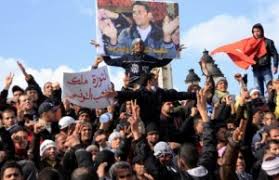
10 YEARS AGO, A GENUINE POPULAR REVOLUTION IN TUNISIA, HIJACKED BY THE WEST

10 YEARS AGO, A GENUINE POPULAR REVOLUTION IN TUNISIA, HIJACKED BY THE WEST

On December 17,2010 erupted a genuine popular uprising in Tunisia when Mohammed Bouazizi, an unemployed 26-year-old, who had been supporting his family by selling fruit from a cart, was enraged when local officials repeatedly demanded bribes and confiscated his merchandise, set fire to himself outside a municipal office in the town of Sidi Bouzid in central Tunisia. As it was expected in similar circumstances and in case of mounting class struggle, the ruling class led by Zineddine Ben Ali has sent its armed gangs in the words of Friedrich Engels celebrating this year his bicentenary(born on November 28,1820), in order to repress the revolt and to nip in the bud a class Revolution. Dozens of protesters were killed in clashes with police.

At the start of the popular uprising, the ruling class sought to manoeuvre and to lure the revolted masses. Ben Ali dismissed the minister of the interior, Rafik Belhaj Kacem, and vowed to establish an investigative committee to examine the government’s response to the crisis. However, All attempts to quell the rioting had failed and clashes between police and protesters continued and spread to the capital, where the government deployed troops to control the popular uprising. The French ruling class,disappointed by the course of the events, proposed through the then foreign minister Michèle Alliot Marie, to send to her friend Ben Ali French armed gangs in Tunisia to help quell the popular uprising and to restore order. On January 13 Ben Ali appeared on national television and made broader concessions to the opposition, promising not to seek another term as president when his term ended in 2014. He shed some crocodile te ars by expressing regret over the deaths of protesters,vowed to order police to stop using live fire except in self-defense and to reduce food prices and loosen restrictions on Internet use.

Despite Ben Ali’s concessions nothing works and did not satisfy the protesters, who continued to clash with security forces, resulting in several deaths. On January 14 a state of emergency was declared, the government had been dissolved and legislative elections yo be held in the next six months. That announcement also failed to quell unrest, Ben Ali stepped down as president and left the country seeking a safe shelter in Saudi Arabia. The prime minister, Mohamed Ghannouchi, assumed power. The following day Ghannouchi was replaced as interim president by Fouad Mebazaa, the former speaker of the lower house of the Tunisian parliament. Both were members of Ben Ali’s political party, the Democratic Constitutional Rally ( Rassemblement Constitutionel Démocratique; RCD)

On January 17, Ghannouchi, once again acting as prime minister, announced the formation of a new unity government incorporating several opposition figures in cabinet posts alongside several sitting ministers from the Ben Ali regime. He also announced that the interim government would act quickly to preserve economic stability and to establish political freedom in Tunisia, releasing political prisoners and eliminating media censorship. The next day, however, the future of the interim government appeared to be in jeopardy when a number of the cabinet’s new ministers from opposition parties resigned in response to fresh street protests over the inclusion of ministers from the previous regime. Attempting to signal a break with the past, Mebazaa, Ghannouchi, and the interim government’s cabinet ministers who had served under Ben Ali all withdrew from the RCD. The interim government announced another set of reforms, lifting Ben Ali’s ban on opposition political parties and granting amnesty to all political prisoners. In February the government officially suspended all RCD activities.

Tunisian popular uprising inspired similar popular uprisings in a number of other North African and Middle Eastern countries, including Egypt, Jordan, Algeria, Yemen, Iran, Bahrain, Syria, and Libya. It was Egypt’s Mubarak regime that the first to suffer the Tunisian popular uprising. Egyptian popular uprising where Mubarak regime was considered as a stable and loyal ally of the US and Israeli regimes in the Middle East ringed the bell and gave the alarm to American establishment and its satellites in Europe prompted to react in order to quell the current popular uprising in Tunisia and Egypt and to prevent its spread to African and Arab allied regimes turning into the US orbit. For these purposes, the US which had a solid experience in regime change and in the techniques of psychological manipulation of the masses implemented successfully by the CIA psychological warfare division since the Truman doctrine aiming at fighting international communism all over the world, fomented the well known Color revolution in some hostile nations, resistant or refractory to American hegemon. The revolt and the angry of the Arab streets which were initially a class struggle of the oppressed and exploited classes, directed against the exploiting ruling class and the incumbent regime, turning in the US orbit, have been deflected from its initial trajectory, galvanized, diverted and hijacked by the West to be directed against governments and regimes resisting US geopolitical projects aiming at securing the oil and gas of the Middle East and North Africa. Toppling Kadaffi’s regime in Libya was to secure the oil and gas of the African nation to the benefit of American and western firms and multinationals. Behind attempt to topple Assad regime in Syria, there are in the same time Syrian oil and gas and geopolitical target, phasing out the Iranian influence in Syria and Lebanon.

Catégories
Blog

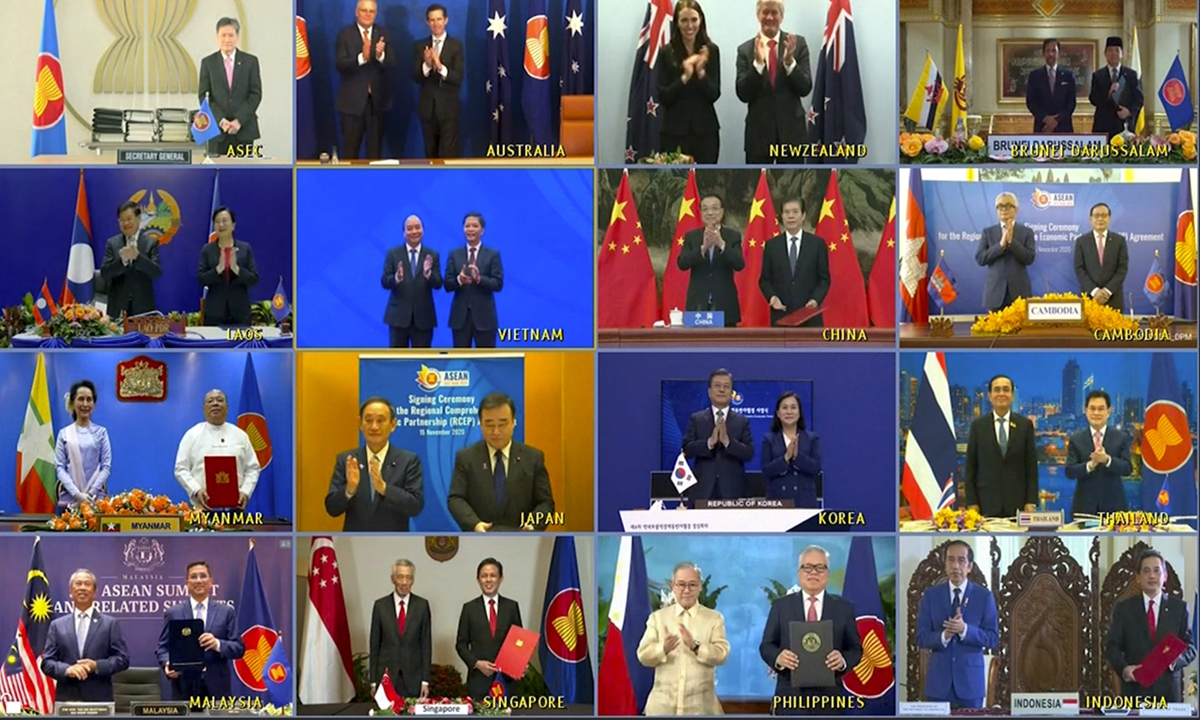
THE BIRTH OF A MEGA FREE TRADE PACT : THE REGIONAL COMPREHENSIVE ECONOMIC PARTNERSHIP(RECEP)

THE BIRTH OF A MEGA FREE TRADE PACT : THE REGIONAL COMPREHENSIVE ECONOMIC PARTNERSHIP(RECEP)

During a virtual summit was created on Sunday November 15, a mega trade bloc, the Regional Comprehensive Economic Partnership (RCEP) including the 10 ASEAN member states, China, Japan, South Korea, Australia, and New Zealand. The 14000 page agreement contains 20 chapters, dealing with tariffs on trade among member countries, including removing barriers for investment and travel. The RCEP is the world’s largest trade agreement, with a combined population of 2.27 billion, $26 trillion in GDP, and $5.2 trillion in exports.  The agreement could boost exports among member countries by 10.4% by 2025, investments by 2.6ù, and GDP by 1.8%.

The first steps that will be implemented by the agreement consist of removing tariffs on 90 percent of merchandise immediately after its implementation, and zero tariffs in 10 years, adopting a « negative list » for investments in manufacturing, agriculture and several other sectors, including arrangements for visas and money transfers.

The RCEP, as an integrator of regional economic and trade rules, will be a recipe allowing the countries at different development stages to engage in a trade deal and trade liberalisation for its diverse groups of its members but also it will become the platform to pursue more bilateral trade deals and resolve trade and other disputes.

Because of the very diverse political systems of its members, the implementation of the agreement will also face challenges and risks not only from internal disputes between its members but also from US and EU meddling.

Mainstream American outlets described the signing of the Regional Comprehensive Economic Partnership (RCEP) agreement, one of the world’s largest regional free trade pacts, as a “challenge” to US trade. Biden’s administration would probably riposte through the US participation US participation in the Asia-Pacific multilateral trade mechanism, the Trans-Pacific Partnership (TPP) – renamed the Comprehensive and Progressive Agreement for Trans-Pacific Partnership (CPTPP).

Likely,the US and EU will exploit internal disputes between the RECEP’s members in order to disrupt the process, by meddling for example in
trade disputes between Japan and South Korea and igniting diplomatic tensions between China and Australia accused for its role in helping the US attack on Beijing.
To increase confrontation, the US and EU will try to sow  the discord in some member countries and divide the 15 members at the same time.

Even before Donald Trump assumed office, the US was trying to contain the rise of China by initiating negotiations for the TPP, which was widely viewed as a strategy to isolate China. Although the Trump administration withdrew from the TPP, it has continued by stirring up tensions in the South China Sea. 

Joe Biden, who pushed for TPP might try to disrupt the RCEP but the US would not be able to disrupt the process as the US-led multilateral trade mechanism in the Asia-Pacific does not fit many in the region, because in the framework of the RCEP each country will focus not on services provided by the US partnership but on existing industrial advantage which is more attractive to ASEAN countries

As a sign of confidence after the signing of the agreement, stock markets stock soared across the Asia-Pacific rallied on Monday as the benchmark Shanghai Composite Index gained 1.11% at market close, in Japan, the Nikkei 225 rose 2.05%, in South Korea, the Kospi also gained nearly 2% and in Australia, the S&P/ASX 200 rose 1.23%. 

Catégories
Blog

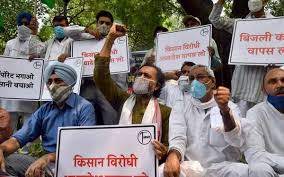
BLOW TO INDIAN FARMING COMMUNITY AS MODI’S GOVERNMENT OPENS AGRICULTURE SECTOR TO MONOPOLE AND AGRIBUSINESS

BLOW TO INDIAN FARMING COMMUNITY AS MODI’S GOVERNMENT OPENS AGRICULTURE SECTOR TO MONOPOLE AND AGIOBUSINESS

The lower house passed on Thursday two farm bills, the Farmers’ Produce Trade and Commerce (Promotion and Facilitation) Bill, 2020 and The Farmers (Empowerment and Protection) Agreement on Price Assurance and Farm Services Bill, 2020. Both bills are aiming at deregulating the agriculture sector, one to free up agricultural trade from all restrictions and the other to create a new contract farming putting the Indian farmer at the mercy of big agro industry and multinationals. The bills seek to open up the Indian farming community to monopole and enabling bigger agribusinesses to control the access to markets, which are currently fragmented.

The bills were first announced by finance minister Nirmala Sitharaman on May 15 in the second of her series of briefings on proposed reforms. The main provisions of the Farming Produce Trade and Commerce (Promotion and Facilitation) Bill, 2020 abolish regulations of the inter-state and intra-state trade of primary agricultural commodities. Under the old system, farm produce are sold mainly in notified wholesale markets run by so-called agricultural produce marketing committees, or APMCs, under state laws which require farmers to only sell to licensed middlemen in these notified markets, usually in the same area where the farmers reside, rather than in open markets. The bill enables farmers and buyers of their produce to trade outside these tax-free markets and will therefore open up APMCs to competition. The bill will enable food traders to buy farmers’ produce from any market, rather than bind them to the specific markets where they are licensed to operate.

The Farmers (Empowerment and Protection) Agreement on Price Assurance and Farm Services Bill, 2020 abolishes the old regulations related to contract farming. It provides for a national framework on farming agreements, enabling a farmer to engage with agribusiness firms, processors, wholesalers, exporters or large retailers for sale of future farming produce at a pre-agreed price imposed by big agribusiness.

Union minister Harsimrat Kaur Badal of the Shiromani Akali Dal (SAD) has resigned on Thursday from Prime Minister Narendra Modi’s government, as the BJP ally on Thursday opposed the two farm bills that seek to liberalise the agriculture sector, exposing a crucial rift on the issue of farmers and agricultural reforms. “I have resigned from Union Cabinet in protest against anti-farmer ordinances and legislation. Proud to stand with farmers as their daughter & sister,” tweeted Harsimrat Badal. “I think I was probably the lone voice who came from a 100% agrarian state. The officers who made the ordinances were unable to see Punjab differently from rest of the country” she saif in interview to the Hindustan news agency.

On September 12, the party had formally asked the Centre not to enact three farm ordinances during the monsoon session of Parliament, which began on September 14.

Farmer groups said they feared the new changes would lead to big monopolies. Farmers are already protesting these ordinances in food bowl states, such as Haryana and Punjab, and influential farmers’ unions are also preparing to square off with the government on the demand of making profitable sales in the form of minimum support prices, or MSPs, a legal right. The All-India Kisan Sangharsh Coordination Committee (AIKSCC), a front for nearly 200 farmers’ groups, has opposed the bills. The Rashtriya Swayamsevak Sangh (RSS)-affiliated Bharatiya Kisan Sangh demanded safeguards for the farming community, so has the Bhartiya Kisan Union.

Major parties that opposed the bills were the main opposition Congress, Bahujan Samaj Party, Siromani Akali Dal, Samajwadi Party, the Trinamool Congress, the Aam Aadmi Party, the Left parties, Nationalist Congress Party, the Indian Union Muslim League and the Dravida Munnetra Kazhagam. The Congress’s Adhir Ranjan Chowdhury said: “Show me one farmer who is happy over this bills. Haryana and Punjab are on fire.” Adding ““I appreciate the sentiments of Harsimrat Kaur (the minister who resigned from Modi Cabinet) who had the gumption to oppose the bills. These bills are no silver bullet.”

Parties opposing the bill accused the government of taking advantage of the Covid pandemic to introduce “anti-farmer legislations”. “Had there been no corona, farmers’ anger would have been visible in the streets , who does the BJP stand with, foreign investors, Adani-Ambani, dhanna seth (moneyed traders) or farmers?” asked Ritesh Pandey of the Bahujan Samaj Party, registering the opposition of party chief Kumari Mayawati.

Catégories
Blog

CHINA-INDIA’S DEFENSE MINISTERS MEETING : TURNING POINT OR FOOL’S GAME?

CHINA-INDIA’S DEFENSE MINISTERS MEETING : TURNING POINT OR FOOL’S GAME?

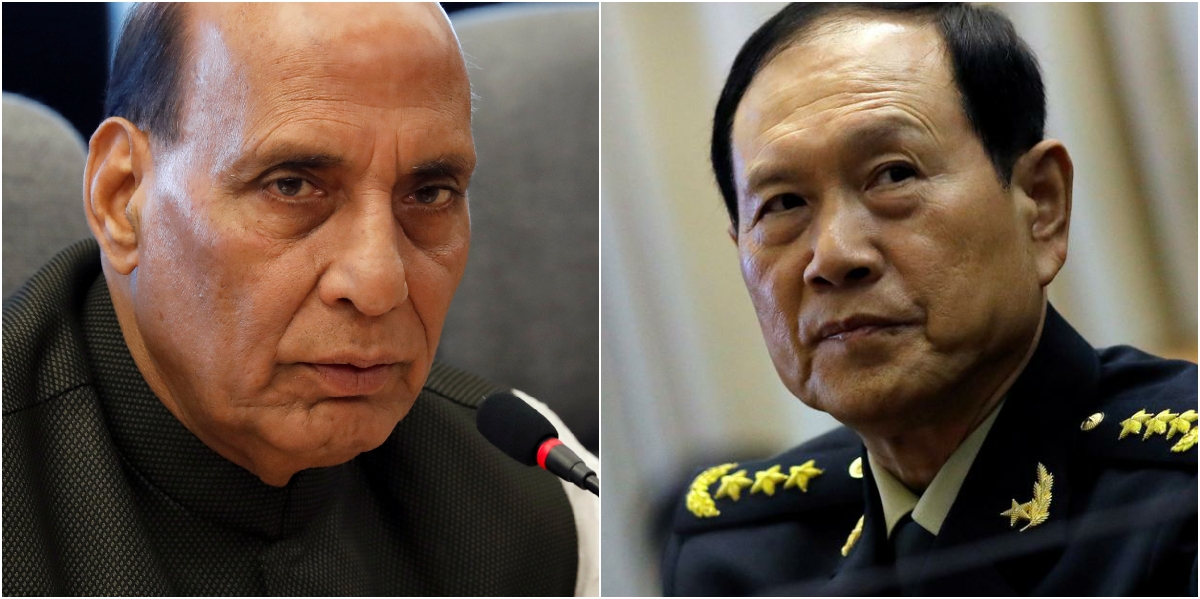
While thousands of Indian and Chinese troops have been poured into eastern Ladakh in a stand-off which has lasted for over four months, Indian defence minister Rajnath Singh and his Chinese counterpart Wei Fenghe have accepted to start talks on the sidelines of the Shanghai Cooperation Organisation (SCO), the highest face-to-face political contact between India and China since the current stand-off began in early May. The fact that the two defense ministers are sitting face-to-face is in itself a positive signal and provides the necessary atmosphere for the two countries to manage their border disputes and cool down the situation on the ground.

Both countries asserted their positions, the talks concluded with each country stating that the other side had agreed to peacefully “de-escalate” the situation. Following the meeting which lasted nearly two and half hours in a Moscow hotel, both countries had agreed to peacefully “de-escalate” the situation. Both sides asserted that they will protect their own sovereignty and territorial integrity.

The Indian statement issued on Saturday afternoon stated that Singh had “emphasised that the actions of the Chinese troops including amassing of large number of troops, their aggressive behaviour and attempts to unilaterally alter the status quo were in violation of the bilateral agreements and not in keeping with the understandings reached between the Special Representatives of two sides”. The Chinese ministry of defence conveyed that “it was important for the two defence chiefs to have a frank exchange of views on relevant issues face-to-face”. Wei had noted that the “causes and truth of the current tension on the China-India border are clear, and the responsibility is entirely with India”.

There also seemed to be a consensus that talks are the only way forward, with China claiming that Singh had underlined that “both sides should keep the channels of military and diplomatic dialogue open.

The fact that the two defense ministers are sitting face-to-face is in itself a positive signal and provides the necessary atmosphere for the two countries to manage their border disputes and cool down the situation on the ground. Chinese State Councilor and Foreign Minister Wang Yi and Indian Minister of External Affairs Subrahmanyam Jaishankar will also plan to meet on September 10. The meeting between Wei and Singh laid an important foundation for the meeting between the two foreign ministers. The complex border issue between China and India cannot be resolved in one meeting, but the role of the two defense ministers will be crucial in cooling border frictions.

The tensions might persist in the near future because the boundary issue is very difficult to solve immediately. The China-India boundary issue, which had been dormant for decades, has become « an active volcano » again in recent years, and it should not be. Before delimiting the border, it should be a common goal for both countries to manage the border issue by letting the disputes become « dormant » between the two sides again.

China and India have not yet demarcated their borders and the Line of Actual Control (LAC) shouldn’t be subject to constant change and different interpretations. The LAC of November 7, 1959 should be the base for both sides.

In the ongoing border tensions, the United States is encouraging India to take aggressive line on the border issue, by waging a border war « at any cost. » The right wing government in New Delhi also believes its alignment with the United States has increased India’s strategic strength and provided it with additional capital for risky adventure along the China-India border. Objectively, China’s military strength, is much stronger than India’s. Although China and India are both great powers, when it comes to the ultimate competition of combat capability, the Indian side will lose. If a border war starts, India will have no chance of winning.

Catégories
Blog

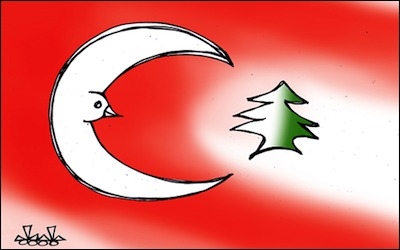
FRANCE’S GEOPOLITICAL GAME IN LEBANON TO COUNTER TURKEY

FRANCE’S GEOPOLITICAL GAME IN LEBANON TO COUNTER TURKEY

On August 6, only two days after the deadly explosion that literally destroyed Beirut’s port and ravaged a large part of the Lebanese capital, killing 190 people, injuring another 6,500 and leaving 300,000 citizens homeless,  French President Emmanuel Macron has made his first trip to Lebanon before returning for the second time in less than a month. According to a World Bank, the damages caused by the explosion could be between $6.7 billion and $8.1 billion in total in addition to a crippling financial crisis.

After landing on August 31, Macron announced clearly the main objective of his second visit aimed to avoid Lebanon ending up “in the hands of the vileness of the regional powers” and to prevent the country from falling into a new civil war. What did Macron mean by “the hands of evilness of the regional powers”? Those regional powers are Turkey, Saudi Arabia and Iran, which are competing to carve out an area of influence in this tiny country of 10000m² and barely seven million inhabitants.

Macron’s declared objective is to provide financial assistance to Lebanese people following the deadly explosion but his undeclared objective is to reaffirm France’s former colonies as its spheres of influence, to protect and to guarantee the French political and commercial interests, not only in the East Mediterranean, but also in the Middle East. This is occurring most notably in Africa, where it is currently challenging Turkish attempts to spread its interests. By gaining a foothold in Lebanon, Macron can weaken Turkish attempts to become the gatekeeper of the Sunni stronghold of north Lebanon.

Turkey’s activities are centered around the northern port of Tripoli, a stronghold of Sunni political Islam and an urban center for the Lebanese Sunni population. As such, the area is a natural focus for Turkey. The Akkar Governorate, home to Lebanon’s tiny Turkmen minority, is also an area of interest.

Turkey seeks to leverage both its Sunni Islamist credentials to appeal to Sunni Arab populations, and where relevant its Turkic ethnicity to appeal to Turkic remnant populations in the Levant. Available evidence suggests that in Lebanon, a similar pattern is being followed. Turkey has been working slowly and assiduously, via NGOs and government relief organizations such as the Turkish Cooperation and Coordination Agency – TIKA to establish its foothold in the country. On July 4 two Turkish and two Syrian citizens on a flight to Lebanon from Turkey were arrested as they attempted to smuggle $4 million into the country. Lebanese Interior Minister Mohammed Fahmi claimed that the money was intended to finance street-level protests against the Lebanese government. As of now, however, the first signs are emerging that Sunni Islamist Turkey is seeking to fill the vacuum, and to recruit the Lebanese Sunni street to its banner.

Catégories
Blog

US BUILDING UP OF INDO PACIFIC NATO TO COUNTER CHINA

US BUILDING UP OF INDO PACIFIC NATO TO COUNTER CHINA

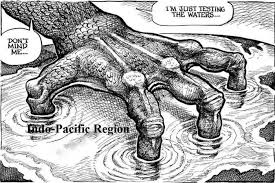
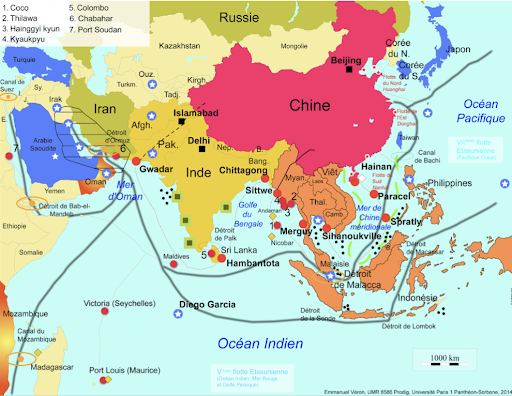
On August 31,in the framework of the ongoing summit of the US-India Strategic Partnership Forum, the US Deputy Secretary pf State Stephen Biegun said in an online discussion that the US is working to strengthen closer defence ties with countries of the India-Pacific region, India, Japan and Australia, to build up Indo- Pacific Alliance modeled on the North Atlantic Treaty Organisation (NATO) with an aim to counter China

Stepehn Biegen is a necons, he’s the number 2 official in the US state department, an American businessman, fluent Russian-speaking diplomat former staffer on the National Security Council in the George W Bush administration and the US special Representative for North Korea in the Trump administration.

Washington’s aim is to create in the Indo-Pacific region a strong multilateral structures, ultimately to align in a more structured manner, similar to those of NATO. The Donald Trump administration’s Indo-Pacific Strategy is the role played by the Quadrilateral Security Dialogue, or “Quad,” comprised of Australia, India, Japan, and the United States. Since the Quad’s resurrection from a decade-long hiatus in November 2017, the group has met five times and has emphasized maintaining the liberal rules-based international order, which China seeks to undermine or overturn. Washington’s aim is to get the Quad grouping of four countries to work together as a bulwark against a potential challenge from China and to create a critical mass around the shared values and interests.

It is expected that the Quad grouping will meet in New Delhi this autumn with Australia’s possible participation in India’s forthcoming Malabar naval exercise as an example of progress towards a formal defence bloc.

The US wants to see Vietnam, South Korea and New Zealand to eventually join an expanded version of the ‘Quad’ to form an alliance grouping the seven nations working together in order to safeguard their common and shared interests in the Inod Pacific region.

The ongoing standoff with China provides a pretext for the Modi government to unveil its real agenda, the timing alibi to align the Indian foreign policy establishment to openly transform the Quad into a Indo Pacific NATO.

Catégories
Blog

DEUSCHLAND UND EU FORDERN DEN AUFBAU EINER „INDO-PACIFIK“ ALLIANZ, EINES GEGENGEWICHTS GEGEN CHINA

DEUSCHLAND UND EU FORDERN DEN AUFBAU EINER „INDO-PACIFIK“ ALLIANZ, EINES GEGENGEWICHTS GEGEN CHINA

Kürzlich hat der deutsche Außenminister Heiko Maas erklärt: « Der Indo-Pazifik ist eine Priorität der deutschen Außenpolitik. » Im Klartext muss Bundesregierung ihrer Aktivitäten in Süd-, Südost- und Ostasien, darunter militärische Maßnahmen intensivieren, mit doppeltem Ziel:  Wirtschaftskooperation mit China aber ein Gegengewicht gegen Beijing.

Diese deutsche Doktrin wird unter dem Titel  neue « Leitlinien zum Indo-Pazifik » veröffentlicht. Die Bundesregierung versteht unter dem Indo-Pazifik die Gesamtheit des vom Indischen Ozean und vom Pazifik geprägten Raums. Das Dokument plädieret für der Aufbau der ökonomischen Kooperation mit der Volksrepublik aber militärische Kooperation mit  NATO-Partnern Japan und Australien. Eingeführt im Jahr 2007 von dem indischen Marinestrategen Gurpreet S. Khurana,  ist der Begriff „Indo-Pacifik“ eine aktualisierten Version des Kalten Kriegs wo die Regionen nach Freund und Feind aufgeteilt sind.

In ihren veröffentlichten « Leitlinien zum Indo-Pazifik » zielt die Bundesregierung die Bildung   einen « Schulterschluss mit den Demokratien und Wertepartnern der Region », eine Zusammenarbeit mit ihnen nicht nur politisch und wirtschaftlich, sondern auch militär- und rüstungspolitisch ; nicht nur die Teilnahme an sicherheitspolitischen Foren sondern auch die Teilnahme an Übungen in der Region, die Entsendung von Verbindungsoffizieren sowie verschiedene Formen maritimer Präsenz, die bilaterale Verteidigungszusammenarbeit, und Ausbildungsprogrammeder Bundeswehr für ausländische Streitkräfte Dabei handelt es sich vor allem um Japan und Südkorea, um Australien und Neuseeland, um den südostasiatischen Staatenbund ASEAN und um Indien.

Translate »